


 September 30, 2026
 September 7, 2026
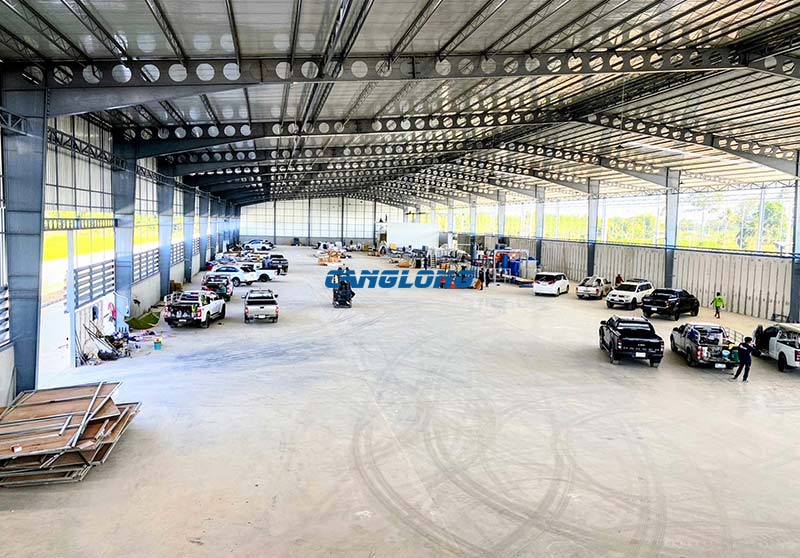
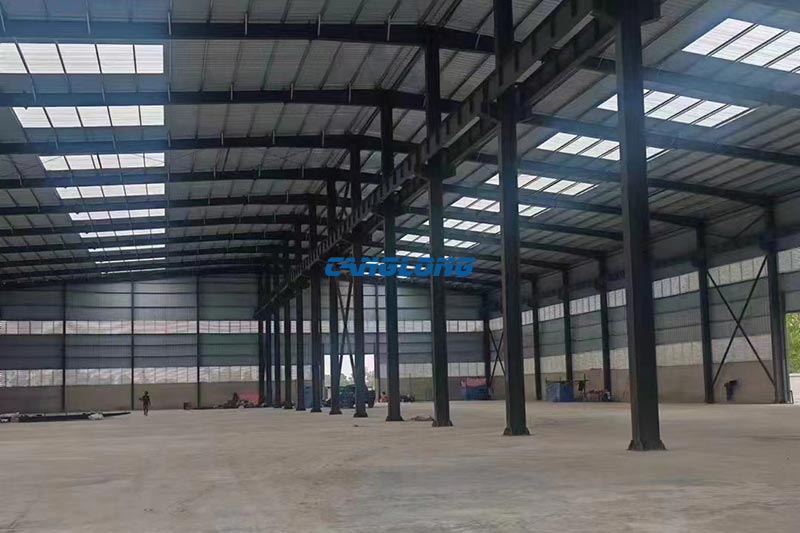
Thailand Industrial Workshop
Project Case Study · Chonburi, Thailand
This 3,744 m² industrial workshop in Chonburi was bought as a rental asset, not as a home for the owner’s own production line. The client’s business is industrial property — they build workshops and let them out — and that single fact shaped every decision that followed, from the structural grid to the choice of cladding.
The building measures 78 m long by 48 m wide, 12 m high, and sits in Pengshiluo, Chonburi province, within easy reach of Laem Chabang deep-sea port. It was ordered by a repeat customer: the same client had bought steel buildings from us before, and the reference mattered more than any brochure we could have sent.
- Location: Chonburi, Thailand
- Building: Industrial workshop for lease
- Dimensions: 78 m × 48 m × 12 m
- Floor area: 3,744 m²
- Scope: Design + supply + installation
3,744 m²
Floor area
48 m
Width, two spans
12 m
Building height
78 m
Length
Turnkey
Design to install
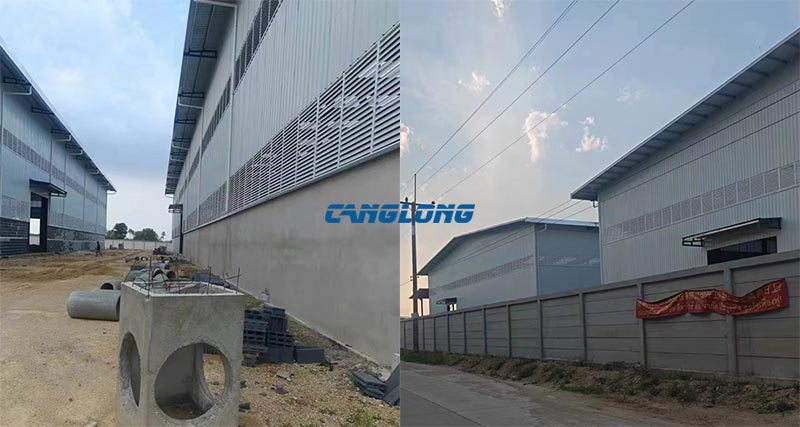
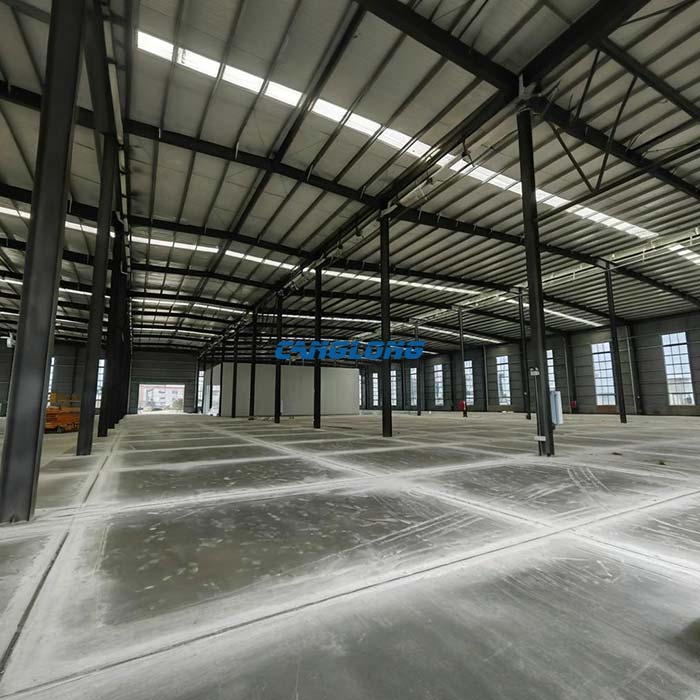
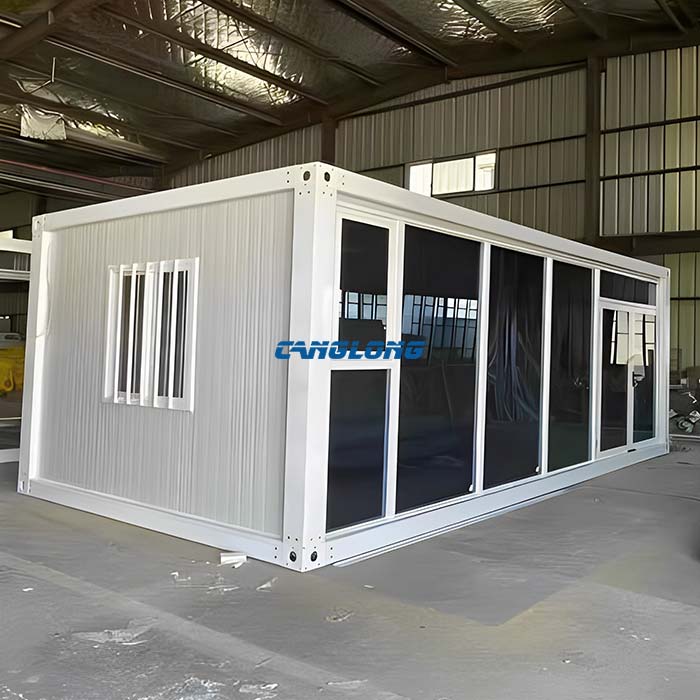
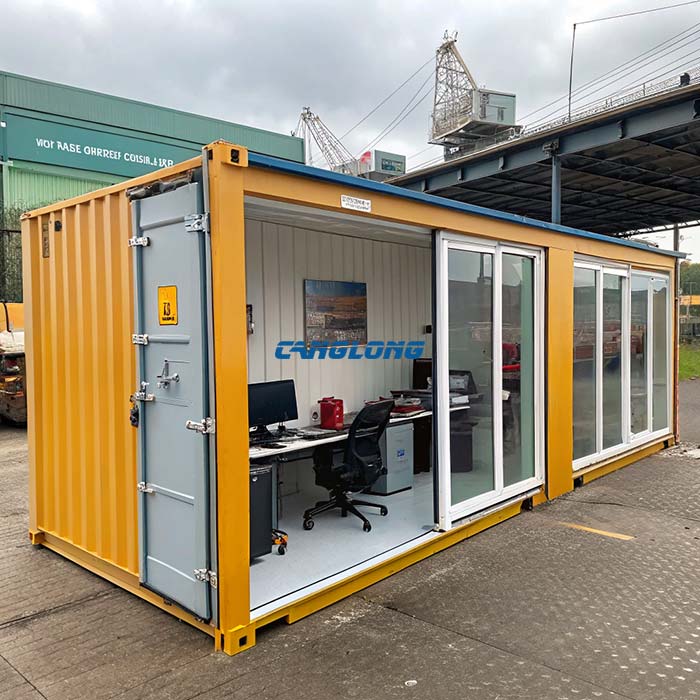
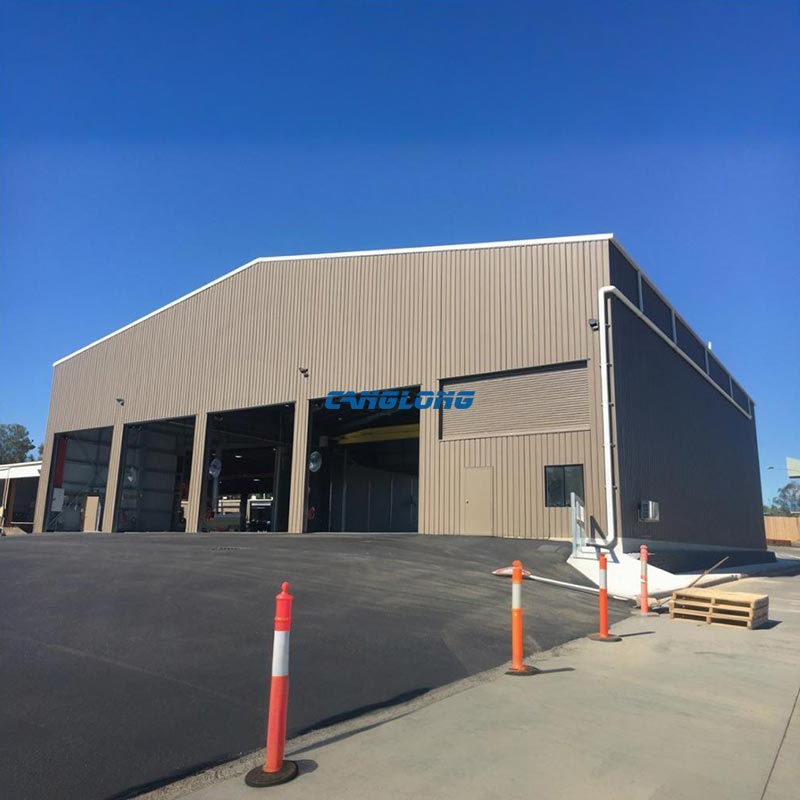
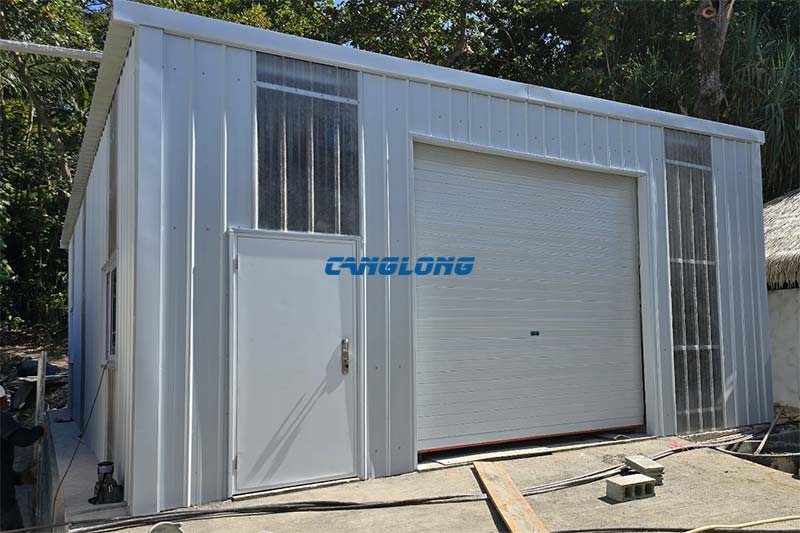
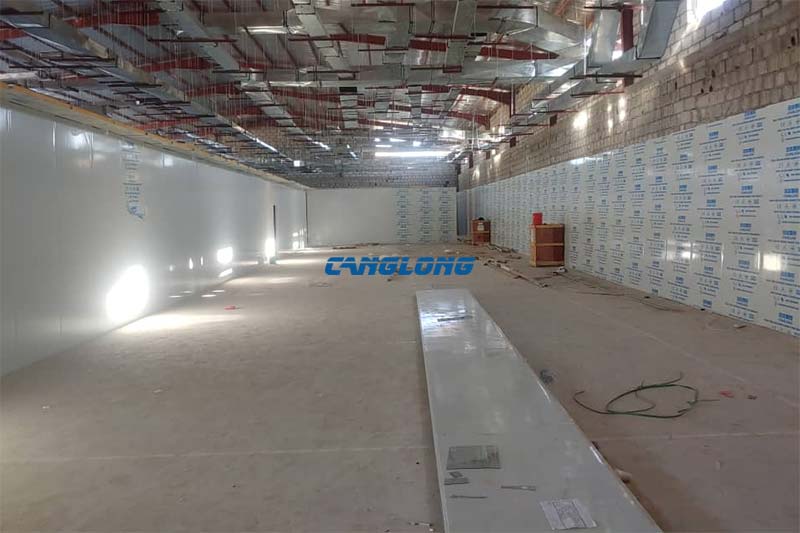
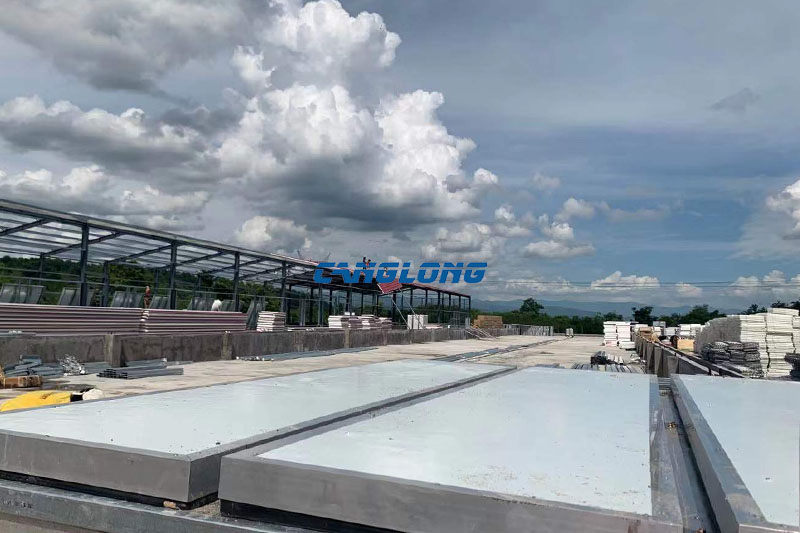
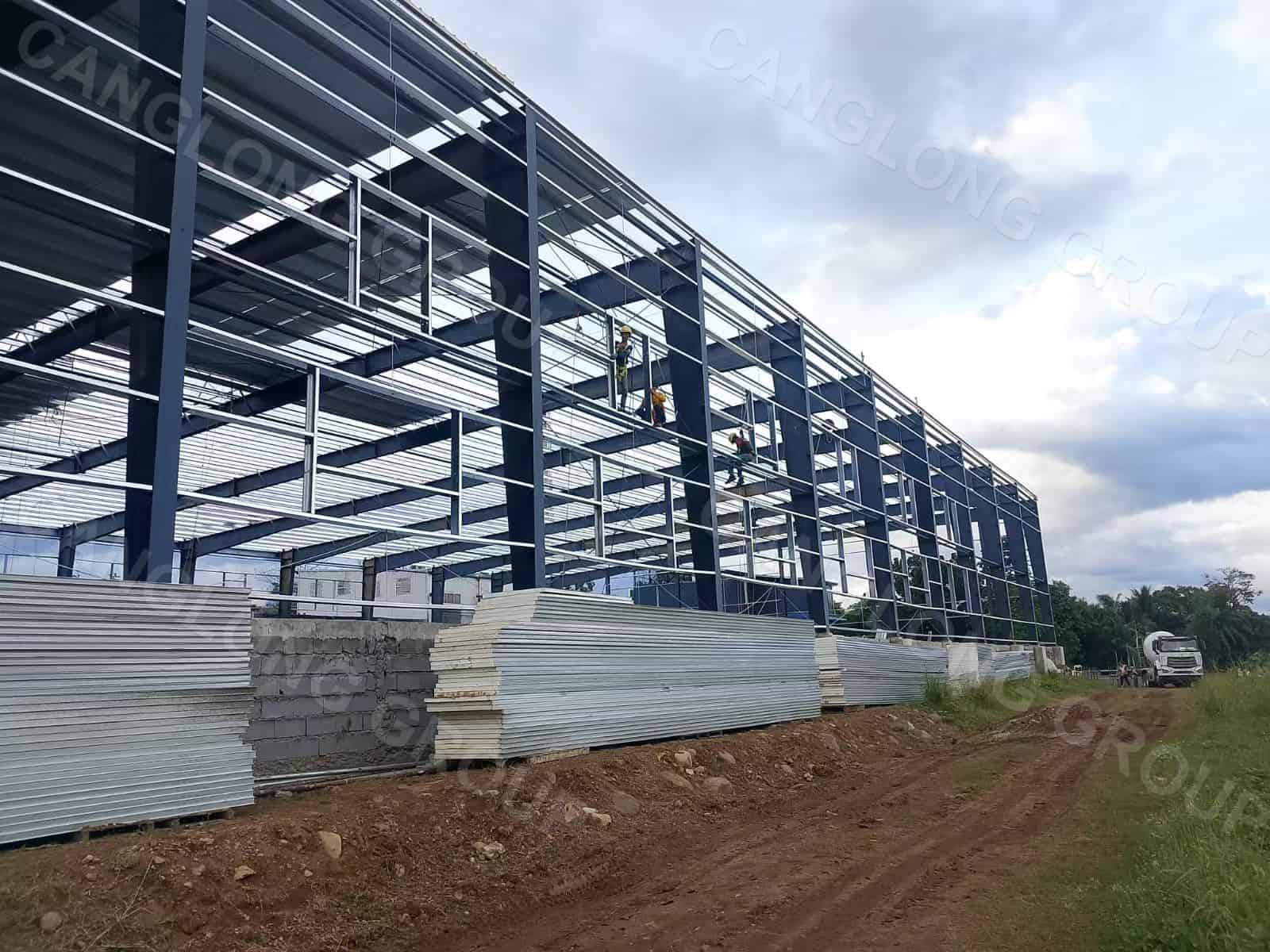
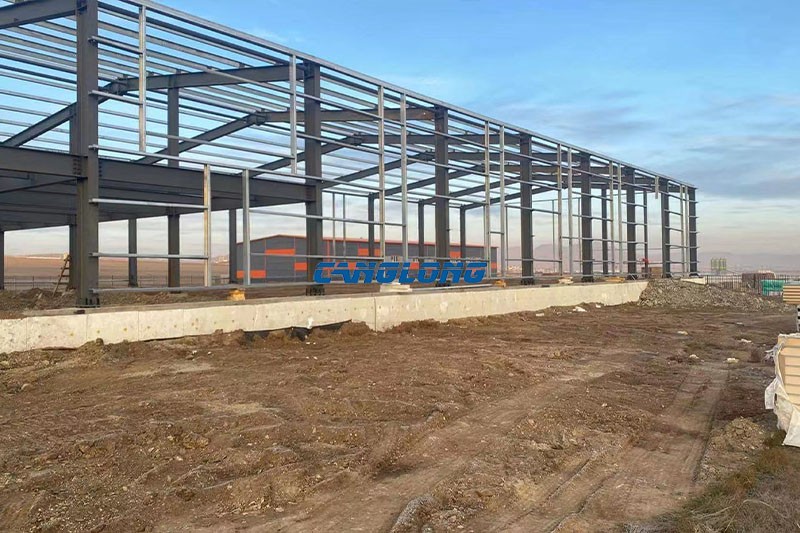
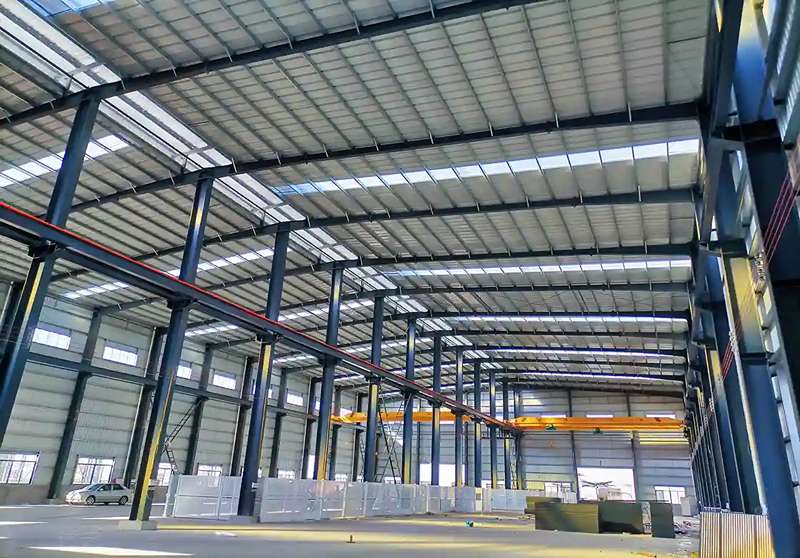
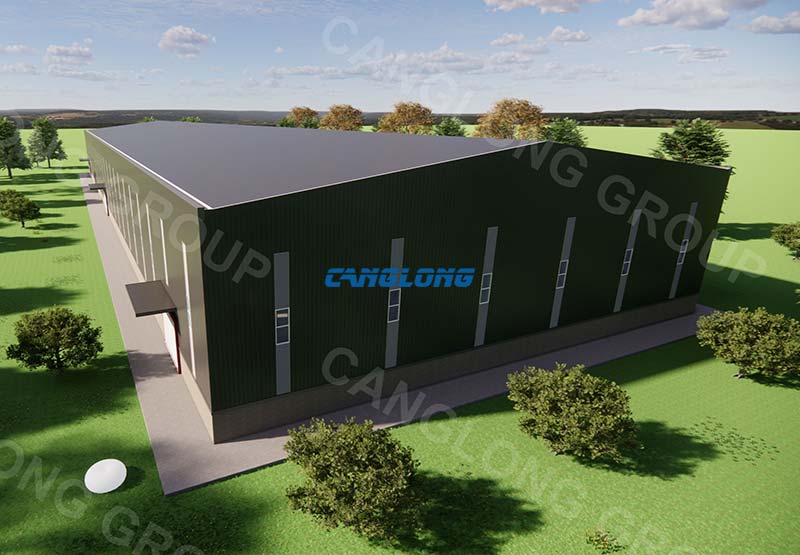
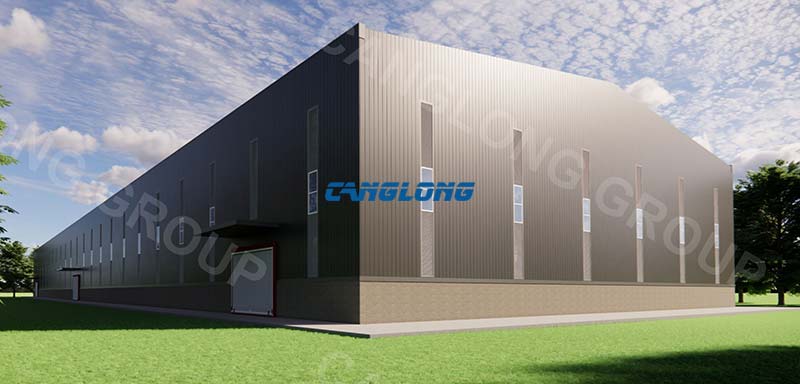
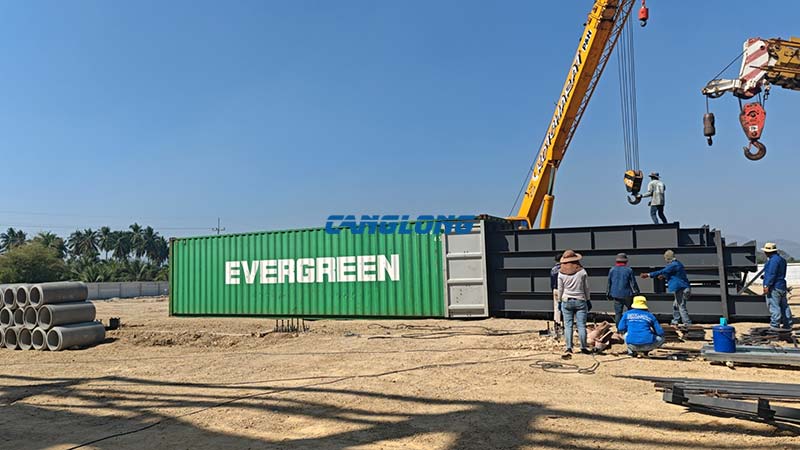
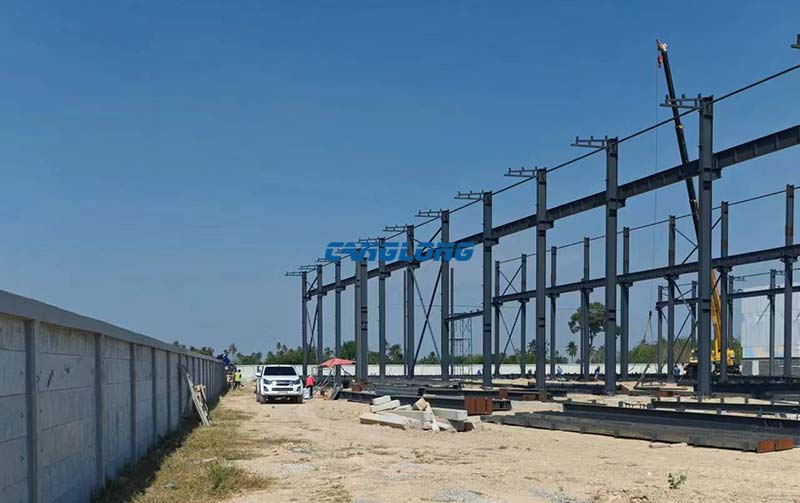
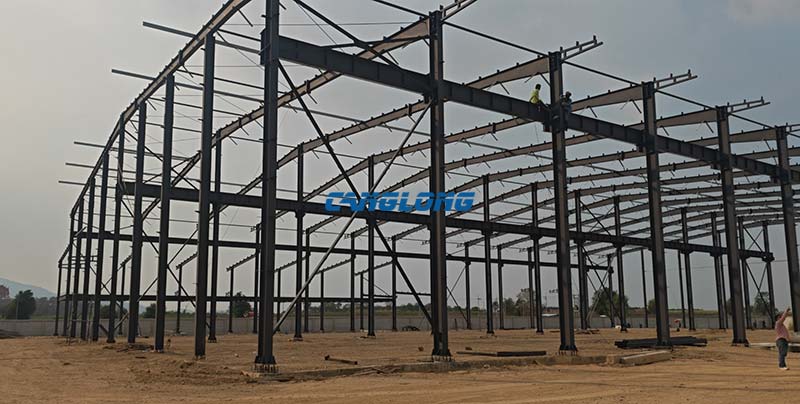
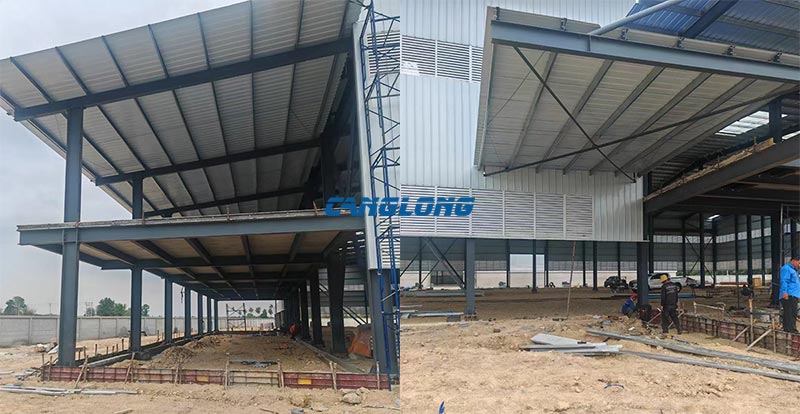
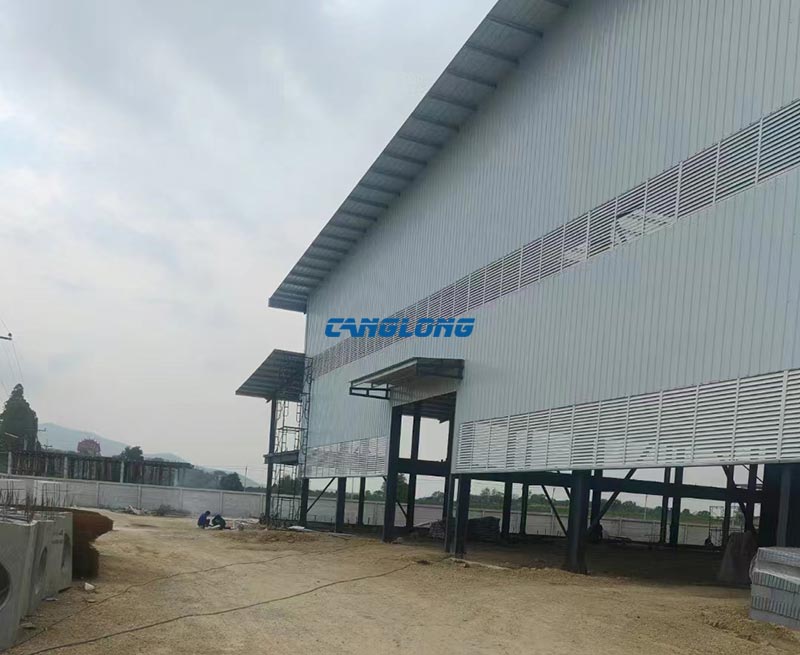
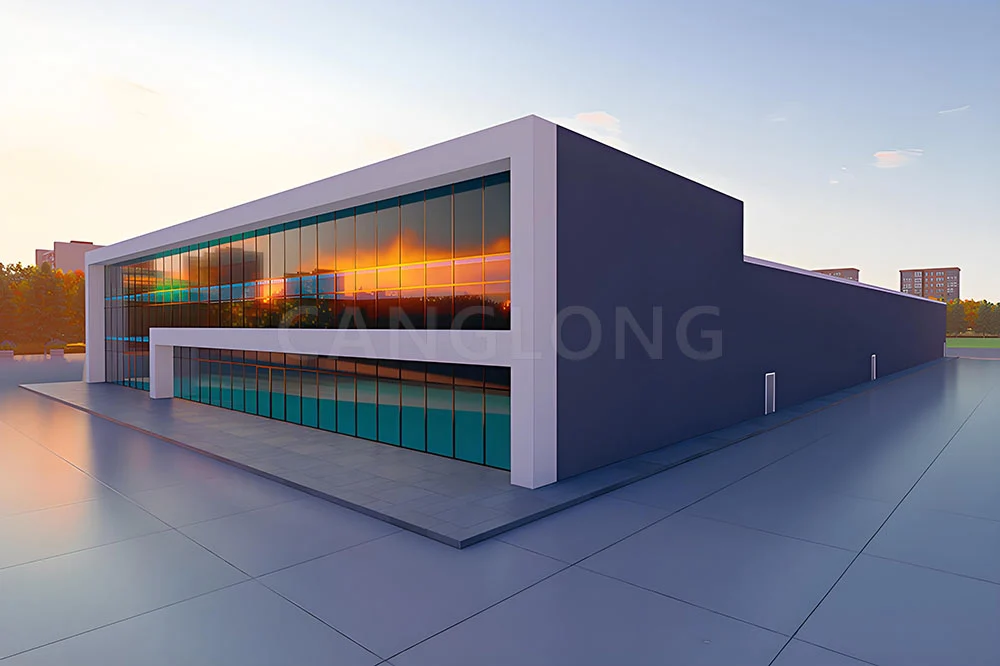
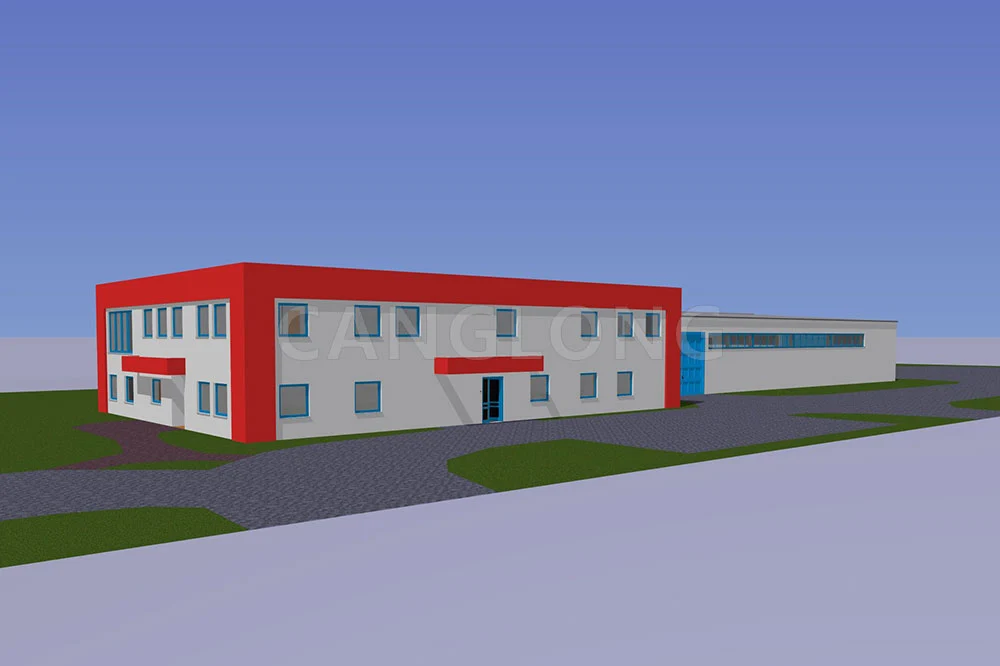
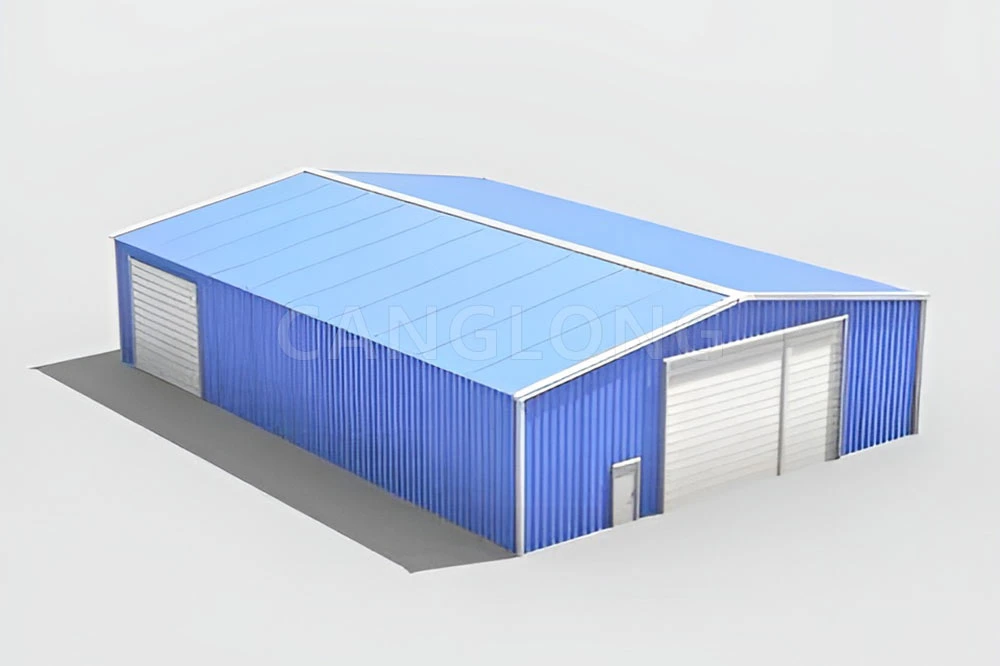
The workshop at 78 m by 48 m — installation in progress and the finished elevations. Two spans across the 48 m width keep the structural grid simple enough to let a tenant divide the floor as they wish.
A Workshop Designed to Be Let, Not Used
A landlord’s building and an owner-occupier’s building are not the same object. An owner-occupier knows what goes on the floor — the machine footprint, the crane duty, the aisle widths — and can shave material off everything else. A landlord does not.
So the brief here was simple in principle and demanding in practice: build a workshop that fits the widest possible range of light and medium industry, at a rent that still works, in a location where tenants are looking. Three things followed from that.
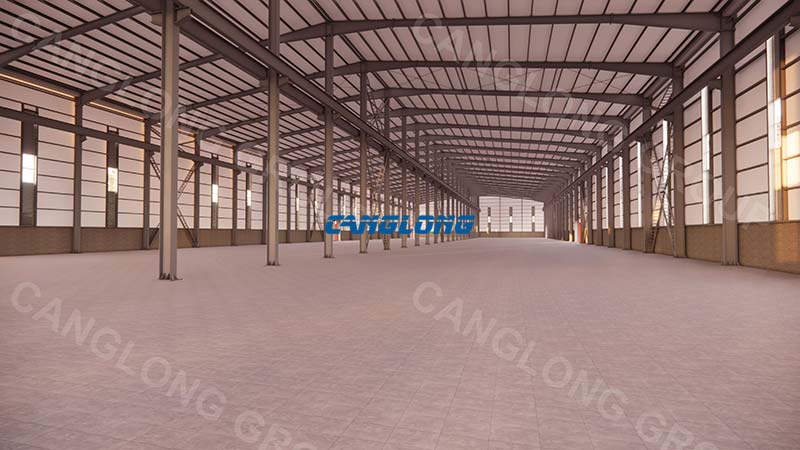
The floor had to stay open and subdividable. Tenants arrive with different ideas about layout. A clean 78 m by 48 m floor under a regular column grid can be split into two units, left as one, or fitted out with a mezzanine later, with no structural work required. That flexibility is worth more to a landlord than any saving in steel tonnage.
The height had to clear industrial equipment without wasting volume. At 12 m, the building takes the kind of machinery and handling equipment that rules out a low shed, and it gives hot air somewhere to go so the working zone stays tolerable without mechanical cooling. It is also the height at which a tenant begins to think about a mezzanine office, which is a rentable feature rather than a cost.
It had to be quick to build and cheap to keep. A rental asset only earns once it is occupied. The faster the box goes up and the less it asks for in maintenance, the sooner the client starts collecting and the longer they keep collecting. That is the reason for both the structural system and the enclosure system below.
The Structure: Two Spans Across 48 Metres
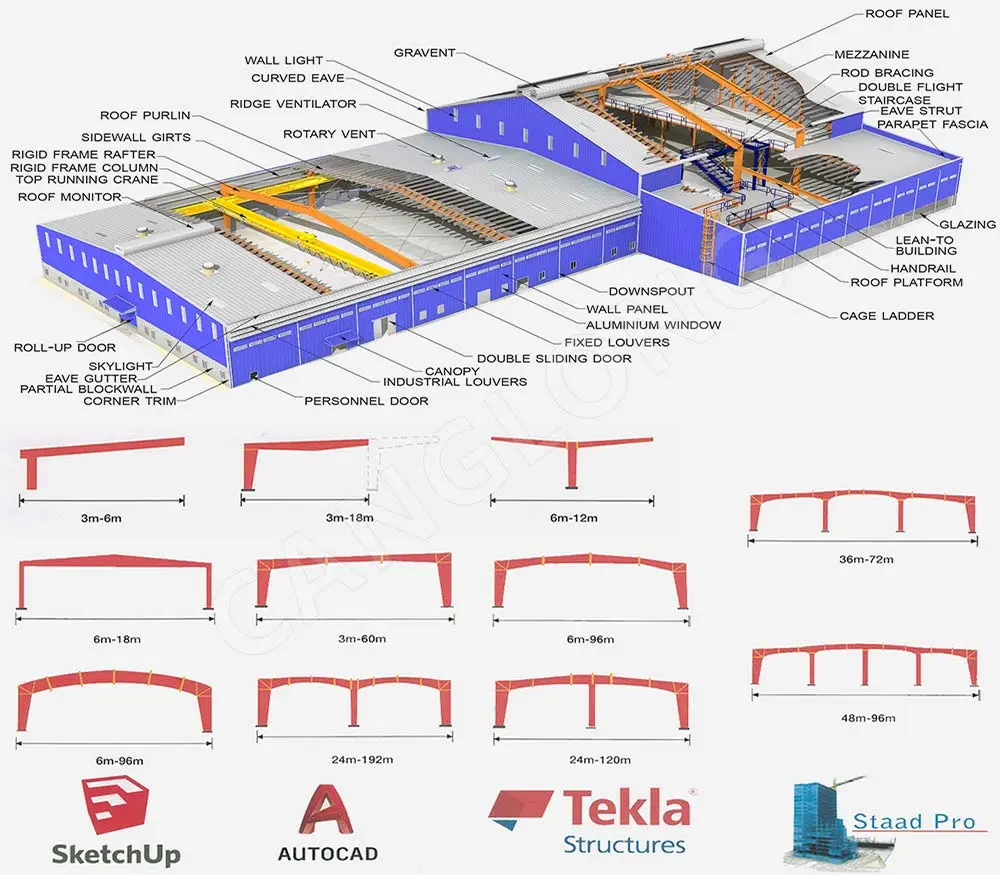
The frame is a double-slope, double-span steel structure. Primary members — columns and rafters — are high-strength H-section steel throughout, sized for the spans and for the roof and wind loading appropriate to a coastal province.
Why two spans rather than one 48 m clear span. A single 48 m span is buildable, but the rafters get deep and heavy, and the cost rises faster than the benefit. Splitting the width into two spans puts a column line down the middle and brings the members back to sensible depths. For a speculative workshop that is the right trade: the client gave up a fully column-free floor and got a building that costs less to erect and lets at the same rent. Where a tenant genuinely needs an uninterrupted span — a sports hall, an aircraft hangar, a large assembly bay — the calculation goes the other way, and we would not specify this grid.
Why double-slope rather than a single fall. A 48 m width draining to one edge means a very deep gutter and a lot of water arriving at one wall. Two slopes discharging to both eaves halves the flow in each gutter and keeps the roof geometry normal. Chonburi’s rain arrives in intense bursts; the drainage design is set by peak intensity, not annual average.
What the H-section frame buys in a rental building. H-sections are stiff and predictable, and their bolted connections can be taken apart. That matters more in a leased building than in a private one: a tenant who wants to remove a bay of internal framing, add a crane runway later, or cut a new opening gets a structure that can be modified rather than a structure that has to be replaced.
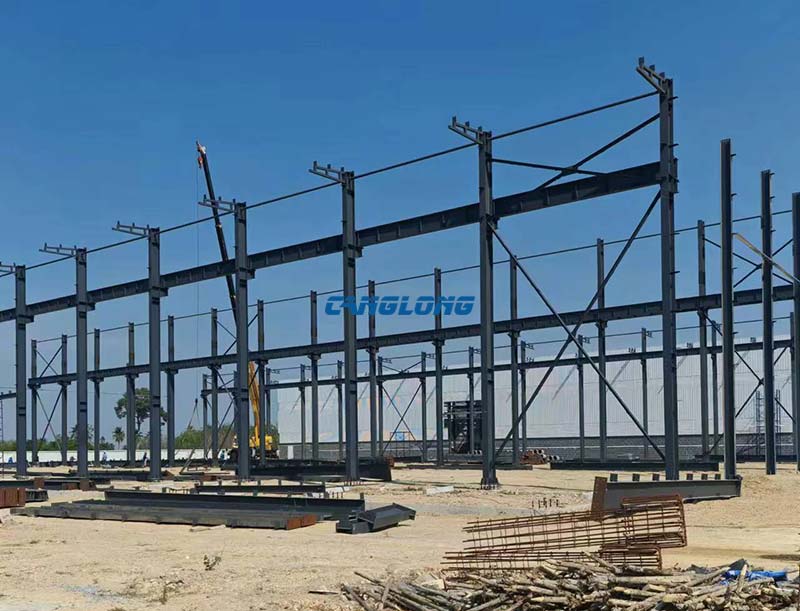
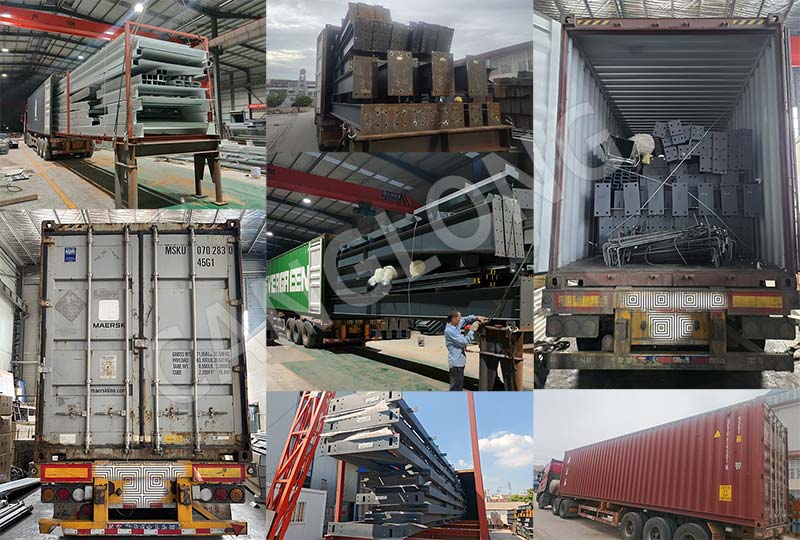
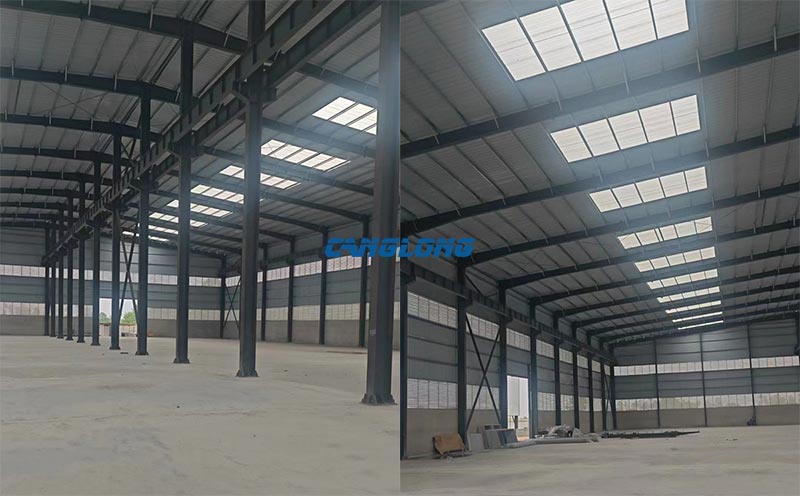
Frame erection on site. The members arrived fabricated, cut and drilled to the drawing, which is what lets a build of this size run on a short programme.
The Envelope: Sandwich Panels, and Why Here
Walls and roof are covered with metal sandwich panels — a rigid insulation core bonded between two pre-coated steel faces, in place of single-sheet corrugated steel. In Thailand that is not the cheap option, and it is not chosen by reflex. It was chosen because of who would be renting the building.
Insulation is what makes the floor lettable across the year. A single-sheet roof in a tropical climate radiates solar heat straight into the hall; the interior runs well above outside air temperature, and the building becomes uncomfortable to work in and unsuitable for anything heat-sensitive. Sandwich panels break that path, so the working zone stays within a range a tenant’s staff and product can tolerate.
Condensation control is the less obvious benefit. A bare steel inner face sitting against humid tropical air drops below dew point overnight, and the water that collects on it drips onto whatever is underneath — stock, machinery, finished goods. The panel core separates the steel face from the humid air, which removes the problem at its source rather than managing the symptom.
Fire performance and speed of build come with the same system. Sandwich panel assemblies carry defined fire behaviour, which matters both for the tenant’s insurance and for the landlord’s ability to let the building to tenants in regulated industries. And because the panels are factory-cut to length and simply fixed on site, the enclosure closes quickly — no wet trades, no curing time, and less weather risk during the build.
Where sandwich panel would be the wrong answer. Panel is not automatically the right envelope for every building. Where a process runs hot — foundries, forging, molten-metal handling — the hot zone is better served by a non-combustible core such as rock wool, or by a single-sheet wall with local heat shielding, because a foam core near sustained heat is a liability rather than a benefit. Where a tenant needs nothing more than a covered yard, single-sheet is cheaper and adequate. The panel specification here is correct for general light and medium industry in a humid climate. It is not a universal default, and we do not sell it as one.
The Project at a Glance
| Building type | Industrial workshop built for lease to third-party tenants |
| Location | Pengshiluo, Chonburi province, Thailand — near Laem Chabang port |
| Dimensions | 78 m length × 48 m width × 12 m height, 3,744 m² floor area |
| Structural system | Double-slope, double-span H-section steel frame — H-section columns and rafters |
| Roof | Metal sandwich panel, double-pitch to both eaves |
| Walls | Metal sandwich panel |
| Scope | Turnkey — design, material supply and installation construction |
| Intended use | Leased workshop space for light and medium industry |
| Client | Repeat purchaser, Thai industrial property investor (details withheld at the client’s request) |
| Handover | 2024 |
Turnkey: What We Actually Took On
This project ran as a turnkey package. That is a specific commitment and it is worth being precise about what it covered, because “turnkey” gets used loosely in this trade.
We took on the structural design and the workshop drawings; the fabrication of the frame, purlins and bracing; the supply of the sandwich panel roof and wall system with its flashings and fixings; the shipment; and the installation construction on site. One party carried the interface between the steel and the envelope, which removes the most common source of delay on a project like this — the argument between the frame supplier and the cladding supplier about whose tolerance was wrong.
What turnkey did not include. Foundations and all civil works; the brick or blockwork if any; electrical, plumbing and mechanical services; fire suppression; and the permits and local approvals. Those sat with the client and their local team, as is normal in Thailand, where the building permit and the factory licence are applied for by the owner. A supplier who tells you a Chinese factory handles your Thai permits is not describing how it works.
From Concept to Tenanted Floor
- ● Repeat enquiryThe client had bought from us before and came back with the next site.
- ● Design and drawing approval78 × 48 × 12 m worked up as a double-span frame; layout, openings and panel set-out confirmed before fabrication.
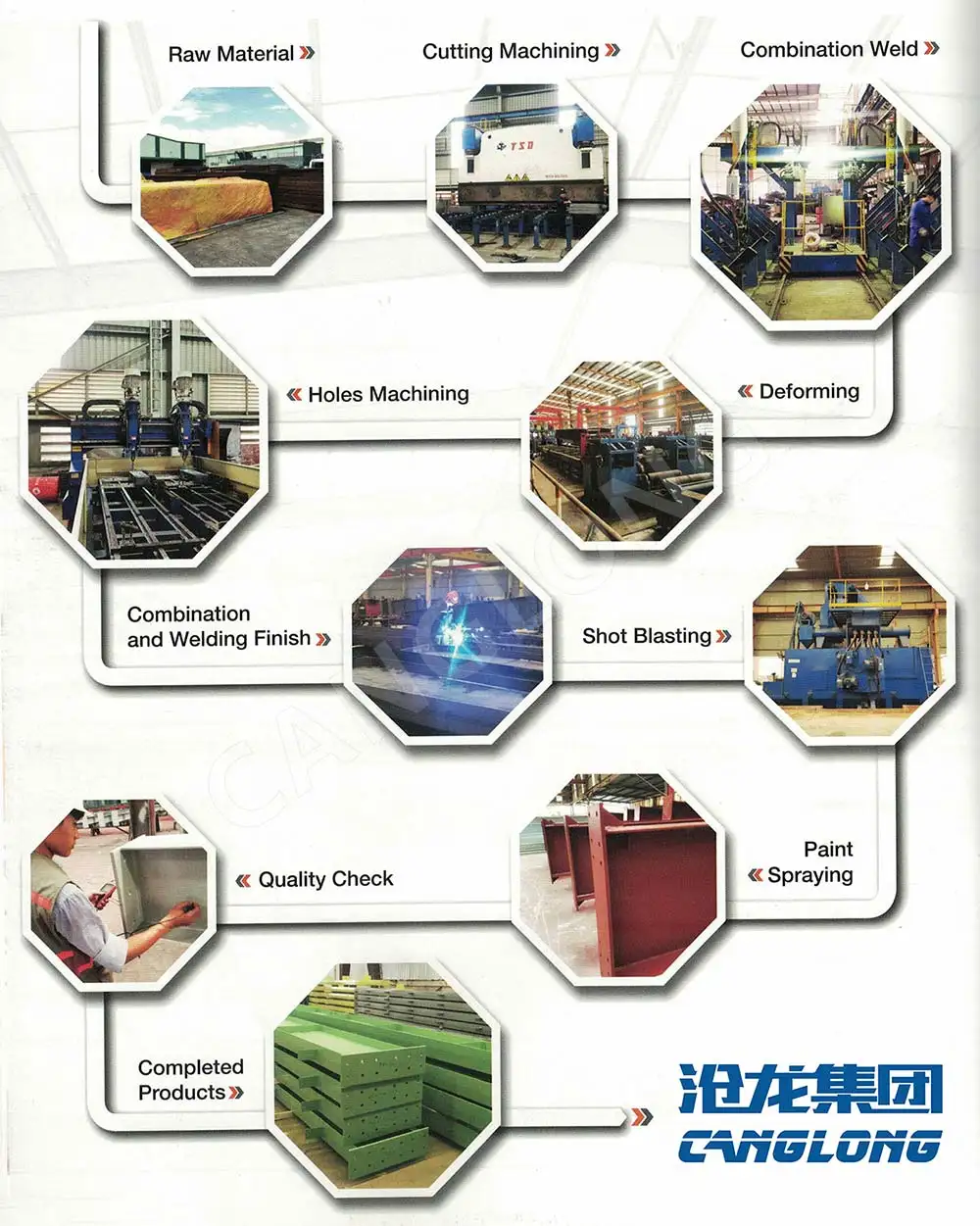
- ● FabricationH-section columns and rafters fabricated and drilled to drawing; sandwich panels cut to length for the roof and wall runs.
- ● Shipment to ChonburiSteel and envelope shipped together, landed close to Laem Chabang port to keep the inland leg short.
- ● Frame erectionColumns set and bolted, rafters lifted into the two spans, purlins and bracing fixed, plumb and alignment checked.
- ● Envelope closedRoof panels laid to both slopes with flashings and drainage, then wall panels fixed and sealed.
- ● HandoverWorkshop complete and available to let — the point at which the client’s investment starts earning.
What a Rental Building Has to Get Right
A workshop built to let is judged on three things, none of them visible in a photograph.
How long it sits empty between tenants. Every month without a tenant is a month of lost rent. The levers a landlord actually controls are the ones built into the structure: floor area that can be split or combined, height that clears real machinery, a door layout that lets a tenant’s vehicles in, and services capacity that does not need upgrading. Get these wrong and the building is difficult to let no matter how good it looks.
What it costs to own while it is let. Maintenance belongs to the owner, not the tenant, and it is paid for out of the rent. Roof leaks, corroded purlins and failed panel seals all turn a profitable asset into a project. That is why the enclosure on this building is a coated steel sandwich panel rather than a cheaper single sheet — the money goes in at construction and comes back over the years the building is standing.
Whether the tenant stays. A tenant who moves out costs a void period, a re-let and possibly a fit-out rework. Comfort, daylight, ventilation and noise all feed into whether a tenant renews, and they are the things a sandwich panel envelope addresses without the landlord having to spend anything after handover.
The honest accounting. A single-sheet building would have cost the client less up front and would have let for less. The sandwich panel specification is not a claim about being more durable in the abstract — it is a bet that a cooler, quieter, condensation-free floor commands a higher rent and holds its tenants longer than a bare steel box does. On this project the client made that bet deliberately, which is exactly the kind of decision a repeat purchaser is equipped to make.
Watch the Build
This short animation walks through the workshop as built: the double-span frame, the two roof slopes, the panel set-out on walls and roof, and how the space divides across the 78 × 48 m floor.
Questions Buyers Ask About This Project
Should a rental workshop use one clear span or two spans?
It depends on what tenants you expect to attract. Two spans put a column line down the middle, which reduces the member sizes and the cost, at the price of a column-free floor. For general light and medium industry that trade is usually right, because most tenants care about total usable area and height far more than about a single uninterrupted span. Go to one clear span when the tenant’s process genuinely demands it — long assemblies, sports use, aircraft or large vehicle handling.
Are sandwich panels worth the extra cost over single-sheet steel in Thailand?
For a building that will be let, usually yes, and the reason is commercial rather than technical. Insulation keeps the working zone tolerable through the year, the core prevents the overnight condensation that drips onto stock and machinery, and the panel dulls the noise of heavy rain on the roof. Those three things affect the rent a tenant will pay and whether they renew. For a covered yard or an open storage shed, single-sheet is cheaper and perfectly adequate — the panel decision follows the use, not the climate alone.
What does turnkey cover on a project like this?
On this project it covered structural design and workshop drawings, fabrication of the frame and secondary steel, supply of the sandwich panel roof and wall system with flashings and fixings, shipment, and installation construction on site. It did not cover foundations and civil works, electrical and mechanical services, fire suppression, or the Thai permits and factory licence, all of which sat with the client and their local team. Ask any supplier to list what their turnkey excludes before you compare prices — the exclusions are where quotations diverge.
What do you need from us to quote an industrial workshop?
Five things: the plan dimensions you are working with, the height you need, whether the building is for your own use or for lease, the local snow or wind conditions if you have them, and whether you want supply only or a turnkey package including installation. Add the intended tenant type if you know it — light assembly, storage, food, machinery — because that decides the eave height, the door sizes and whether the envelope should be insulated panel or single sheet.
Planning a Workshop in Thailand?
If you are building to let, or building for your own production, talk to the person who handled this project from the first drawing to handover.
Talk to Mia About Your Project
MW
Mia Wang
Export Consultant · Thailand & Southeast Asia · Canglong Group
Export Consultant · Thailand & Southeast Asia · Canglong Group
Send her the plan dimensions, the height you need, and whether the building is for lease or for your own use. Tell her what kind of tenant or process the floor has to suit and she will come back with a frame and envelope specification rather than a generic price list.
Related pages
- Double-span workshop buildings — the structural arrangement used here, explained as a building type.
- Prefabricated workshop buildings — spans, heights and what a steel workshop package includes.
- Enclosure materials for tropical climate zones — the reasoning behind sandwich panel in a humid climate.
- Other workshop projects in Asia — steel workshops delivered across the region.
Project Info
Country
Thailand

Project Name
Industrial Workshop
Project Date
2024-4-9
Product Address
Pengshiluo Province, Thailand
Area
3744㎡
Customer Reviews
10.612 Rating
Quality
4.9
Price
4
Design
88
Service
91
Delivery
83
Package
75
Project Details
Contact us Leave a Message
Your email address will not be published. Required fields are marked *
Bringing the steel building to you
Figure out what you want, choose the type of building you need, understand the cost, contact Canglong then go get it!