

 September 30, 2026
 September 7, 2026
Chile Workshop Building
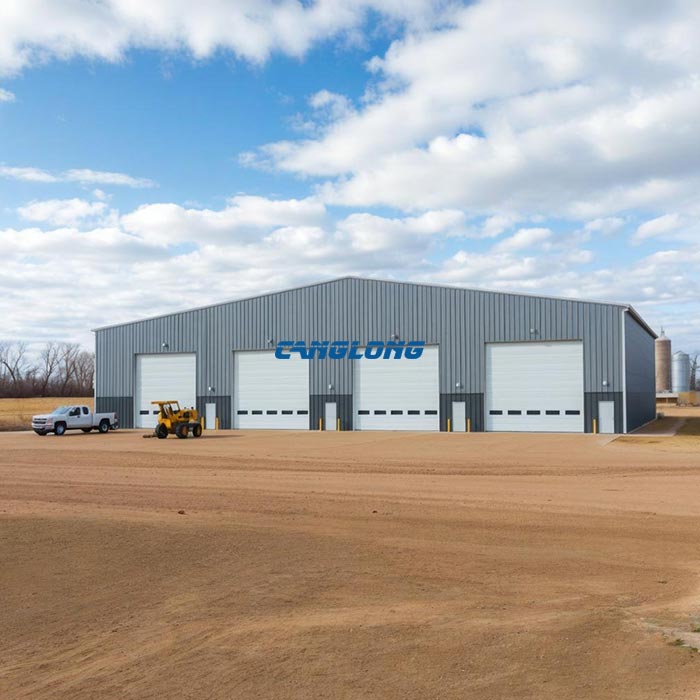
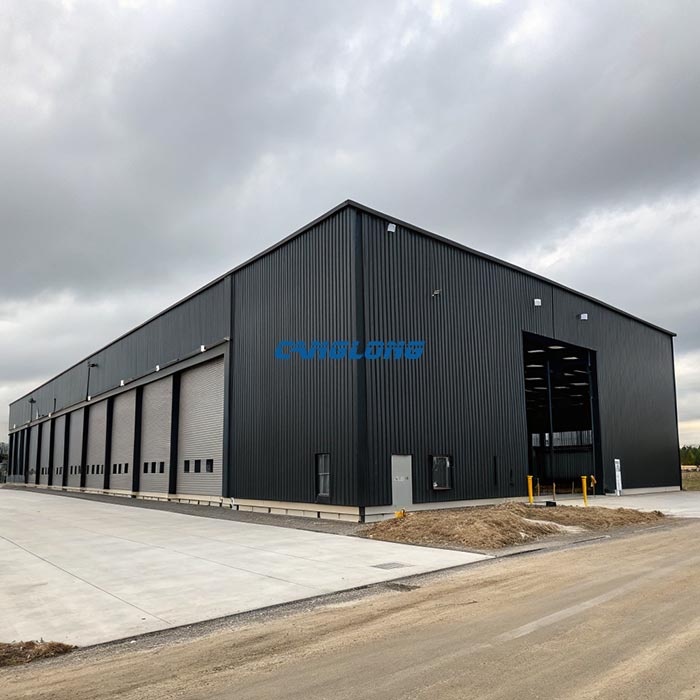
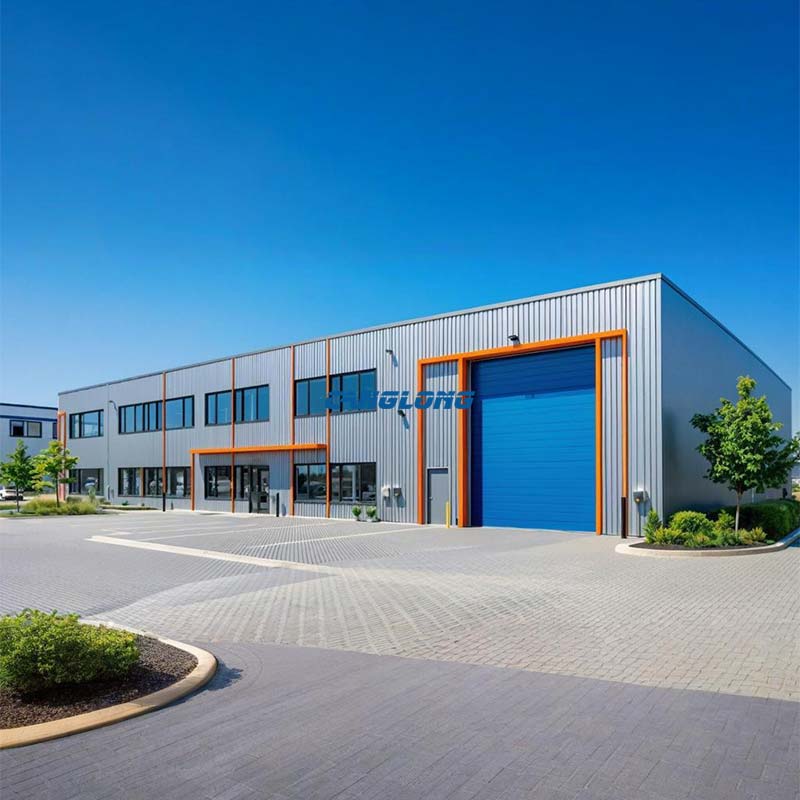
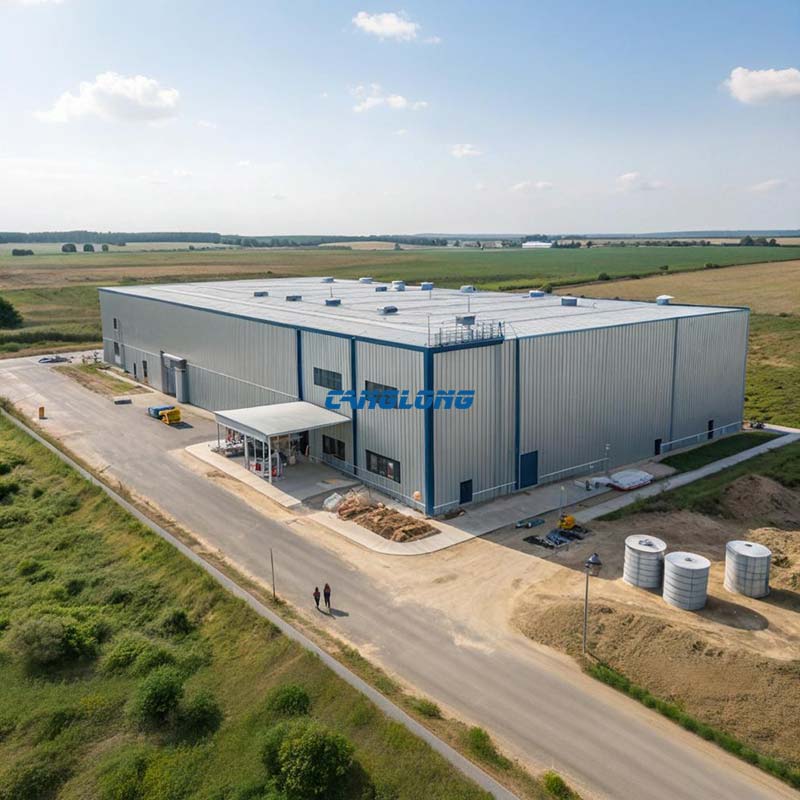
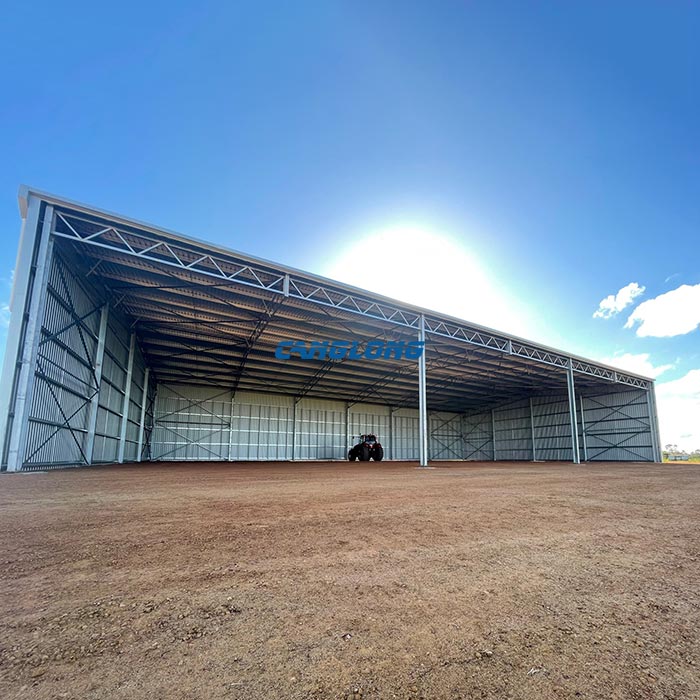
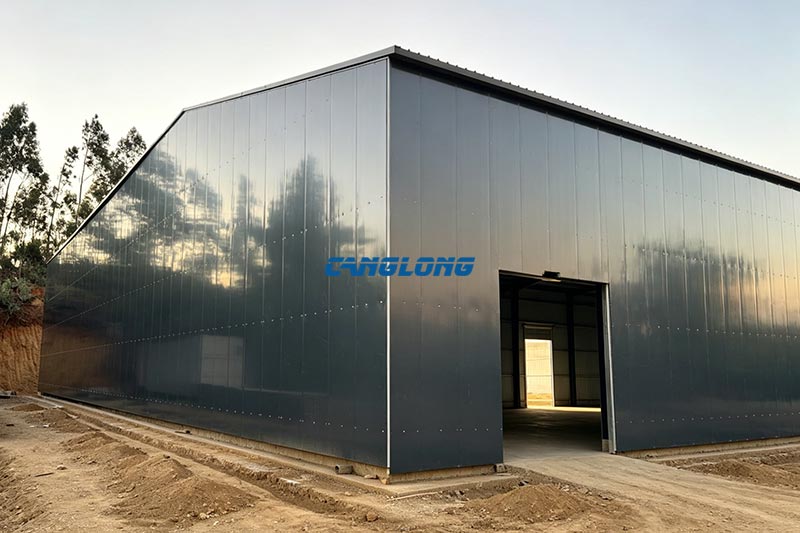
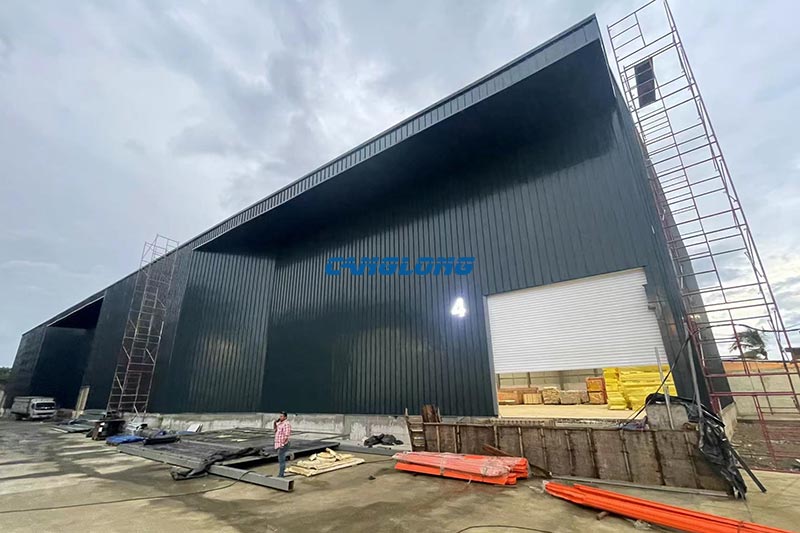
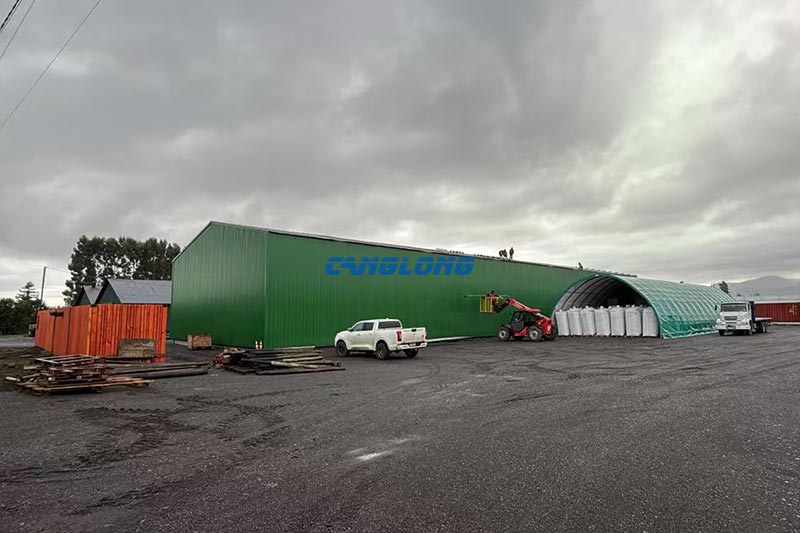
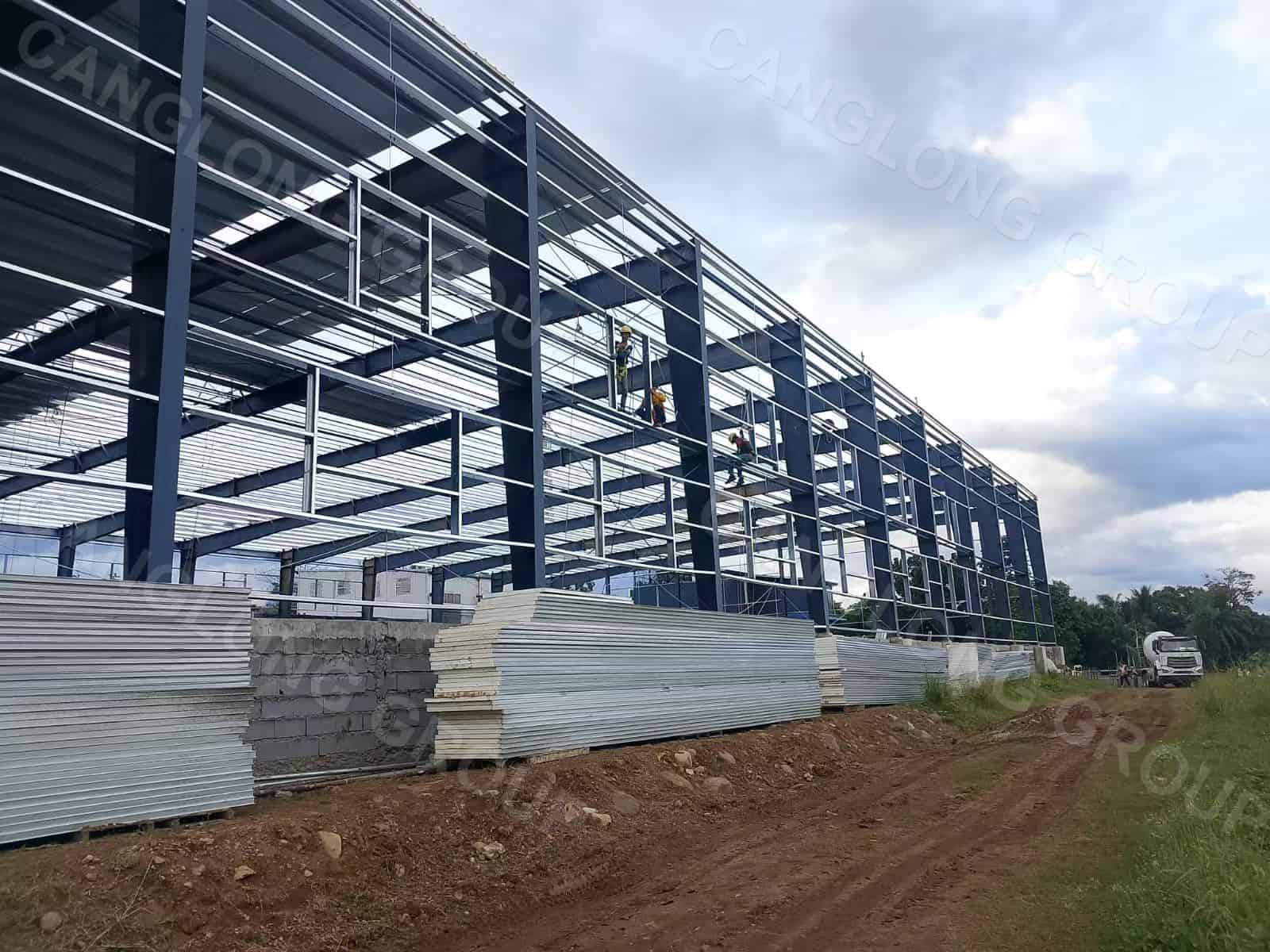
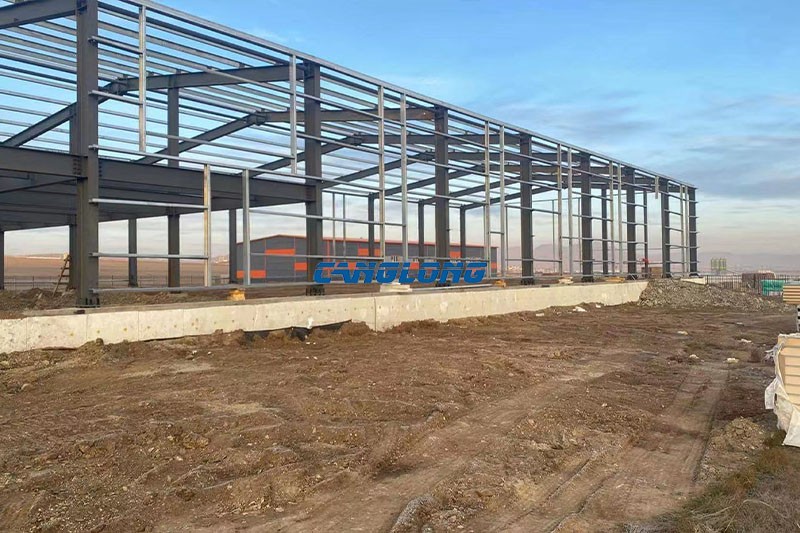
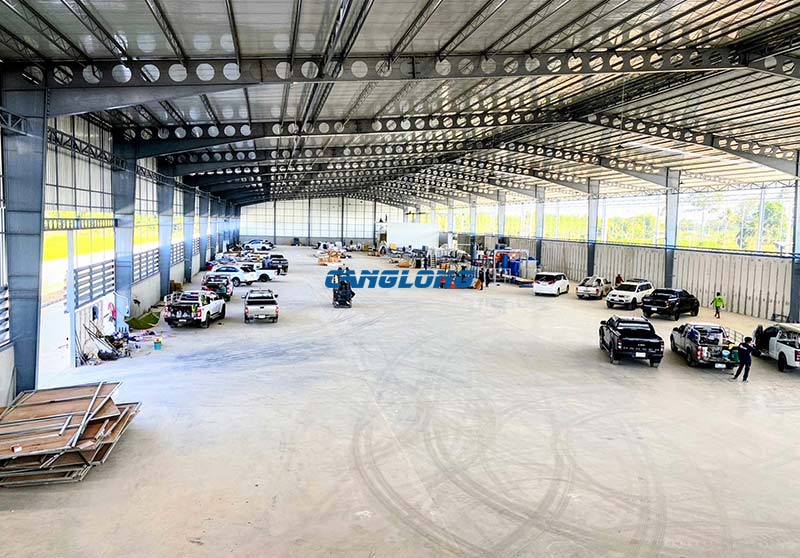
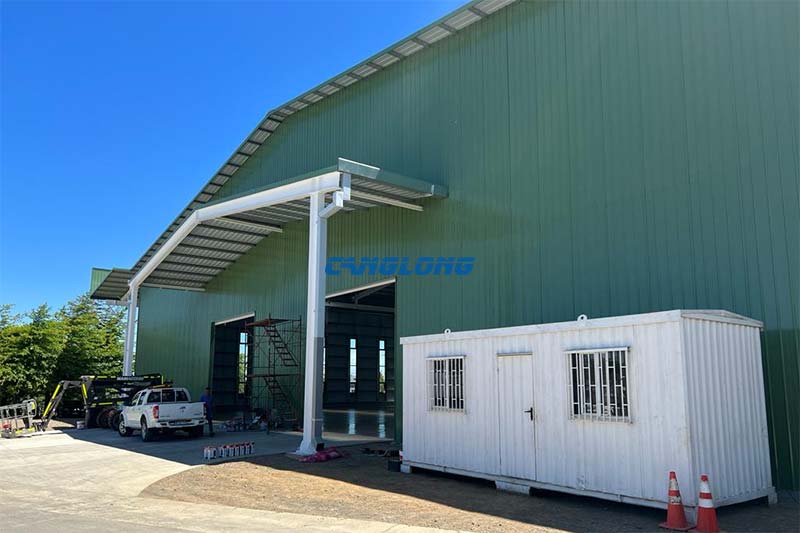
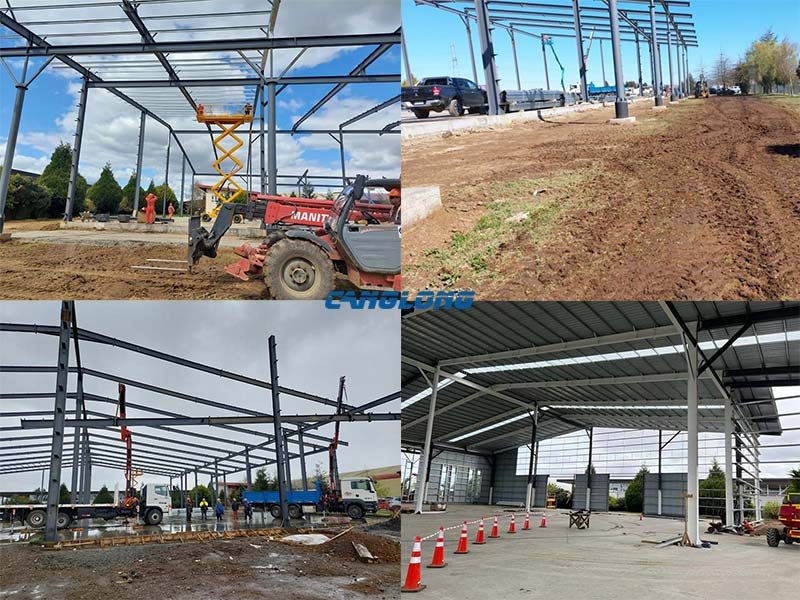
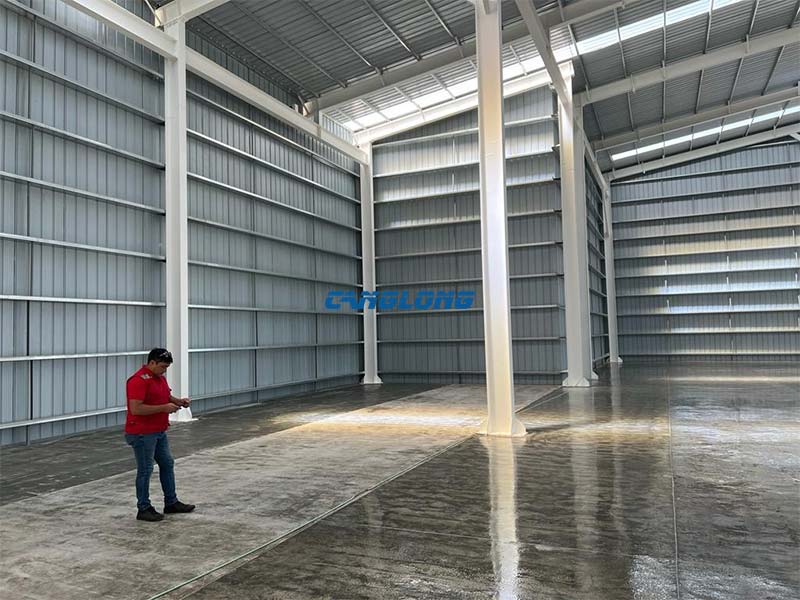
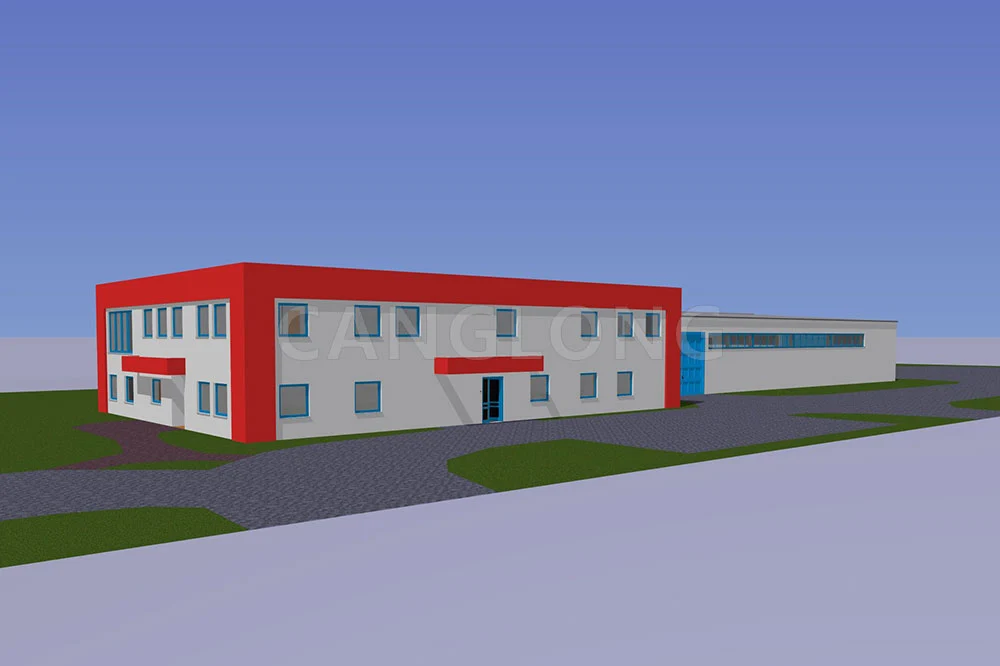
Canglong delivered this workshop building in Chile as a complete package — design, fabrication, shipment and construction support. It measures 52.4 × 71 metres, 3,720 m² of floor area, with an eave height of 8.73 metres and one bay rising to 13.08 metres.
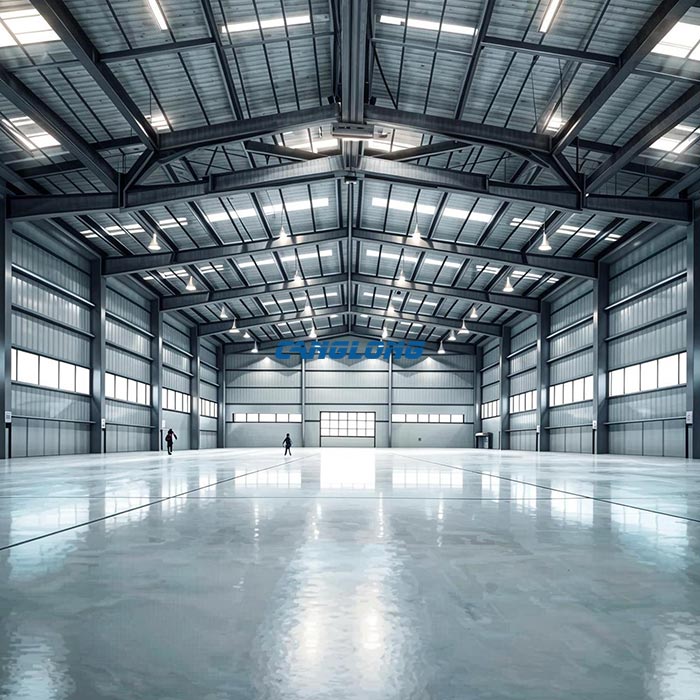
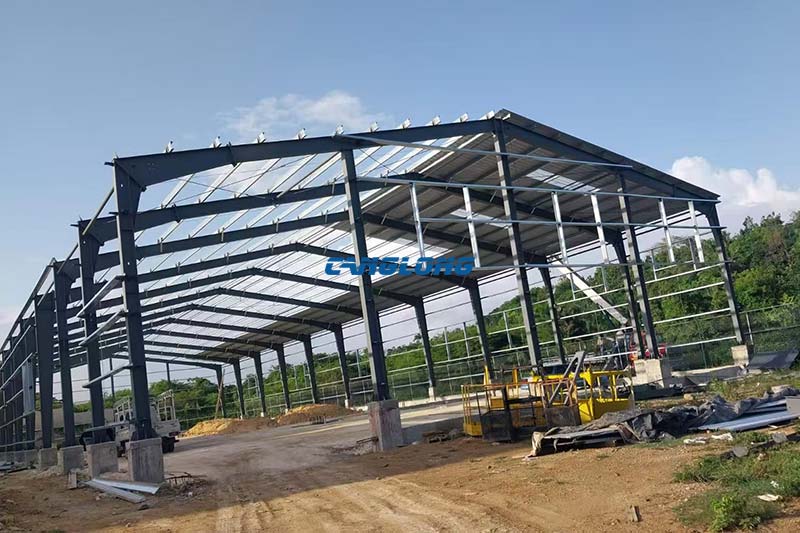
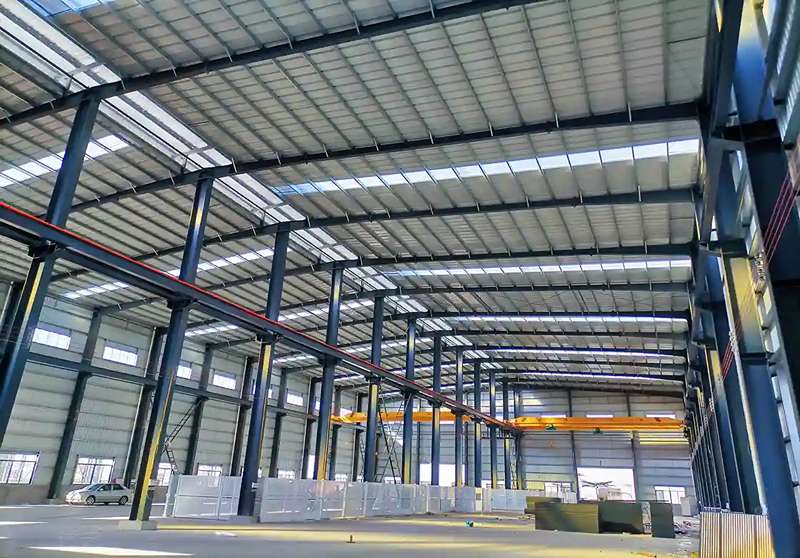
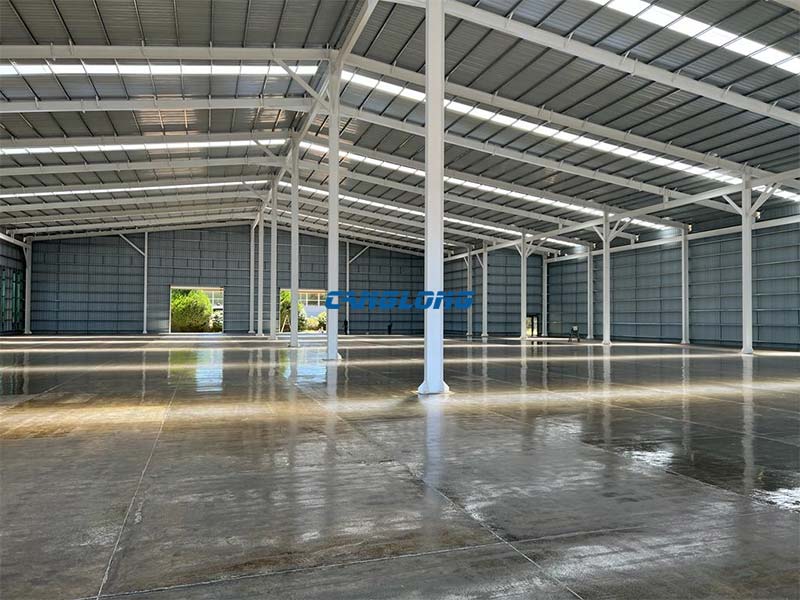
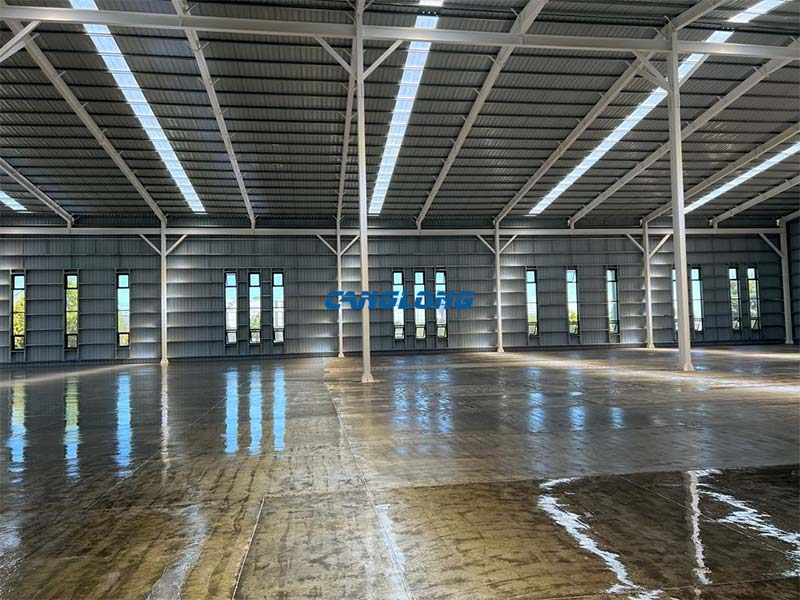
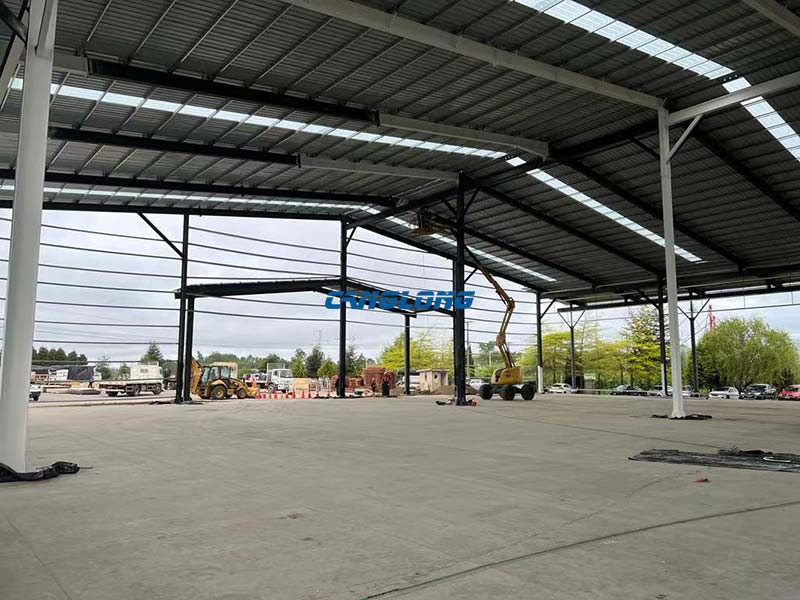
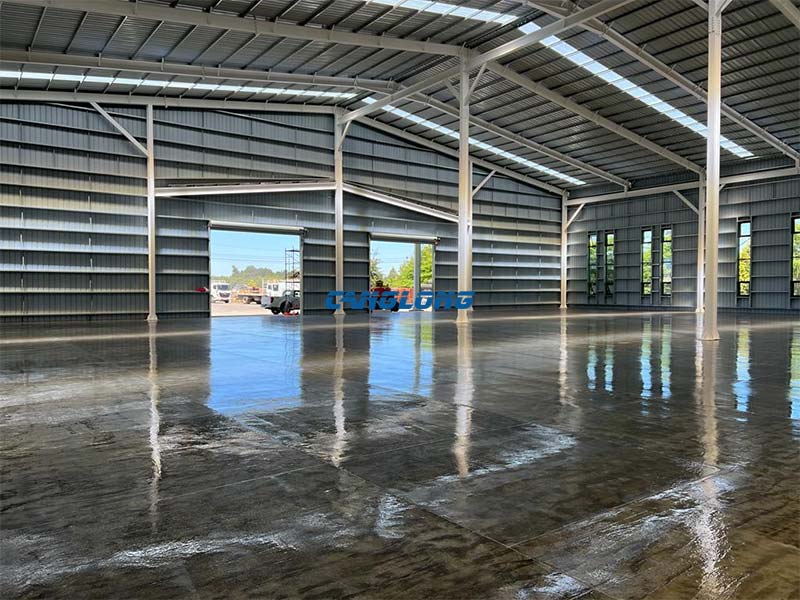
The frame is multi-span: interior column lines divide the width rather than one clear roof spanning the whole 52.4 metres. The roof is double-slope, the main beams and columns are painted white H-section steel, and the roof and wall sheeting are green profiled steel sheets.
Those three things — the number of column lines, the jump in height in one part of the building, and the colour scheme — are the decisions worth explaining, so that is what the rest of this page covers.
Project data
| Item | Detail |
|---|---|
| Location | Chile |
| Building area | 3,720 m² |
| Dimensions | 52.4 m × 71 m |
| Eave height | 8.73 m, with a section at 13.08 m |
| Span arrangement | Multi-span, interior column lines |
| Roof form | Double slope |
| Main frame | Welded H-section steel, painted white |
| Roof and walls | Green profiled steel sheet |
| Supply scope | Design, fabrication, connection hardware, drawings, construction support |
Why 52.4 metres is not one clear span
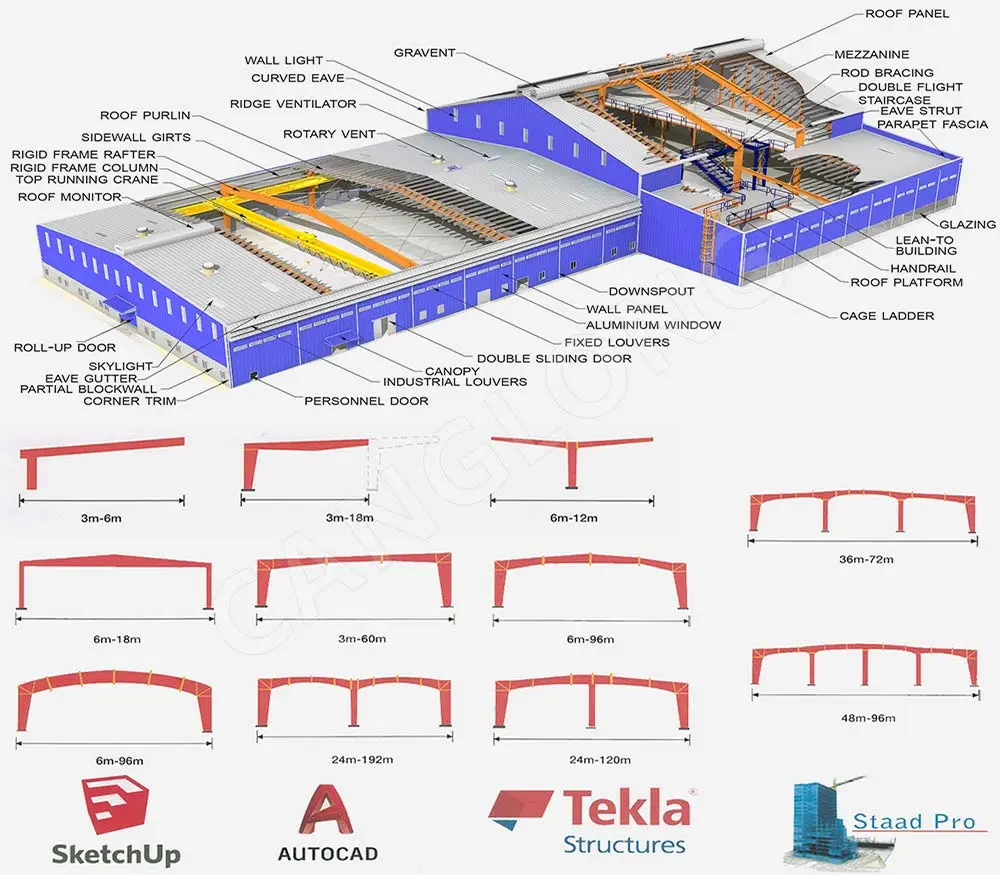
Span count is a layout decision, and at this width it is the first one that has to be settled. Up to roughly 36 metres, a single clear span is usually the cheapest answer — the rafters stay economical and the floor stays completely open. Past about 40 metres, rafter depth starts growing faster than the floor area it covers, and a clear frame means trusses and heavier foundations.
At 52.4 metres the frame has to be divided. Split the width into two bays and each rafter drops back to around 26 metres, which is the range where welded H-section frames work most efficiently — that is the logic behind our double span workshop layout, and for many buildings of this width it is also the cheapest one.
This building went further than two bays, and the reason is visible in the height: an 8.73 metre eave over most of the footprint with one part reaching 13.08 metres. Once different zones inside one envelope need different heights, one shared roof line stops working, and a multi-span workshop arrangement with a column per bay line is the cleaner structure.
The trade-off is honest: every interior column line costs a foundation strip, some floor area and some routing around it in daily use. What it buys is roof steel you can actually lift and erect, and the freedom to give one hall a different height from the next.
Engineering notes
The bay that goes to 13.08 metres
A section that much taller than the rest of the building is normally there for a reason — a press or a tall machine, high-bay racking, a crane rail that needs hook height above the tallest load, or a process that vents heat upward. It matters structurally because height drives more than volume: wind load goes up with height, the column in that bay carries a bigger moment, and 13.08 metres sits above the 5–12 metre eave range we build to as standard, so the section sizes in that bay are calculated rather than taken off a table.
It also matters at the joint. Where a tall bay meets a low bay, the step in the roof needs its own drainage and its own flashing; that junction is where leaks start on mixed-height buildings if it is detailed as an afterthought.
Seismic design in Chile
Chile is one of the most seismically active countries we ship to, and the frame for a building this size is designed against the site’s seismic data rather than a generic assumption. In practice that means the calculations are produced to the Chilean standards the client’s engineer specifies — NCh433 for buildings and NCh2369 for industrial structures — with connection ductility, bracing layout and column base design all checked against them.
One thing worth planning for early: structural calculations for a permit in Chile normally have to be reviewed and signed by a Chilean civil engineer before the municipal works office will approve the project. We supply the full calculation package and the drawings in the format that engineer needs, but the review itself is a local step, and it is on the programme, not on the steel.
Roof drainage on a double-slope multi-span roof
Each bay roofs on its own pair of slopes, and where two slopes meet over an interior column line there is a valley gutter. That gutter collects from both roof planes, so it is sized on the combined catchment of the two bays, not on one bay’s area. Blocked valley gutters are the most common leak source on divided-span buildings, and fixing one after handover means opening a roof over a working floor.
Where a site has no one who will regularly get on the roof, we would rather rearrange the roof as mono-pitch bays draining to external eaves gutters than leave an interior gutter nobody maintains. On this project the double-slope form with interior valleys was kept, which suits a client with maintenance staff on site.
White frame, green sheeting
The white-painted H-section steel is not only an appearance choice. Light-coloured structure raises the reflectance of the interior surfaces, so daylight that comes in through roof lights and wall openings bounces further into the building and the lights stay off for more of the day. In a 3,720 m² hall that is a real operating cost, not a finish.
The green sheet on roof and walls is a coated profiled steel sheet — the coating is what carries the weather resistance, and the colour is a corporate identity choice. Two honest caveats: a white frame shows handling marks and weld touch-ups far more than the standard grey primer, so it needs more care in packing and a touch-up kit on site; and colour has a thermal side, with darker roof colours running hotter under strong sun than light ones.
Five inputs we need before designing a workshop this size
- Where a column may not go. Mark the process lines, aisles and door openings an interior column cannot touch, and the span split is set from there rather than from a rule of thumb.
- Why the tall bay is tall. Equipment height, racking height or crane hook height — each one sets a different clearance and a different column.
- Crane data per bay — capacity, span, rail height and duty cycle, if any. A runway is designed into the column section from the start; bolting one on afterwards is the expensive version of the same job.
- Site loads and ground. Wind, snow and seismic data for the location, plus a soil report. Interior column lines concentrate load along foundation strips — a saving on good ground, a constraint on poor ground.
- Local approval route. Which engineer reviews the calculations, and which code set they work to. This affects the drawing format we issue, and it is on the critical path.
Where this configuration is the wrong answer
- Under about 36 metres of width. A single span workshop is cheaper and simpler, and we will say so and quote that instead.
- No interior column at any price. Automated lines or very wide storage sometimes justify a clear-span truss even past 40 metres. We will put both steel weights in front of you before you decide.
- A process that will be re-laid out every few years. Column lines are permanent. If the layout is genuinely unsettled, spend the money on clear span rather than on moving columns later.
- Nobody to maintain an interior valley gutter. Then the roof should drain to external eaves, even if it costs a little more steel.
Other workshop and warehouse projects in the Americas
- Panama Crane Warehouse — 2,380 m², double slope, double span, galvanized frame with crane runway.
- Chile Steel Warehouse — 800 m² portal frame with EPS sandwich panels.
- Chile Cold Storage Warehouse — 950 m² insulated building with PU panels.
More on the structural side of these buildings in our industrial plant steel building guide, or browse the full project gallery.
About Canglong
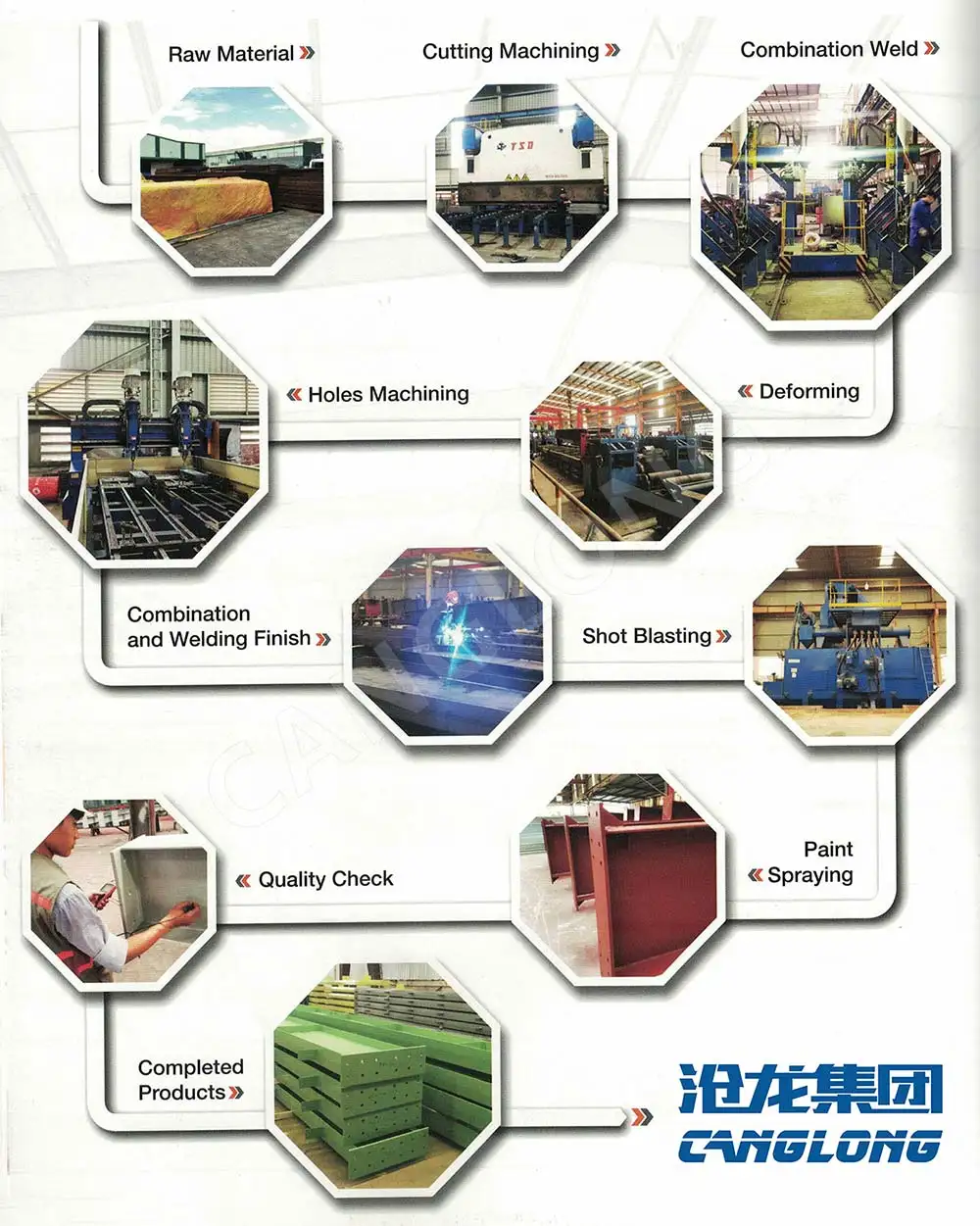
Canglong Group builds steel structures in Henan, China. We do the engineering and the fabrication in-house, which is what lets us issue calculations to the code set your country requires instead of shipping a standard kit and hoping it passes.
- Design to your code. Calculations and drawings are referenced to GB, ASTM, EN 1090, Eurocode 3, AISC 360 or AS/NZS 4600 as the destination requires — on this project, to the Chilean standards named above.
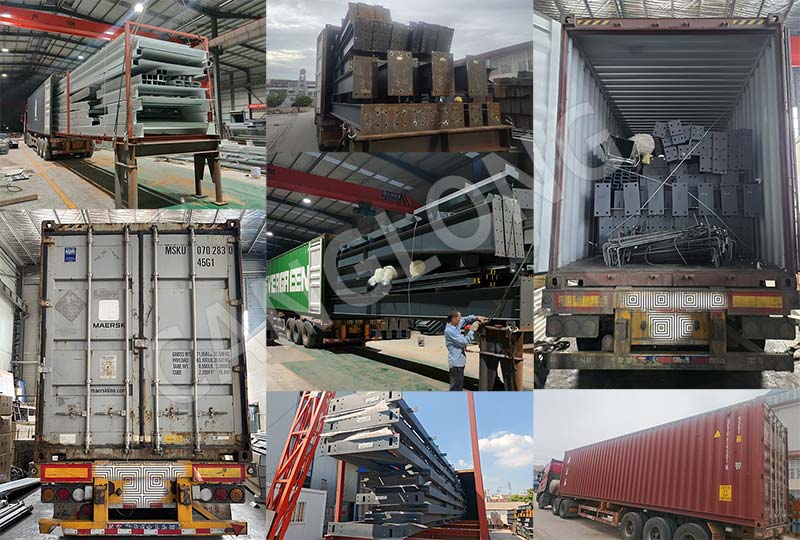
- Pre-assembled before shipping. Components are trial-fitted, numbered and packed against a container loading plan, so standard connections bolt up on site without field cutting or welding.
- Documentation as standard. Structural calculations, fabrication drawings, foundation drawings and installation guidance ship with the steel. Remote support during erection is included; for complex sites we can send an engineer.
- Certified production. ISO 9001 quality management and CE EN 1090 execution class for steel components.
Chile is also a straightforward place to ship to: the free trade agreement between China and Chile removes import duty on most steel products, and fabrication plus ocean freight to a Chilean port typically runs a few weeks either side of two months. See the production workshop, our certificates, or more about Canglong Group.
FAQ
How many spans does a 52 metre workshop need?
At 52 metres, one clear span is rarely economical. Two bays of roughly 26 metres is the usual starting point; more bays make sense when different zones need different eave heights, when the building will be extended in phases, or when the process already divides the floor into three or more halls.
Can one bay be taller than the rest?
Yes, and it is common. Different eave heights per bay are built routinely — a machining hall at 9 metres beside an assembly bay at 6 metres, for example. The step between the two roof levels needs its own drainage and flashing detail, which is where mixed-height buildings leak if it is not designed in.
Who approves the structural calculations in Chile?
Municipal building permits in Chile normally require the calculations to be reviewed and signed by a Chilean civil engineer. We supply the calculation package and drawings in the format that engineer works to, so the review is a local step that runs in parallel with fabrication rather than after it.
Planning a workshop of a similar size? Send the five inputs above and we will come back with a span arrangement and a quotation — contact the Canglong engineering team.
Project Info
Country
Chile

Project Name
Workshop Building
Project Date
2024-1-2
Product Address
Santiago Capital Region
Area
3720.4㎡
Customer Reviews
10.612 Rating
Quality
5.0
Price
4
Design
88
Service
91
Delivery
83
Package
75
Project Details
No
Contact us Leave a Message
Your email address will not be published. Required fields are marked *
Bringing the steel building to you
Figure out what you want, choose the type of building you need, understand the cost, contact Canglong then go get it!