


 September 30, 2026
 September 7, 2026
Chile Refrigerated Warehouse
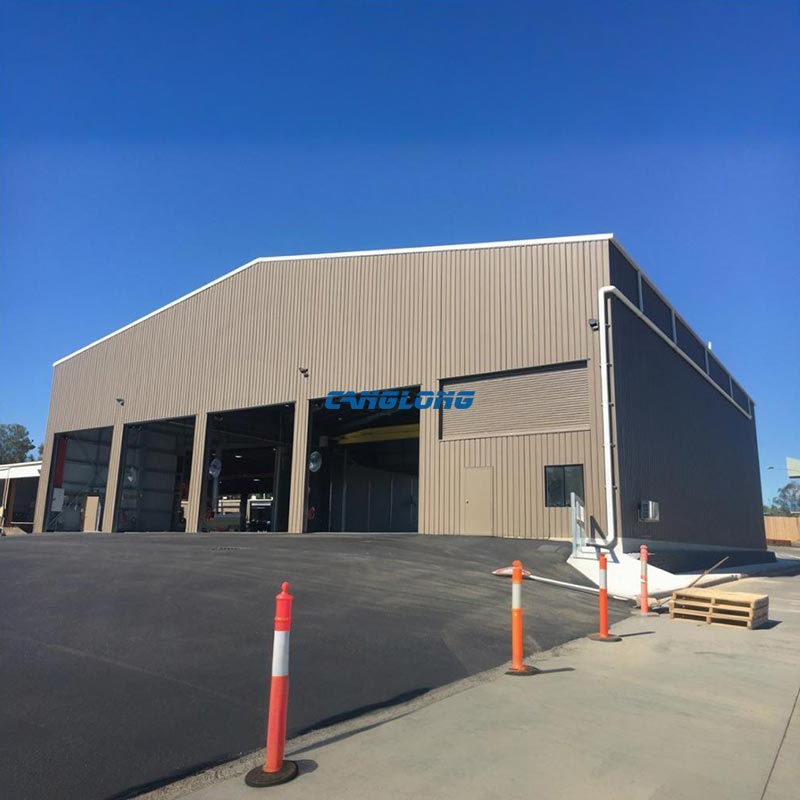
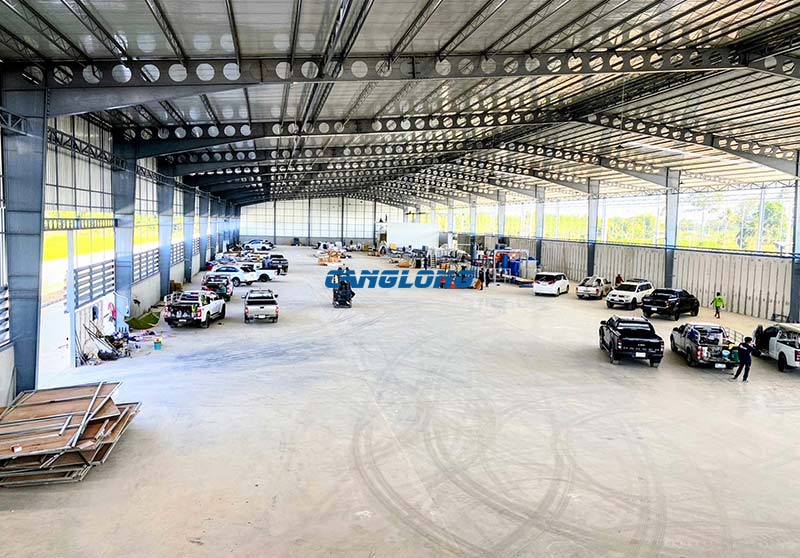
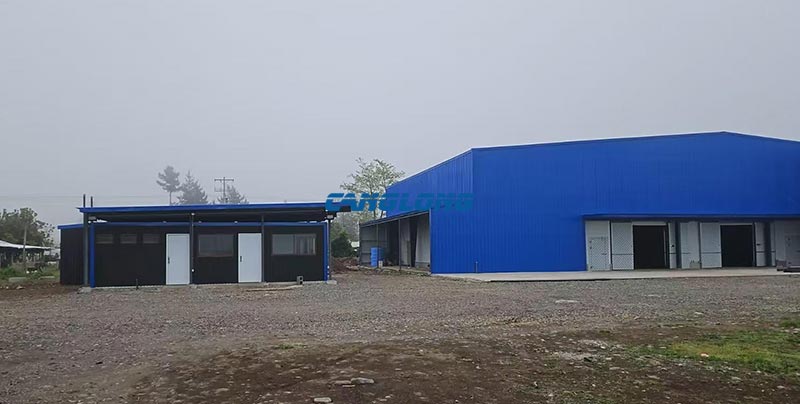
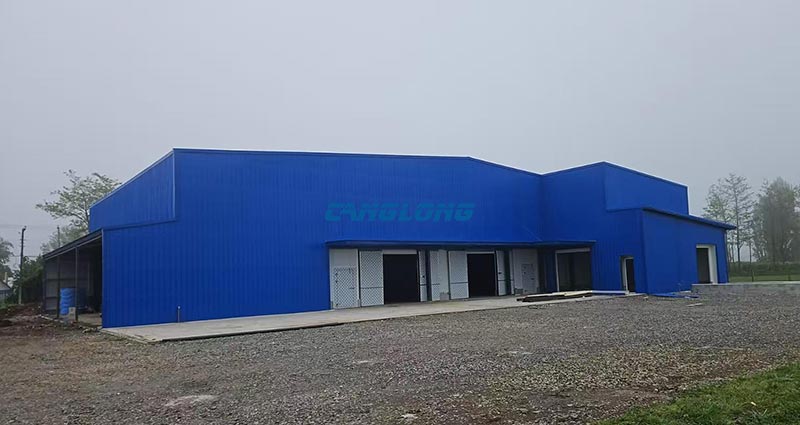
Longaví sits in the Linares Province of Chile’s Maule Region — orchard and vineyard country, some three hundred and fifty kilometres south of Santiago. The project address reads Fundo El Castaño, s/n: a fundo is a farm estate, and s/n means sin número — no street number, because the nearest neighbour is a field. A cold store built here works to the harvest calendar, not to a city distribution schedule, and the building was designed around that. It is a 38 × 24 m steel frame standing 7 m at the eaves, completed in late 2025, and its envelope works in two layers — which is the part of this project worth explaining.
The project at a glance
| Country | Chile |
| Project name | Refrigerated Warehouse |
| Project date | 14 October 2025 |
| Location | Fundo El Castaño, Longaví, Maule Region |
| Footprint | 38 × 24 m, eaves at 7 m |
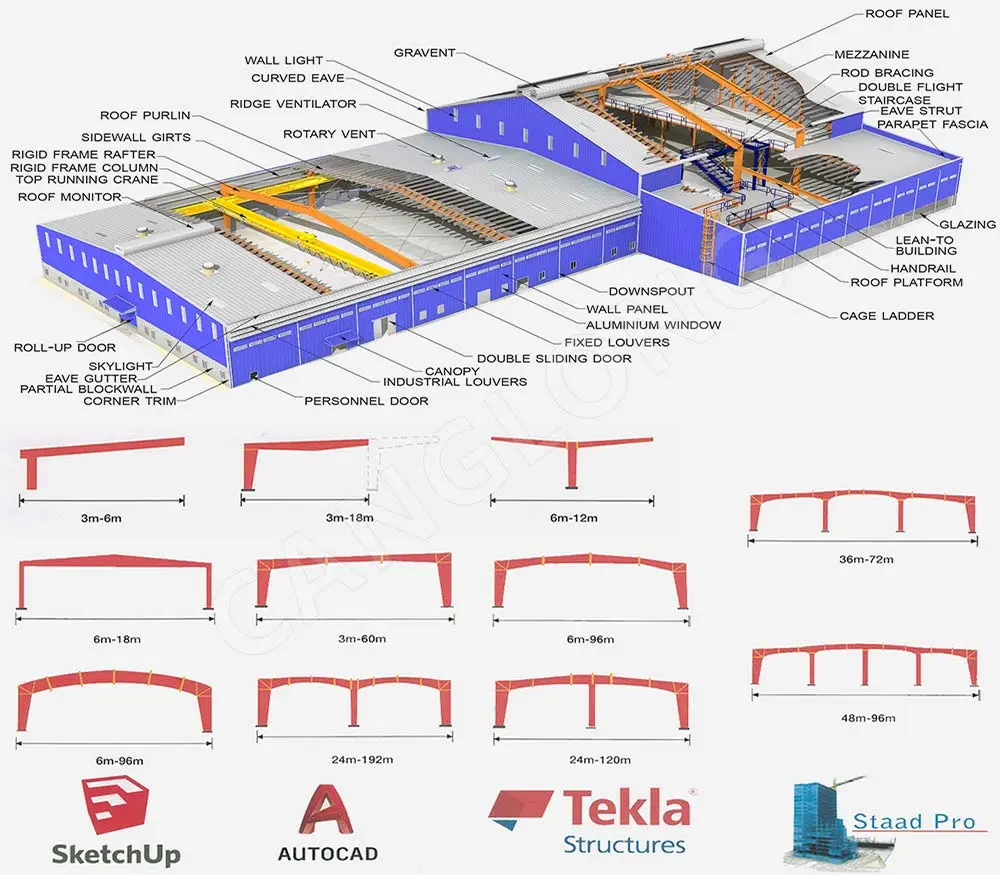
| Frame | H-section portal frames, galvanized C/Z purlins |
| Outer envelope | Corrugated steel sheet, roof and walls |
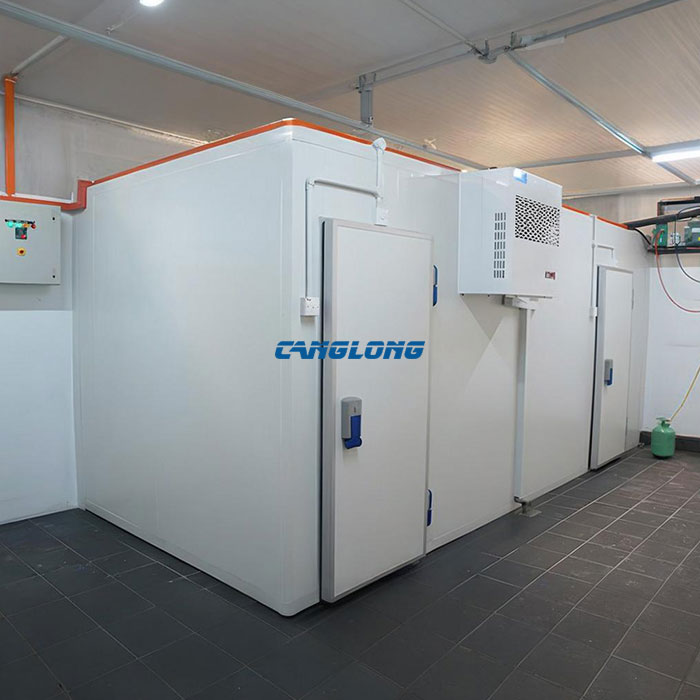
| Cold rooms | PU sandwich panel rooms built inside the shell |
Two envelopes, one building
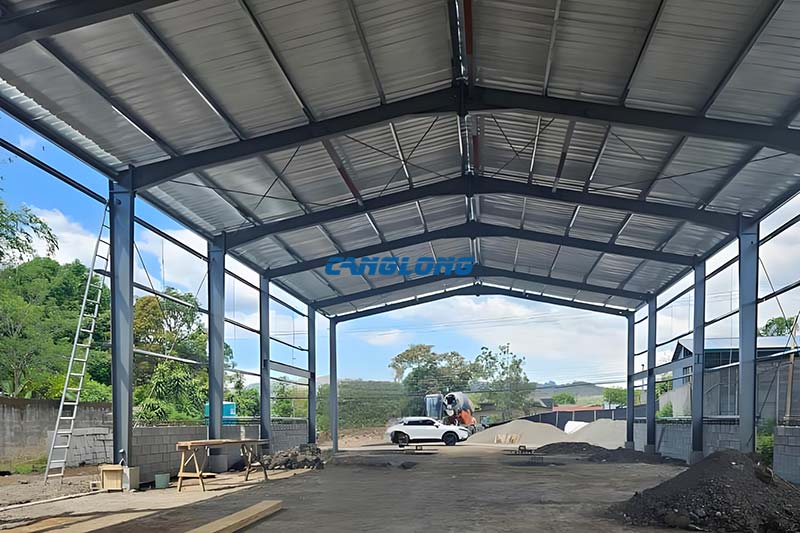
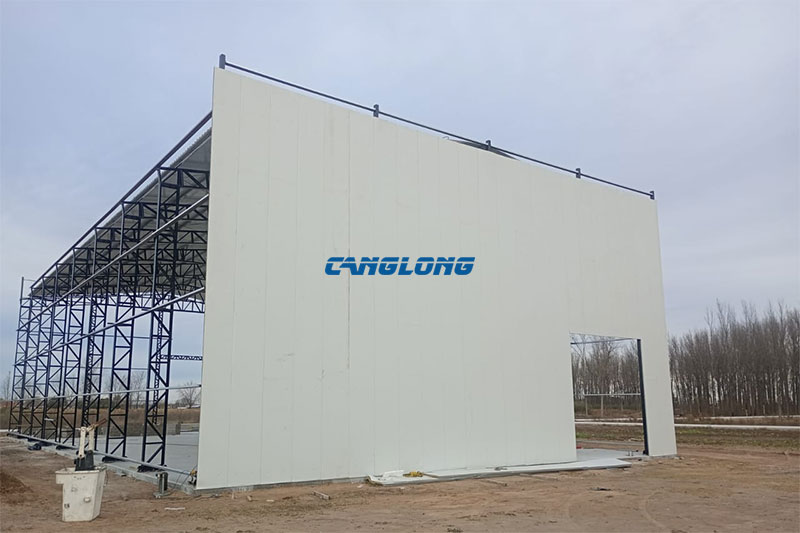
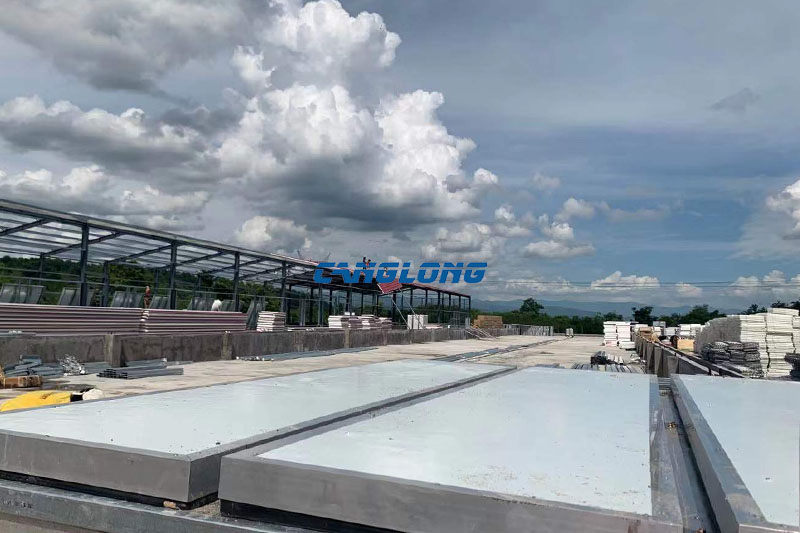
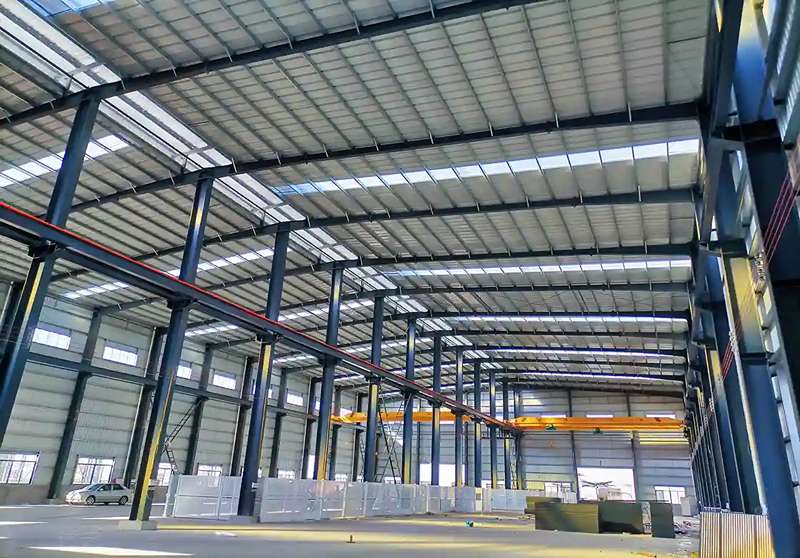
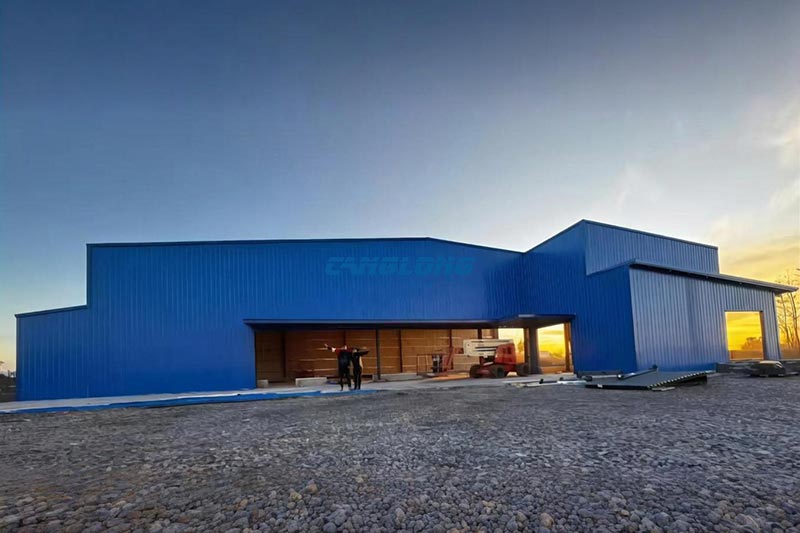
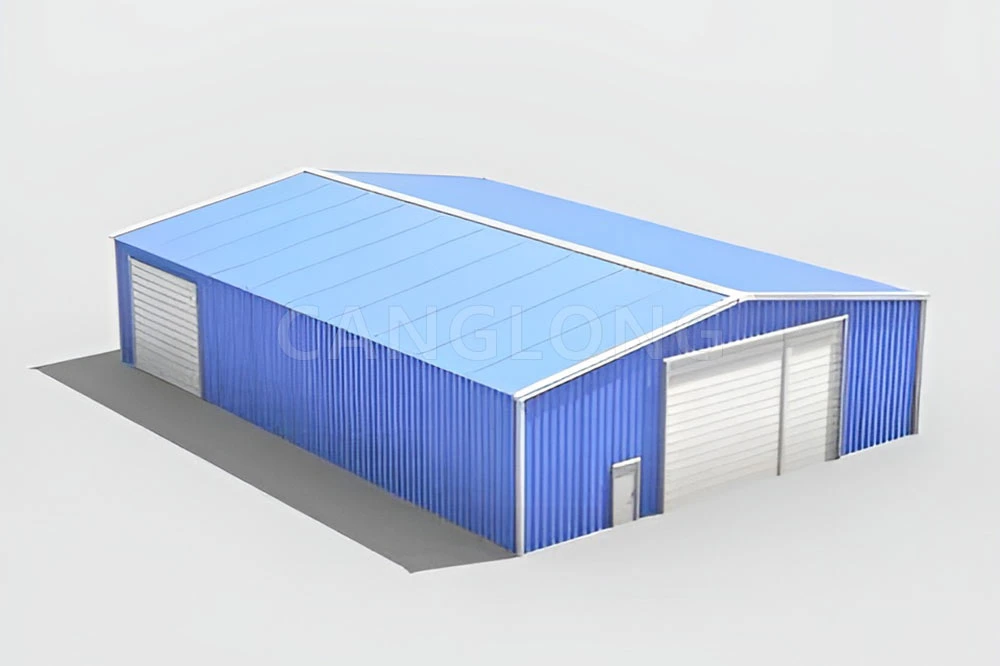
The obvious way to build a cold store is to insulate everything: one envelope, sandwich panel from slab to ridge, all 900-odd square metres of it. This building does the opposite, deliberately. The outer shell is single-skin corrugated steel — the blue cladding in the photographs — and its job is weather, sun and security, nothing thermal. The actual cold store is a set of PU sandwich panel rooms built inside the shell, and only those rooms carry insulation.
The saving is easy to count: insulation is bought for the refrigerated volume instead of for the whole footprint. The performance gain is subtler and, for a cold store, more valuable. In a conventionally insulated warehouse, every frame column and every rafter end pierces the thermal line, and each penetration is a cold bridge working against the refrigeration plant all summer. Here the thermal boundary is the inner box — a continuous panel surface with no structure crossing it. The steel stands in the ambient zone and never touches the cold side.
If you are comparing configurations for your own project, the building type is covered properly on our refrigerated warehouse page, including the temperature-zone table that sizes panel thickness to storage temperature. This project is the delivered version of one of those decisions.
The gap between the boxes and the shell
Two envelopes create a space between them, and that space is where this arrangement either works or fails. Warm Maule air sitting against the outside face of a cold panel will condense there, and moisture that reaches the panel core is performance lost for good. So the details that decide this building’s success are not visible in any photograph: the vapour barrier on the warm face of the PU rooms, and the way the cavity between box and shell is allowed to breathe and dry. It is the kind of thing decided on paper and only proven a year later, by the absence of stains on a ceiling.
The honest paragraph: this is not the right answer for everyone
A box-in-a-shell layout pays off when the refrigerated volume is a fraction of the building — chill and freezer rooms inside a working shed, with ambient space for staging, packing and traffic around them. If you genuinely need the whole floor at one temperature, a fully insulated envelope is simpler to build, simpler to seal and simpler to insure, and you should not buy this arrangement just because it is clever. Longaví suited it because the cold rooms are compact and the ambient space around them does real work every day.
Built for a farm, sized for a harvest
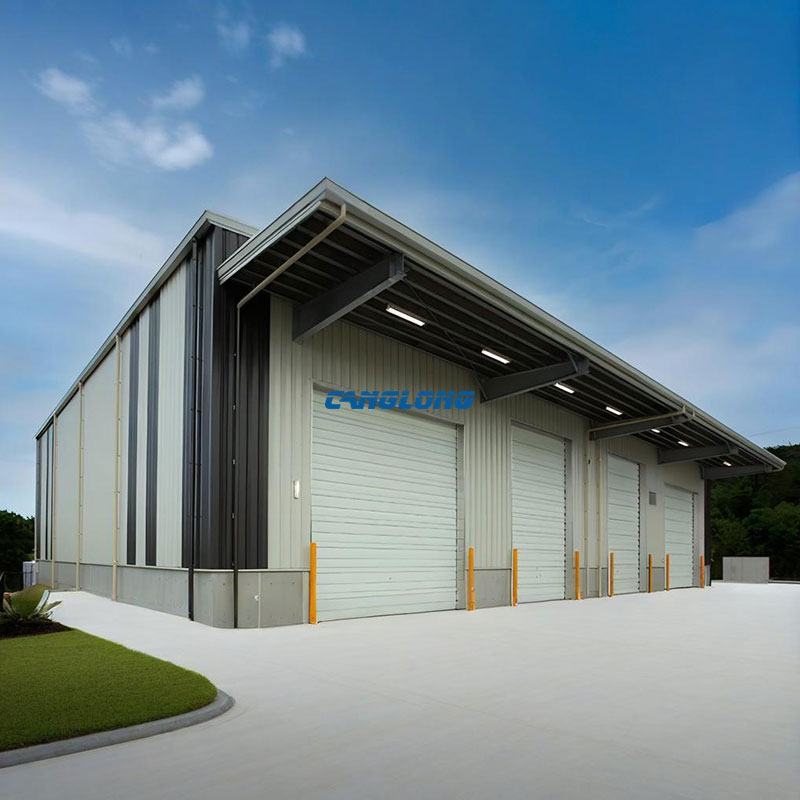
A cold store on a fundo lives a seasonal life: quiet for most of the year, then running flat out through harvest, with trucks arriving on gravel roads and forklifts shuttling between field and panel door. The building gives that pattern somewhere to happen — a tall clear volume inside the shell, roller doors on the lower wing for vehicle access, and cold rooms behind them sized to the product rather than to a standard module. One more local fact any Maule building answers to: this is earthquake country, and the 2010 Maule event is living memory here. Steel frames are the structural default in Chile for exactly this reason; confirm the seismic calculation package for your own site before ordering anywhere in the country.
Shipped in containers, built on the fundo
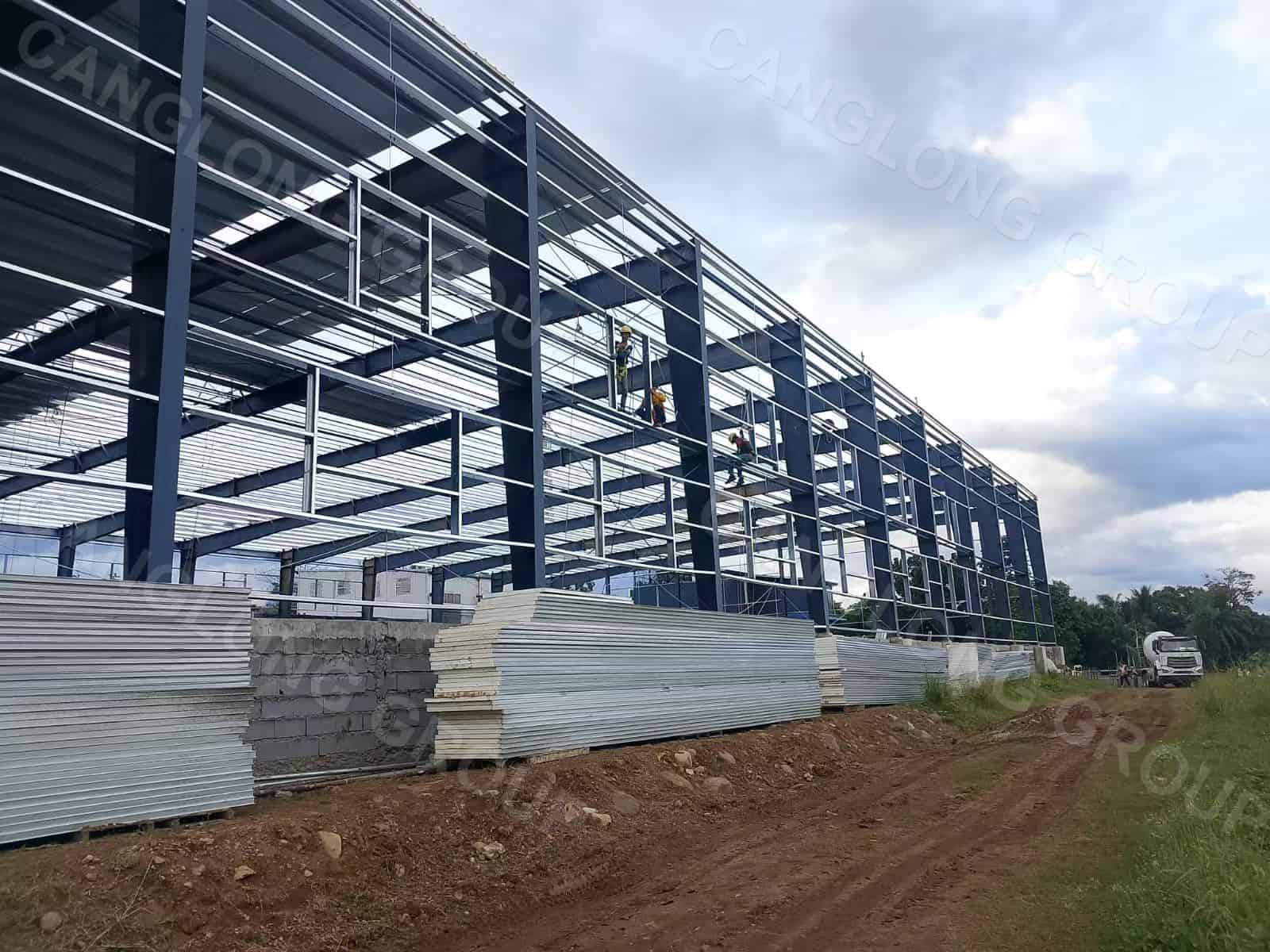
Everything for this building — frames, purlins, corrugated sheet and the PU panel packs for the cold rooms — travelled in containers to Chile and was unloaded on the farm. The frame went up first, opening the site sky; the shell closed the weather out; the cold rooms then went together inside, panel by panel, in the dry. Sequencing is the quiet advantage of the two-envelope layout: the insulated work happens indoors, out of the rain and the afternoon wind, whatever the month.
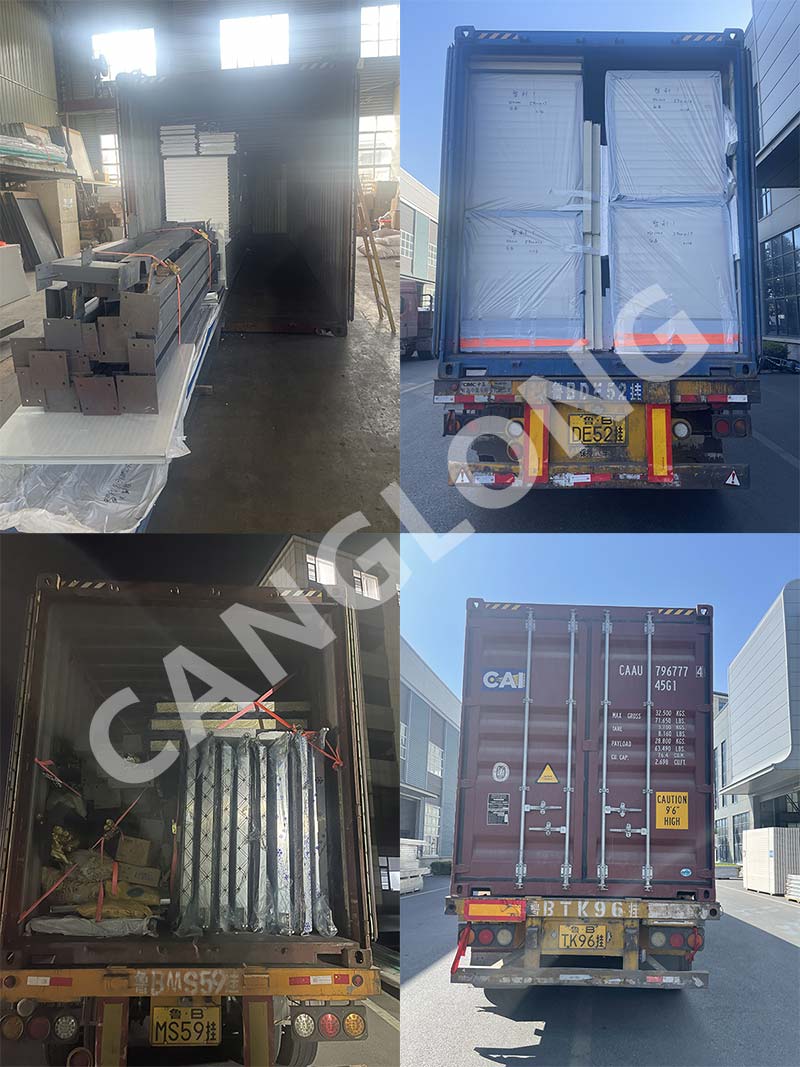
The loading photographs show the two halves of the order in one frame: PU panel packs standing braced in the container, and the steel bundle beside them. One shipment, one packing list, one party accountable for both envelopes.
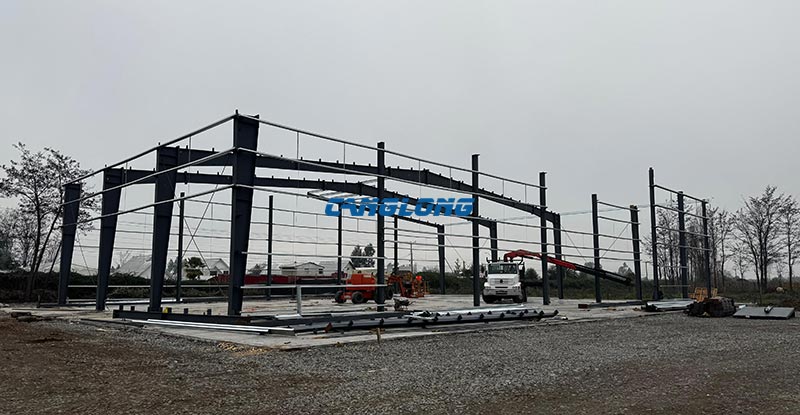
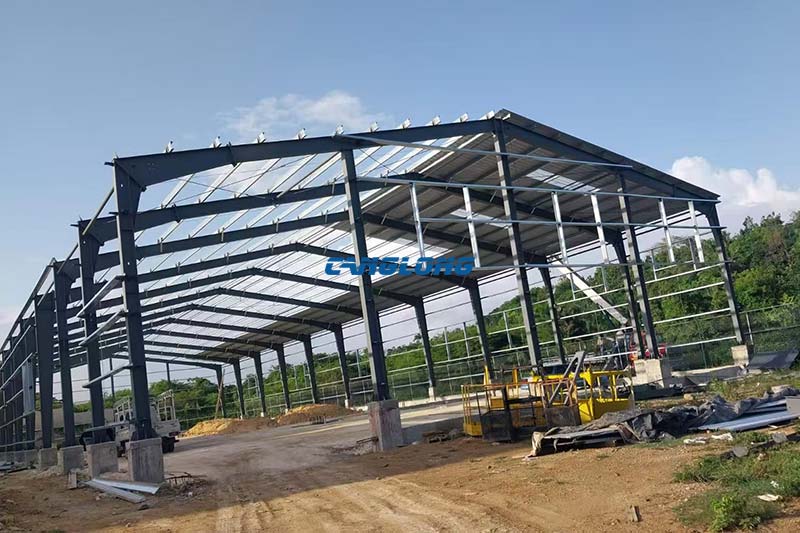
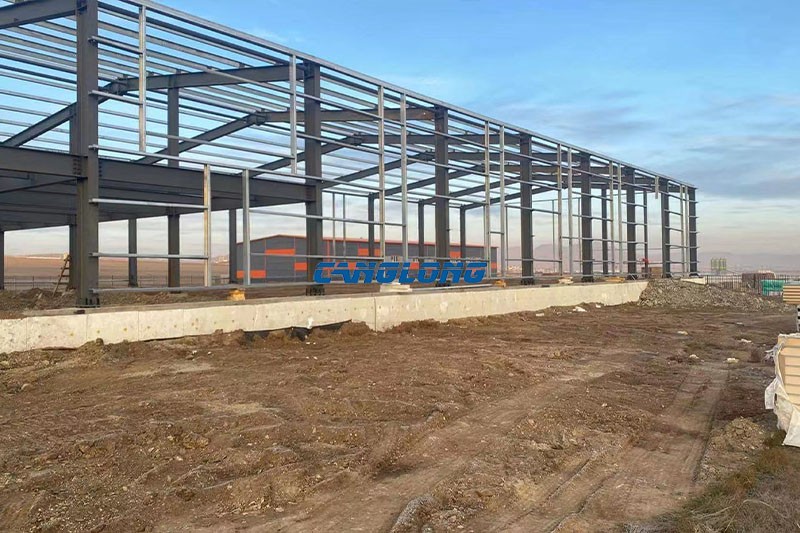
Frames first, always — the grid that every later decision hangs from.
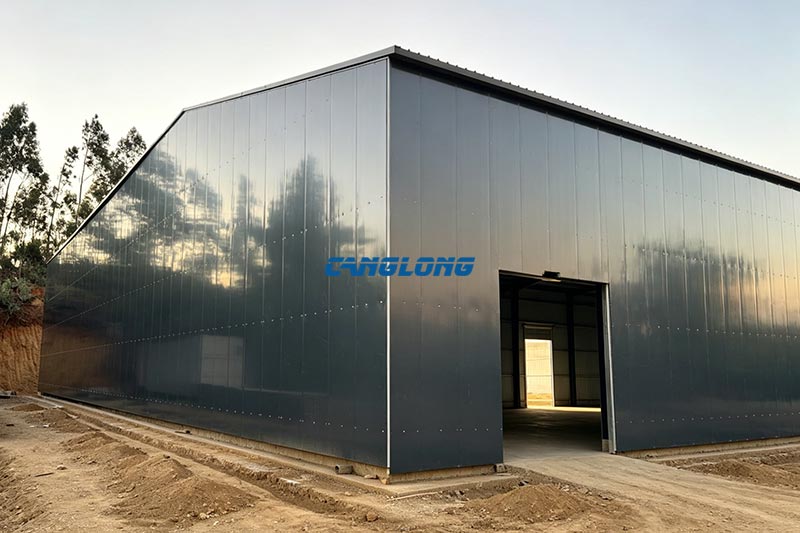
The finished shell at dusk: plain corrugated steel doing its one job — keeping the Maule sun and rain off the building that actually does the cooling, which is inside.
Questions buyers ask about a cold store like this
Why not just insulate the whole building?
Cost and cold bridges. Insulating only the PU rooms buys thermal performance for the refrigerated volume alone, and the thermal boundary ends up unbroken by structure — no frame columns crossing the insulation line, no cold bridges at every frame. When the cold rooms are a fraction of the footprint, this is the cheaper building and the better-insulated one. When the whole floor must be cold, insulate the envelope instead.
Does the uninsulated shell cause condensation problems?
Only if the details are wrong. The design answer is a continuous vapour barrier on the warm face of the cold rooms and a cavity that can dry — both decided at drawing stage. This is the detail to ask any supplier about, because it is invisible on completion day and expensive a year later.
What temperature do the cold rooms hold?
That follows the product, and panel thickness follows the temperature: roughly 100 mm for chill duty, 150–200 mm for frozen, per the temperature-zone table on our refrigerated warehouse page. Send us the storage temperature and we size the rooms from there — we do not guess it from the outside of the building.
Can the building be extended or re-zoned later?
Yes, and that is a real advantage of the layout. More or larger cold rooms can be added inside the shell without touching the weather envelope, and ambient space can be converted as the operation grows. The shell rarely needs to change; the boxes do what the business asks.
Talk to us about a cold storage building in Chile or anywhere else
Send the storage temperature, the footprint and the site location — our engineers will come back with a structural layout, a panel specification per temperature zone and a quotation, with free 3D design included in the first inquiry. Start with your dimensions, and tell us which share of the floor actually needs to be cold. The answer to that question decides the envelope, and it is worth getting right before the steel is ordered.
Project Info
Country
Chile

Project Name
Refrigerated Warehouse
Project Date
2025-10-14
Product Address
Los Lagos Region, Chile
Area
950㎡
Customer Reviews
10.612 Rating
Quality
5.0
Price
4
Design
88
Service
91
Delivery
83
Package
75
Project Details
No
Contact us Leave a Message
Your email address will not be published. Required fields are marked *
Bringing the steel building to you
Figure out what you want, choose the type of building you need, understand the cost, contact Canglong then go get it!