 2025-09-03
By
 Canglong Group
754
How has steel structure become the new standard for industrial construction?
At the oil and gas processing plant in Siberia, modular steel structure frames are being constructed at a rate of 5,000 square meters per week. At the electronic manufacturing industrial park in Ho Chi Minh City, Vietnam, prefabricated steel components are transported by barge along the Mekong River to the construction site, and the first layer of assembly is completed within 72 hours. In the NEOM new city in Saudi Arabia, the world’s largest green hydrogen plant uses corrosion-resistant special steel with a design life of up to 50 years. These scenes are happening simultaneously in the field of steel structure construction worldwide.
While traditional concrete structures still dominate half of industrial construction, steel structure industrial buildings have quietly become the new standard for global industrial construction through technological iteration, policy-driven incentives, and market-driven demand. This transformation is not only about material substitution, but also a microcosm of industrial civilization’s transition towards low-carbon, efficient, and intelligent construction. For businesses seeking a steel frame industrial building solution, understanding this shift is critical to making future-proof investment decisions.
I. From Optional to Mandatory: Three Technological Breakthroughs
The core requirements of industrial architecture always revolve around spatial flexibility, construction efficiency, cost controllability, and long-term durability. Traditional concrete structures are gradually unable to meet the agile production needs of modern industry due to their heavy weight, long construction period (average 6–12 months), and high on-site pollution (construction waste accounts for 30% of the world’s total). Three major technological breakthroughs in steel structure construction have upgraded it from an optional solution to a mandatory option.
1. Revolutionary Improvement in Material Performance
The advancement of modern metallurgical technology has increased the strength of steel by three times compared to the 20th century. The yield strength of high-strength steels such as Q460 and Q550 can reach 460–550 MPa, while the compressive strength of ordinary concrete is only 15–30 MPa. Converted to the same bearing capacity, the amount of steel used in a steel structure industrial building is only one-third to one-half of that in concrete.
More importantly, the homogeneity of steel solves the brittle defect of concrete. In the Great Hanshin Earthquake in Japan, the collapse rate of steel structures was only one-fifth of that of concrete structures. After the Türkiye earthquake in 2023, the warehouse of Bosch, a German industrial equipment manufacturer in Istanbul, used a hot-formed steel frame. The main structure only experienced local buckling, and the internal precision instruments were undamaged—demonstrating the superior steel structure earthquake resistance that saves both assets and lives.
2. Deep Integration of Industrial Construction
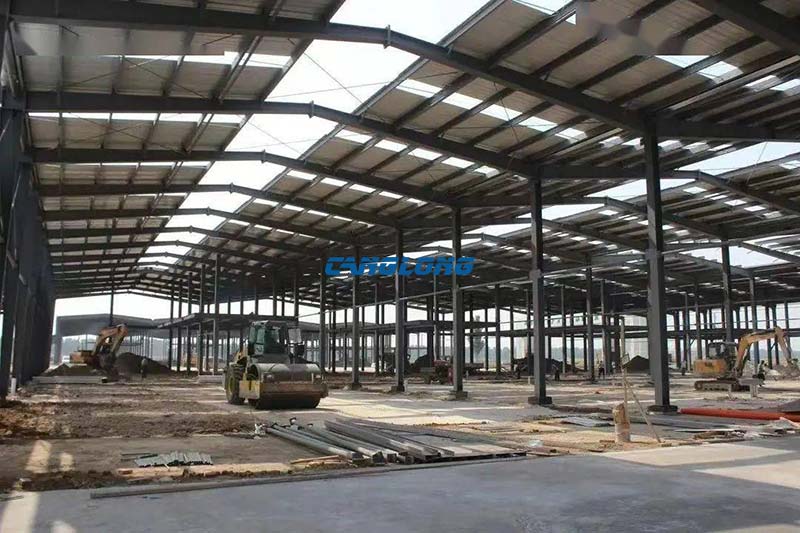
The modular steel structure design and prefabricated production of steel buildings have completely changed the construction logic of industrial facilities. Taking China Baowu Iron and Steel Group as an example, its steel structure factory modules can complete 90% of component processing—including welding, painting, and pre-embedding of mechanical and electrical pipelines—in the factory, requiring only bolt connection and positioning on site. This shortens the construction period from the traditional 6 months to 45 days.
The steel frame provided by Germany’s ThyssenKrupp for Tesla’s Berlin Gigafactory achieves full-process collaboration through BIM steel structure modeling and digital twin technology, with errors controlled within 2 millimeters and installation efficiency increased by 40%. This model of “building factories like cars” has shifted industrial steel building construction from labor-intensive to technology-intensive processes. Whether you need a portal frame warehouse or a single span warehouse, this prefabricated approach ensures consistent quality and rapid deployment.
3. Disruptive Optimization of Full Lifecycle Costs
Although the initial cost of a steel structure vs concrete structure is 5–10% higher, the steel structure lifecycle cost (LCC) advantage is significant. According to data from the American Institute of Steel Construction (AISC), the maintenance cost of steel structure buildings is 25% lower than that of concrete due to strong corrosion resistance and the elimination of frequent reinforcement repairs. During demolition, 90% of steel material can be recycled (compared to only 5% for concrete), and the residual value recovery rate is 8 times that of concrete.
Taking a 300,000-square-meter automobile steel structure factory as an example, the total cost of the steel structure scheme throughout its entire 50-year lifecycle is 18% lower than concrete. More importantly, the modifiability of steel structures meets the iterative needs of industrial buildings. BASF’s Ludwigshafen Base in Germany has completed three production line upgrades within 10 years through flexible dismantling and reinstallation of steel frames, while traditional concrete structures face renovation costs of up to 60% of new construction due to load-bearing wall limitations. Learn more about how steel structures reduce factory costs through smarter lifecycle planning.
II. Institutional Thrust: Policy, Carbon & Global Markets
Technological breakthroughs have provided the possibility for steel structure industrial buildings, while global policy carbon constraints and industrial synergy have pushed adoption towards inevitability. From the EU’s “Green New Deal” to China’s “dual carbon” goals, from the US Inflation Reduction Act to India’s “2047 Net Zero Emissions Roadmap,” countries are accelerating the popularization of steel structures through mandatory standards and economic incentives.
1. Carbon Tariffs and Green Certification
The EU CBAM (Carbon Border Adjustment Mechanism) has covered six major industries including steel and cement, requiring imported industrial products to disclose their full lifecycle carbon emissions. For manufacturing countries that rely on exports, such as Vietnam and Mexico, factories that adopt high-carbon-emission concrete structures face direct penalties on export costs. In contrast, green steel building projects with low steel structure embodied carbon and high recyclability have become the preferred choice for export-oriented industries.
In Singapore’s Green Mark certification launched by the Building and Construction Authority (BCA), steel structure industrial building projects can receive up to 20 bonus points (out of 100), directly corresponding to rental subsidies and tax exemptions. China’s GB/T 50878-2022 lists the proportion of steel structure usage as a necessary condition for three-star green industrial buildings.
2. Industrial Chain Collaboration
The popularization of prefabricated steel structure systems cannot succeed without deep collaboration across the supply chain. Upstream steel mills such as ArcelorMittal and Nippon Steel have developed functional steels including weathering steel and fire-resistant steel. Midstream manufacturing enterprises have launched intelligent production lines with component accuracy reaching the millimeter level. Downstream service providers integrate electrical systems, fire protection systems, and steel frame designs. This integrated model shortens the delivery cycle of steel structure projects by 30% and reduces cost fluctuations by 15%.
For example, the NEOM hydrogen plant—a collaboration between Saudi Aramco and South Korea’s POSCO—has extended equipment lifespan from 20 years to 30 years through customized development of special steel resistant to hydrogen sulfide corrosion, while reducing on-site workers by 50% through modular steel structure design.
3. Advantages of Emerging Markets
Emerging markets steel construction in Southeast Asia, the Middle East, and Africa faces the dual challenges of industrialization and carbon neutrality. In these regions, industrial land prices are rising, labor is young but lacks skills, and the high dependence on manual labor (25–30% of total cost) and long construction periods of traditional concrete have become bottlenecks.
Foxconn’s Philippine factory building in North Ninh Province, Vietnam, adopted a light steel structure factory and robot assembly solution, reducing the construction period from 12 months to 7 months and cutting labor by 60%. A Vietnam cleanroom steel building for electronics manufacturing demonstrates how precision prefabrication meets clean environment requirements. In Egypt’s new administrative capital, a textile industrial park introduced prefabricated steel components and completed 500,000 square meters of industrial steel building space within 3 months. The latecomer advantage of emerging markets makes them the largest incremental market for steel structure globalization.
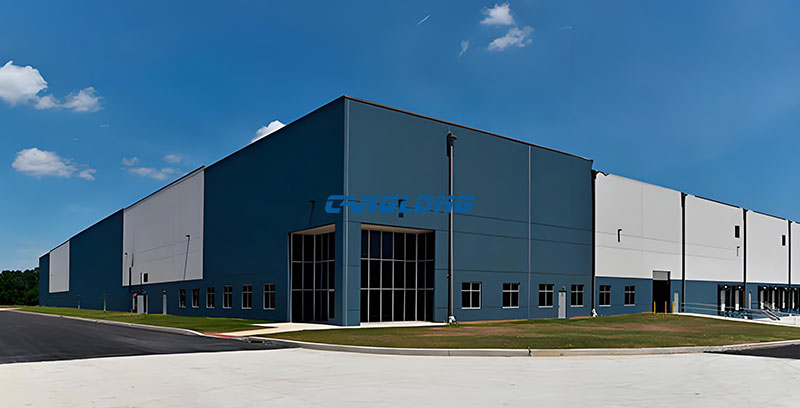
III. Challenges, Breakthroughs & Real-World Solutions
Although steel structure industrial buildings have become a new trend in global construction, widespread adoption still faces three obstacles: technical adaptability, initial cost perception, and market awareness bias.
1. Technical Difficulties: Fire, Corrosion & Extreme Environments
In high-temperature environments (such as steel mills), high-humidity conditions (such as tropical storage), and high-salt atmospheres (such as coastal ports), fire prevention and steel structure corrosion protection remain key challenges—the strength of steel decreases by 80% when it exceeds 500°C. The current mainstream solutions include:
- Fireproof coating: Intumescent fireproof coatings can increase the fire resistance limit of steel components to 2–3 hours, meeting stringent steel structure fire resistance standards.
- Composite structures: The combination of steel frame and concrete floor utilizes the lateral displacement resistance of steel while enhancing fire resistance through concrete mass.
- New materials: Aluminum-magnesium-manganese alloy (with weather resistance 10 times that of ordinary steel) and fiber-reinforced composite material (FRP) wrapped steel components have been validated in offshore wind power equipment plants in Norway.
For businesses operating in extreme climates, understanding how to choose the right steel building by climate zone is essential for long-term performance.
2. Cost Misconceptions: Look Beyond Initial Price
The market’s perception of high initial cost for steel structure vs concrete is essentially a disregard for full lifecycle value. Taking a new energy vehicle steel structure factory in Jiangsu Province, China as an example: the initial cost of the steel structure scheme is 8% higher than concrete, but due to a 3-month shortened construction period, the cash flow income from early production reached 20 million yuan. The value of recyclable steel during demolition is 3 million yuan (compared to only 500,000 yuan for concrete). Maintenance costs save 500,000 yuan annually (10 million yuan accumulated over 20 years). According to cost-benefit analysis (CBA), the full lifecycle cost of steel structures is actually 12% lower.
In the future, financial instruments such as green bonds and carbon asset pledges will help owners quantify implicit returns and lower financing thresholds for green steel building projects.
3. Cognitive Bias: Education and Demonstration
There remains a global cognitive bias that “concrete equals safety” and “steel structure equals fragility.” According to a survey by the Japan Steel Structure Association (JSSC), 60% of Japanese manufacturing owners believe steel factories are less earthquake-resistant than concrete—despite data showing the opposite. Overcoming this requires demonstration projects and education. The steel structure digital twin platform launched by Germany’s Fraunhofer Institute can simulate performance under extreme scenarios. China’s Ministry of Housing and Urban-Rural Development has trained 100,000 industrial workers and engineers through steel structure promotion programs. When steel structure earthquake resistance and efficiency become industry consensus, market acceptance will experience explosive growth.
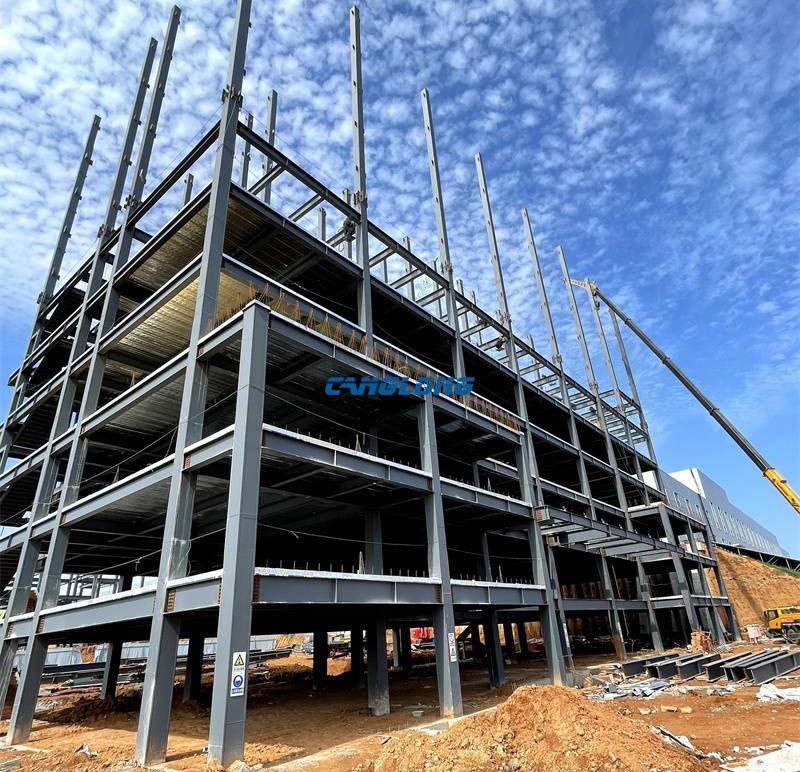
IV. The Future: Intelligent, Green, and Globally Standardized Steel Structures
With the deep integration of Industry 4.0 and carbon neutrality, steel structure industrial buildings are evolving from material revolution to intelligent ecology. Future industrial buildings will be “breathing steel frames”—embedding sensors to monitor stress, temperature, and corrosion in real-time, with AI algorithms optimizing structural safety dynamically. Custom irregular steel components will be produced through 3D printing, breaking traditional design limitations. Through photovoltaic integration (BIPV), the steel frame itself becomes a power generation unit, with 150W photovoltaic panels per square meter of roof generating 150 kWh of electricity annually.
Against the backdrop of global industrial chain restructuring, steel structures are becoming a link in global manufacturing. China’s Baowu Steel, Japan’s JFE, and Europe’s ArcelorMittal are jointly developing the Global Industrial Steel Structure Standard (GISC) to unify material properties, design specifications, and certification systems. Southeast Asian countries such as Vietnam and Indonesia are building steel structure factory processing centers relying on low-cost labor, providing customized components for high-end manufacturing in Europe and America. Ethiopia and Nigeria are building their own steel structure industry chains through technology transfer and local production. This global division of labor and local adaptation model will accelerate the transition of steel structures from regional standards to global consensus.
The application spectrum of steel structure construction continues to expand beyond traditional factories and warehouses. From steel structure aircraft hangars with 60-meter clear spans to indoor cold storage steel buildings for food and pharmaceuticals, from steel structure cattle sheds and steel livestock buildings in agriculture to prefab steel homes and construction site steel houses in residential and temporary sectors—steel has proven its adaptability across virtually every building typology.
Frequently Asked Questions About Steel Structure Industrial Buildings
Why is steel structure becoming the new standard for industrial construction?
Steel structures have become the global standard due to three converging forces: (1) material performance—high-strength steel achieves 3× the strength of 20th-century grades with superior seismic resilience; (2) industrialized construction—prefabrication reduces build time by 50–60% and eliminates weather-dependent curing; (3) lifecycle economics—despite 5–10% higher initial cost, total 50-year lifecycle cost is 12–18% lower than concrete due to faster commissioning, lower maintenance, and 90% recyclability. Combined with global carbon policies like EU CBAM that penalize high-carbon concrete, steel is now the mandatory choice for forward-looking industrial developers.
Is steel structure more expensive than concrete?
Initially, yes—steel structure material costs are typically 5–10% higher than reinforced concrete. However, when evaluating steel structure cost vs concrete on a total project basis, steel wins through: smaller foundations (50% lighter dead load), 50–60% faster construction (earlier revenue generation), 25% lower maintenance over 50 years, and 90% material recyclability at end-of-life (8× higher residual value than concrete). For a typical 300,000 m² industrial complex, the steel structure lifecycle cost is 18% lower than concrete.
How do steel structures perform in earthquakes?
Steel structures demonstrate exceptional steel structure earthquake resistance due to steel’s high strength-to-weight ratio and ductility. In the 1995 Great Hanshin Earthquake, steel building collapse rates were one-fifth of concrete structures. Steel can deform up to 5% under seismic load without collapse (compared to 0.5–1% for brittle concrete), absorbing energy through controlled flexing. Modern moment-resisting frames and concentrically braced frames are specifically engineered to dissipate seismic forces, making steel the preferred material for earthquake-prone regions like Japan, Turkey, and the Pacific Rim.
What about fire safety in steel buildings?
Bare steel loses 50% of its strength at 550°C and 80% above 500°C, which is why steel structure fire resistance is addressed through proven protection systems: intumescent coatings (expand to 50× thickness when heated, providing 2–3 hour fire ratings), cementitious spray-applied fireproofing, and composite steel-concrete floor systems. With proper fire protection, steel buildings meet or exceed all international fire safety codes including IBC, Eurocode, and GB standards.
Can steel structures resist corrosion in coastal or humid environments?
Yes, through modern steel structure corrosion protection systems. Hot-dip galvanization (80–120 µm zinc coating) provides 25–50 years of protection in C3–C4 environments. For aggressive marine environments (C5), multi-coat epoxy-urethane systems or weathering steel (e.g., Corten) develop a self-protecting oxide layer. Aluminum-magnesium-manganese alloys offer 10× the weather resistance of ordinary steel and are increasingly used in coastal industrial plants.
What is the role of BIM in modern steel construction?
BIM steel structure modeling and digital twin technology have transformed steel construction from a site-based craft to a precision manufacturing process. BIM enables: clash detection before fabrication (eliminating 90% of field errors), millimeter-level component accuracy, real-time cost and schedule tracking, and lifecycle asset management. ThyssenKrupp’s steel frame for Tesla’s Berlin Gigafactory achieved error control within 2 mm and 40% faster installation through full-process BIM collaboration.
How sustainable are steel structure industrial buildings?
Steel is the world’s most recycled construction material. Steel structure recycling rates reach 90% at end-of-life, with recovered steel retaining 100% of its mechanical properties. The steel structure embodied carbon of new buildings is dropping rapidly as electric arc furnace (EAF) production using renewable energy expands. Combined with design for deconstruction (DfD) principles, steel structures align perfectly with circular economy goals and green building certifications like LEED, BREEAM, and China’s Three-Star Green Building standard.
Which regions are driving the fastest growth in steel structure adoption?
Emerging markets steel construction in Southeast Asia, the Middle East, Africa, and Latin America are the fastest-growing segments. Vietnam, Indonesia, and the Philippines are building steel processing hubs to serve export manufacturing. Saudi Arabia’s NEOM, Egypt’s new administrative capital, and Ethiopia’s industrial parks are adopting steel structures for speed and scalability. These regions benefit from the “latecomer advantage”—leapfrogging directly to modern prefabricated steel technology without the legacy burden of concrete-dominated construction cultures.
Conclusion: The Irreplaceable Skeleton of Industrial Civilization
From the first large-scale use of steel in the Eiffel Tower in Paris in 1889 to steel structure industrial buildings accounting for over 40% of global industrial construction (with China exceeding 55%) by 2025, steel has always been the most faithful skeleton of industrial civilization.
Today’s steel structure is not only an upgrade in materials, but also a technological carrier for industrial buildings to transform towards low-carbon, efficient, and intelligent operation. When the global manufacturing industry faces the dual challenges of carbon constraints and efficiency revolution, prefabricated steel structure systems are redefining the standards of industrial construction with their irreplaceable advantages. This is not a material substitution war, but a collective migration of human industrial civilization towards a more sustainable future.
Whether you are planning a steel factory building solution for manufacturing, a steel warehouse solution for logistics, or exploring steel structure factory design standards for your next project, Canglong Group provides the engineering expertise, manufacturing precision, and global delivery capability to turn your vision into reality.
Contact Canglong Group today to discuss how a steel structure industrial building can become the foundation of your business success.
As a well-known steel structure construction supplier in China, Canglong Group has 20 years of industry experience and provides one-stop steel structure solutions from design to installation. We have a factory of 100000 square meters, and all our products have been certified by ISO and CE, and are sold to over 80 countries and regions worldwide.
Related Posts
 December 16, 2025
 August 20, 2026
 July 2, 2026
 March 12, 2026
Leave a Message
Your email address will not be published. Required fields are marked *
 October 16, 2026
 September 30, 2026
 September 7, 2026