



 November 5, 2026
 September 30, 2026
Argentina Storage Warehouse
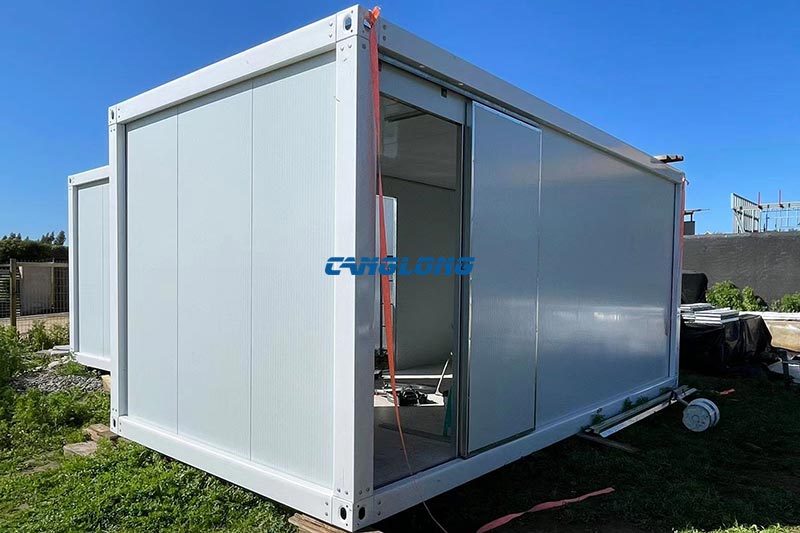
Near Buenos Aires, a client needed 660 m² of enclosed storage and made two specification choices worth pausing on: a steel truss roof under a single slope, and a rock wool sandwich panel envelope. Both decisions show up clearly in the project photographs — one in the open trusswork before the roof was sheeted, the other in the pale, flush-panelled walls that closed the building in — and together they shaped what the finished warehouse can do. Canglong Group supplied the structure and panel system as a kit, shipped by container.
Project at a Glance
| Country | Argentina |
|---|---|
| Location | Buenos Aires |
| Function | Storage warehouse |
| Floor area | 660 m² |
| Roof | Single slope, steel truss rafters |
| Walls & roof | Rock wool sandwich panels |
| Delivery | Kitted and shipped by container |
Why a Truss Under a Single Slope
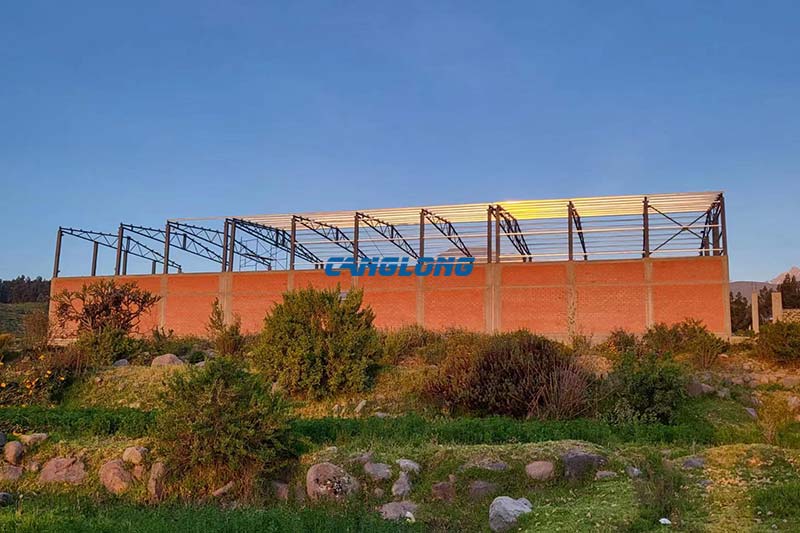
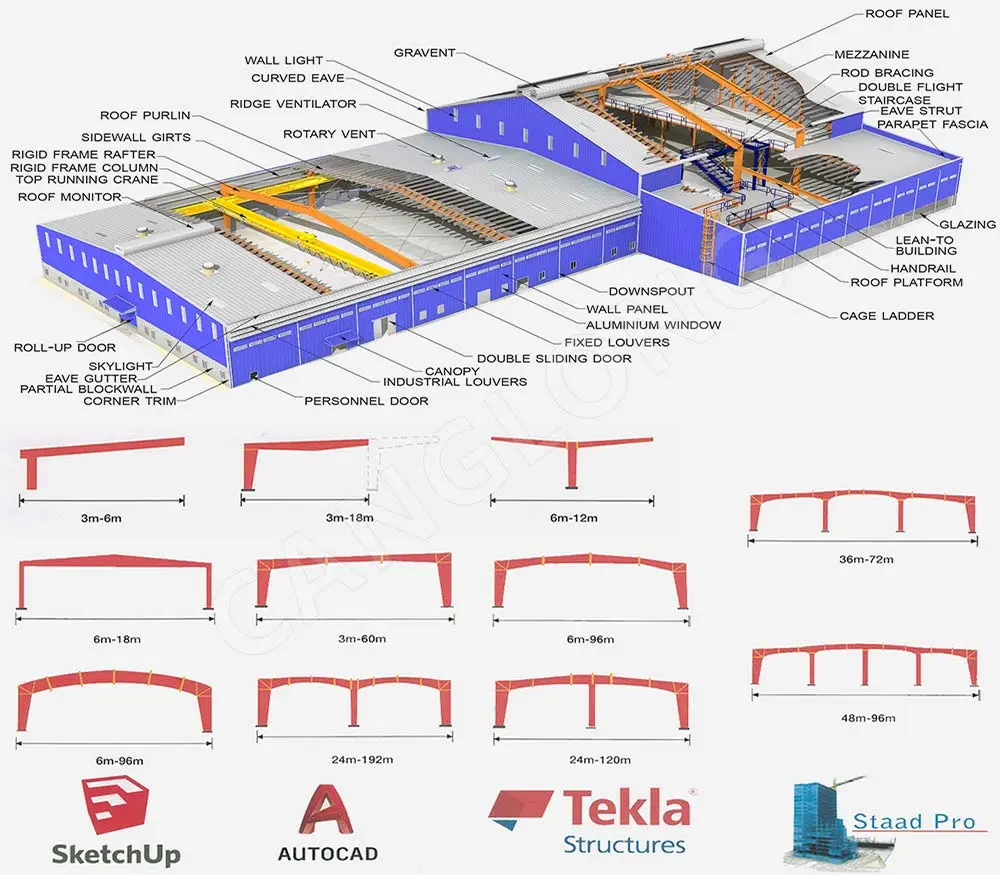
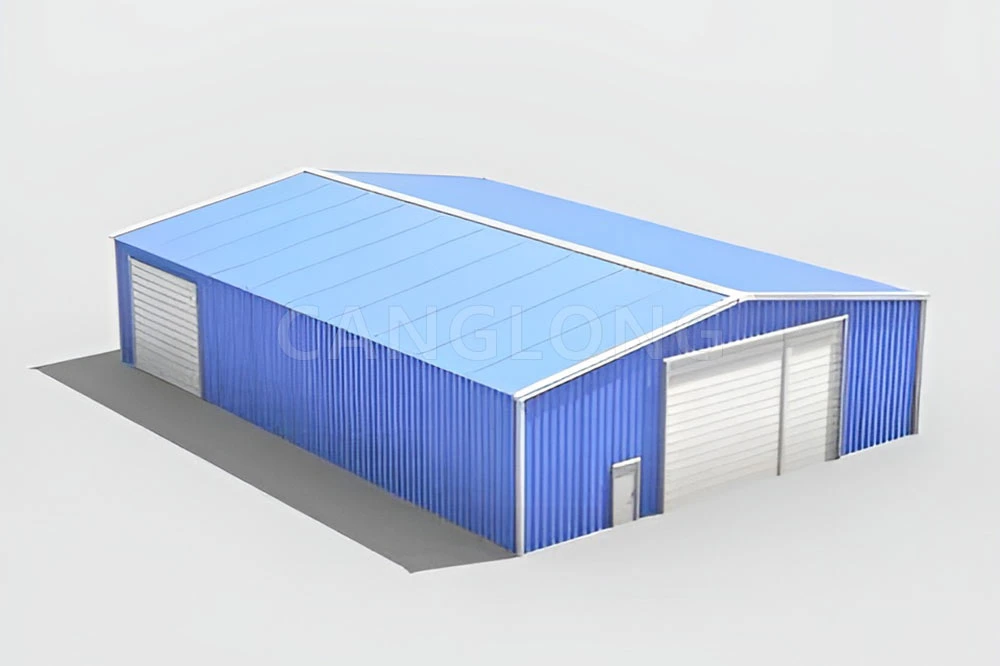
The single slope keeps the building simple: one direction of fall, one eave line, drainage handled on one side only. But a mono-pitch roof still has to cross the building’s full width, and that is where the trusses earn their place. A solid rafter crossing a wide span has to grow deep and heavy; a truss turns that rafter into a lattice, carrying the same reach with less steel and leaving the interior beneath it unbroken. For a storage warehouse, an unbroken floor is the whole point — racking lines, pallet routes and forklift turns are decided by the absence of columns, not the presence of anything.
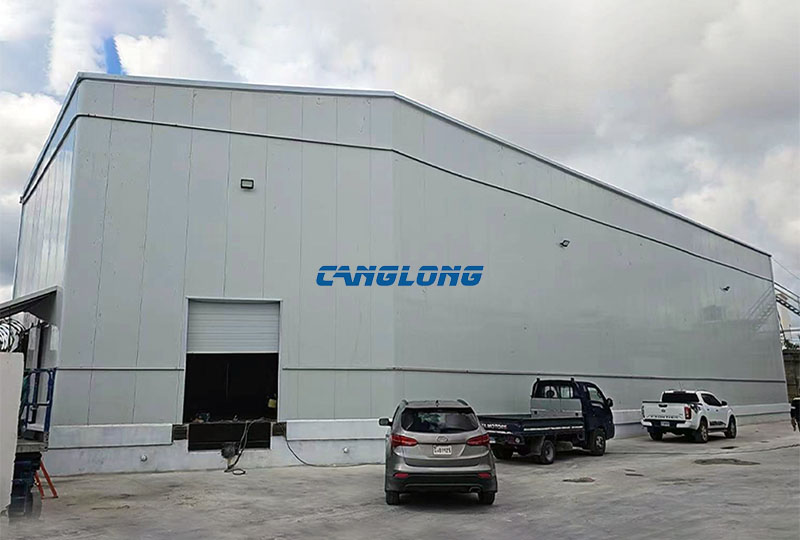
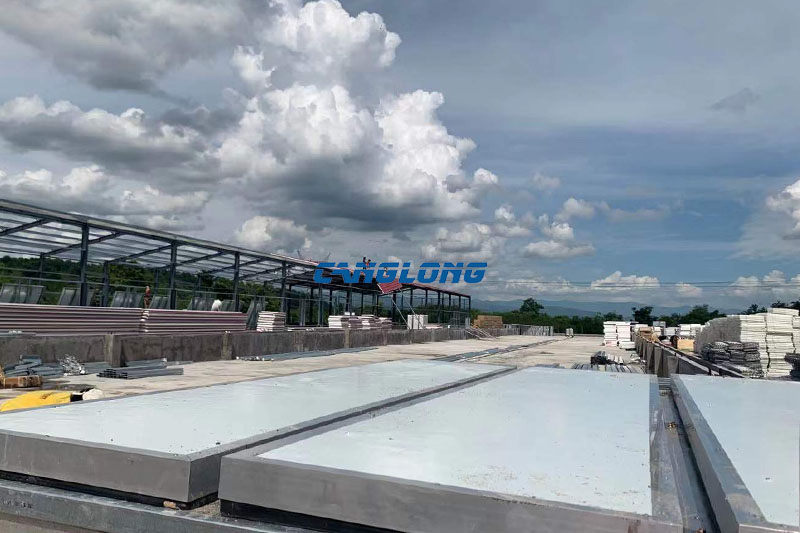
The featured photograph catches the roof at its most legible stage: trusses standing in rows, purlins running across them, the walls already closed while the roof was still open to the sky. It is a good reminder that the tidy white box the client ended up with is, structurally, a linked sequence of engineered triangles.
Buildings like this sit inside our single slope warehouse range — the same drainage logic at any size, with the roof structure tuned to the span it has to cross.
Rock Wool: When Fire Performance Is Part of the Brief
Sandwich panels are specified by their core, and the core is a decision about what the building protects. A rock wool core — mineral fibre spun from rock — does not burn, which is why it is the usual answer when stored goods, insurers or local fire rules make fire performance part of the brief. It insulates as well, blunting the Argentine summer heat that would otherwise build up under a low roof, and its mass adds a stiffness to the wall that foam cores do not quite match.
For this client the calculation was straightforward: the building stores goods whose safekeeping is the entire business, so the envelope had to buy both temperature stability and fire behaviour, and rock wool is the core that pays for both at once.
Walls That Went Up Early
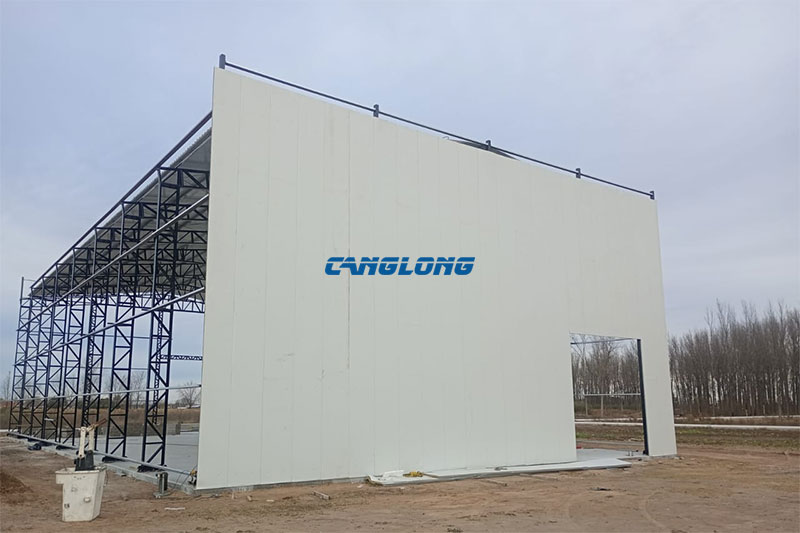
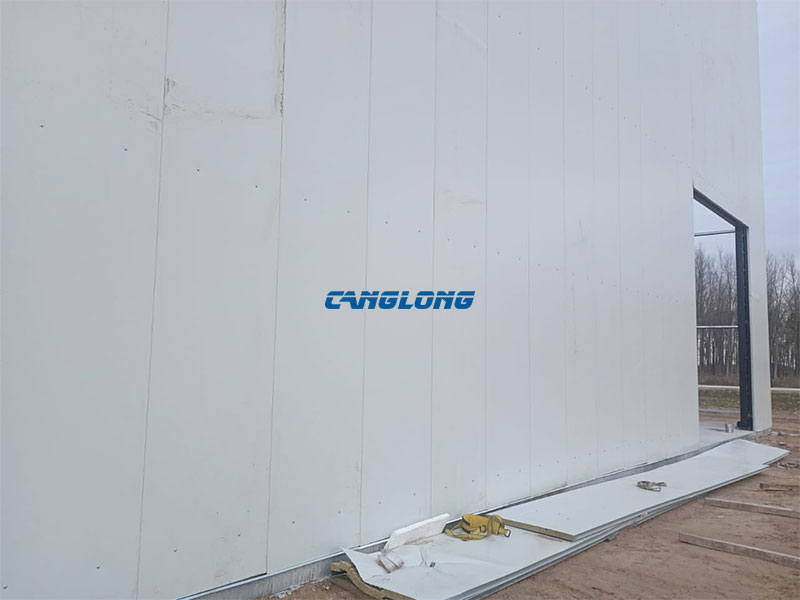
The photographs record an unusual-looking but perfectly sensible sequence: the panel walls were standing while the roof was still bare trusses. Sandwich panels are rigid, self-finished units — each one arrives as wall, insulation and interior lining in a single panel, fixed to the frame and locked to its neighbour — so the walls do not wait on the roof. Closing the perimeter early also sheltered the erection crew and kept the floor dry for the fit-out that followed.
Packed for the Crossing
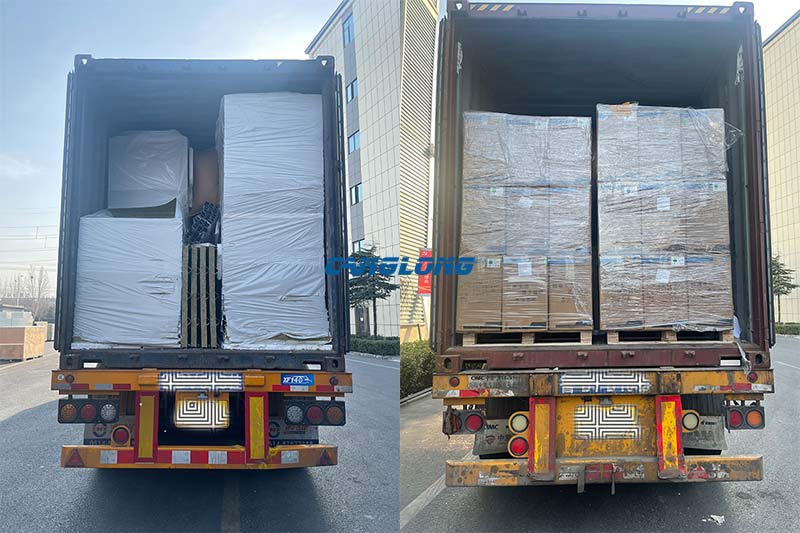
The shipment photos show how a warehouse travels from our works to Argentina: rock wool panels stacked and wrapped in bundles, secondary steel packed alongside, everything loaded into containers for the sea crossing to Buenos Aires. Kit delivery is what makes a remote build predictable — every component arrives matched to its drawing, and the site work is assembly rather than fabrication.
Other Warehouse Projects in the Americas
- Warehouse shed in Honduras — insulated envelope storage in a tropical climate
- Refrigerated warehouse in Chile — cold rooms built inside a steel shell
- Agricultural steel warehouse in Quebec — 540 m² with a five-tonne overhead crane
Frequently Asked Questions
Why use steel trusses for a warehouse roof?
A truss carries a wide span with less steel than a solid rafter, because the lattice puts material where it works hardest. The interior below stays clear of columns, which is what decides racking layouts and forklift routes in a storage warehouse. On this project the trusses sit under a single slope roof, keeping drainage to one eave line.
Why choose rock wool sandwich panels instead of other cores?
Rock wool is a mineral fibre that does not burn, so it adds fire performance to the insulation a sandwich panel already provides. It also gives the wall extra stiffness. For a storage building where the goods themselves are the business, that combination of thermal stability and fire behaviour is usually the deciding factor.
How large is this warehouse?
The building encloses 660 m² of clear-span storage under a single slope roof — a compact footprint sized for the client’s throughput, with the truss roof keeping the whole floor usable.
How is a warehouse kit delivered to Argentina?
In shipping containers: rock wool panels stacked in wrapped bundles, secondary steel packed alongside, every component labelled and matched to its drawing. Assembly on site follows the erection sequence, so the build is installation rather than fabrication.
Project Info
Country
Argentina

Project Name
Storage Warehouse
Project Date
2025-6-27
Product Address
Buenos Aires, Argentina
Area
660㎡
Customer Reviews
10.612 Rating
Quality
4.7
Price
4
Design
88
Service
91
Delivery
83
Package
75
Project Details
No
No
Contact us Leave a Message
Your email address will not be published. Required fields are marked *