


 September 30, 2026
 September 7, 2026
Canada Prefabricated Warehouse
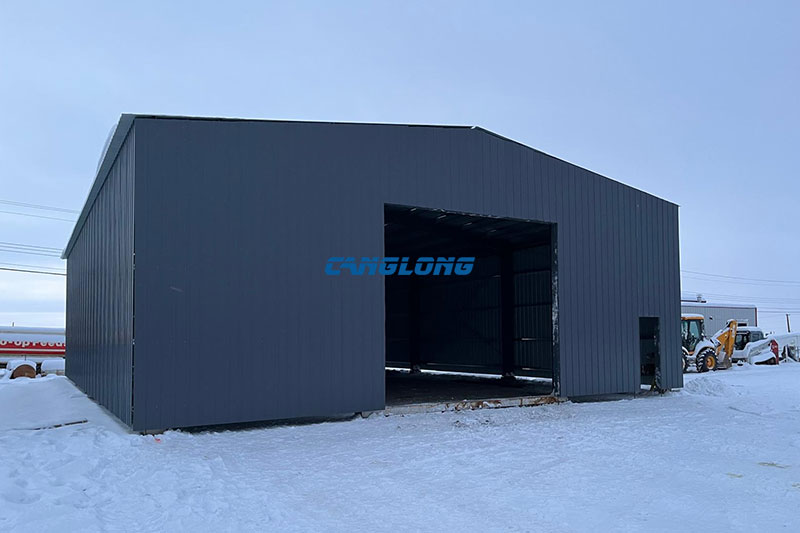
Deep snow on the ground, a flat clearing, small buildings and power lines beyond the site: the photographs of this project place it in a part of Quebec where winter is less a season than a condition. The client needed a warehouse for machinery and general storage, and the site brief carried one line that mattered more than any dimension — the ground there stays frozen year-round. That single fact moved the engineering effort of this project below grade, into a foundation most warehouse buyers never think about.
Project at a Glance
| Country | Canada |
|---|---|
| Location | Quebec |
| Function | Machinery and general storage |
| Size | 20 × 16.8 × 5 m (eave) |
| Floor area | 336 m² |
| Structure | H-beam portal frames, C-section purlins |
| Roof | Double-pitched gable |
| Foundation | Steel pipe piles |
| Delivery | Complete prefabricated kit, shipped by container |
The Problem With Building on Frozen Ground
Ground that freezes and thaws moves. Water in the soil expands roughly nine percent when it turns to ice, and on a site where the upper layer freezes solid every winter and releases every spring, anything founded shallow is lifted, tilted and dropped on a yearly cycle. A warehouse on such ground does not fail dramatically; it fails patiently — frames rack out of plumb, door frames pinch their rollers shut, floor slabs crack along the lines where frost grabbed hardest, and none of it is reversible by bolting anything tighter.
On a normal southern site, the building code answers this with mass: spread footings poured below the frost line, where the ground no longer moves. But that answer assumes the ground below the frost line is stable, and on this site it is not simply a matter of digging deeper. The layer that moves is the layer the building would stand in, and concrete brings its own problems to a remote winter site — it is heavy to freight in, it needs heat to cure, and a foundation crew pouring it becomes the critical path of the whole schedule.
Why Steel Pipe Piles
The foundation that suits this ground is a different idea entirely: steel pipe piles. Each pile is driven or augered down through the active layer — the zone that freezes and thaws — and anchored into the stable ground below it. The pile skin develops strong friction in frozen ground, so the building is effectively pinned to something that does not move, while the seasonal swelling and settling of the surface layers happens around the piles without lifting them.
Pipe piles also solve the logistics problem that comes with a site this remote. Steel pipe segments stack efficiently in a shipping container, travel as ordinary freight, and are installed with the same compact equipment — an excavator or a small piling rig — that erects the building itself. There is no concrete to batch, no water to heat, no curing window to defend against the cold. And if ground movement is ever measured years from now, piles with adjustable heads can be re-levelled; a cracked concrete foundation can only be jackhammered.
For a machinery warehouse, that last point is not academic. Doors that do not pinch, frames that stay plumb and racks that stay square are what the owner actually bought. The pipe piles are how the building keeps those promises in year five, not just at handover.
Erected in Winter, Because It Could Be
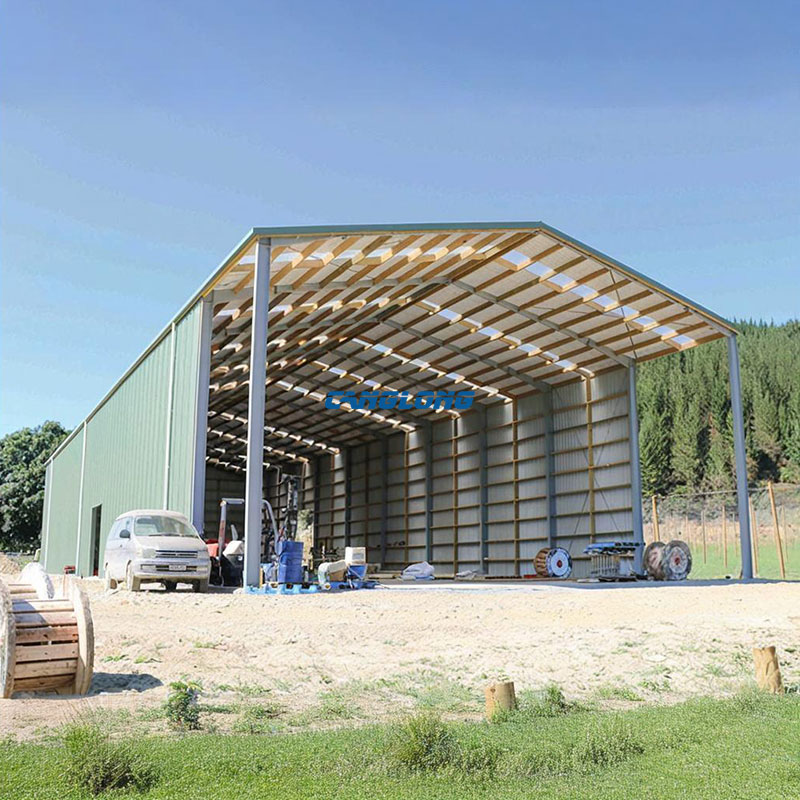
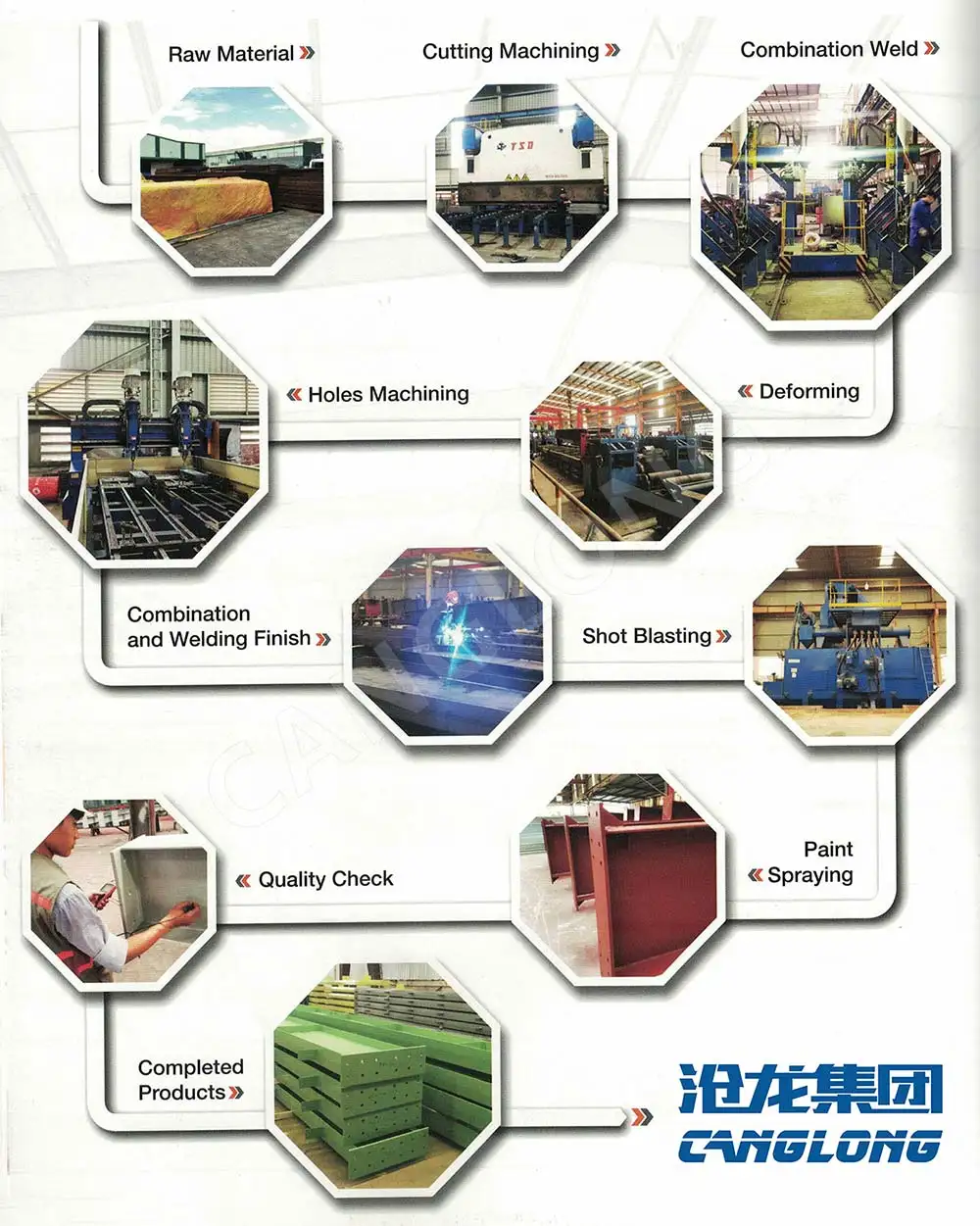
The site photographs tell the rest of the story. The frames went up with snow already on the ground, erected by a small crew with compact machines — no tower cranes, no construction camp, no concrete trucks. This is where a prefabricated kit earns its name. Every member arrived cut, drilled and matched to its drawing; the site crew bolted together a building rather than improvising one, and the erection sequence never had to wait on a pour or a cure.
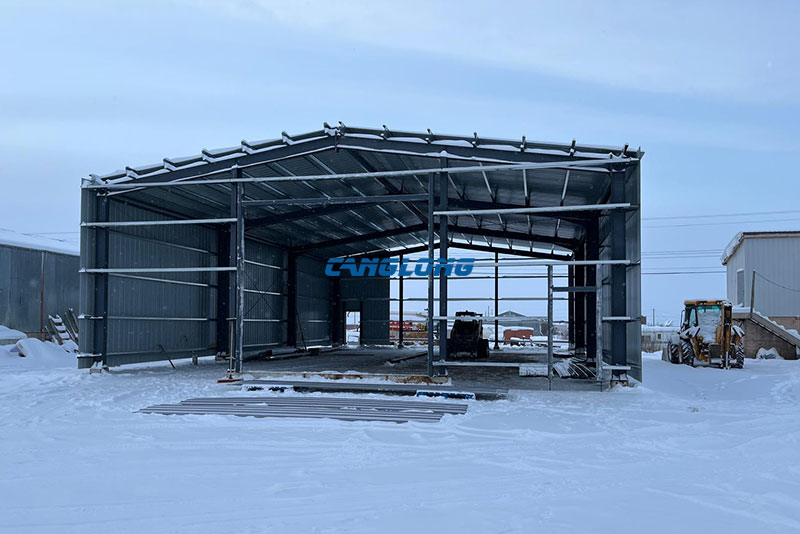
Winter erection is not a hardship here — it is a scheduling tool. In remote northern communities the building season is short and expensive, and a kit that erects in cold weather compresses the time the site is exposed. Fewer days of open structure means less snow to clear from the work, fewer freeze-thaw cycles on unprotected materials, and a weatherproof envelope closed before the deepest part of winter arrives.
The Frame Above the Frost
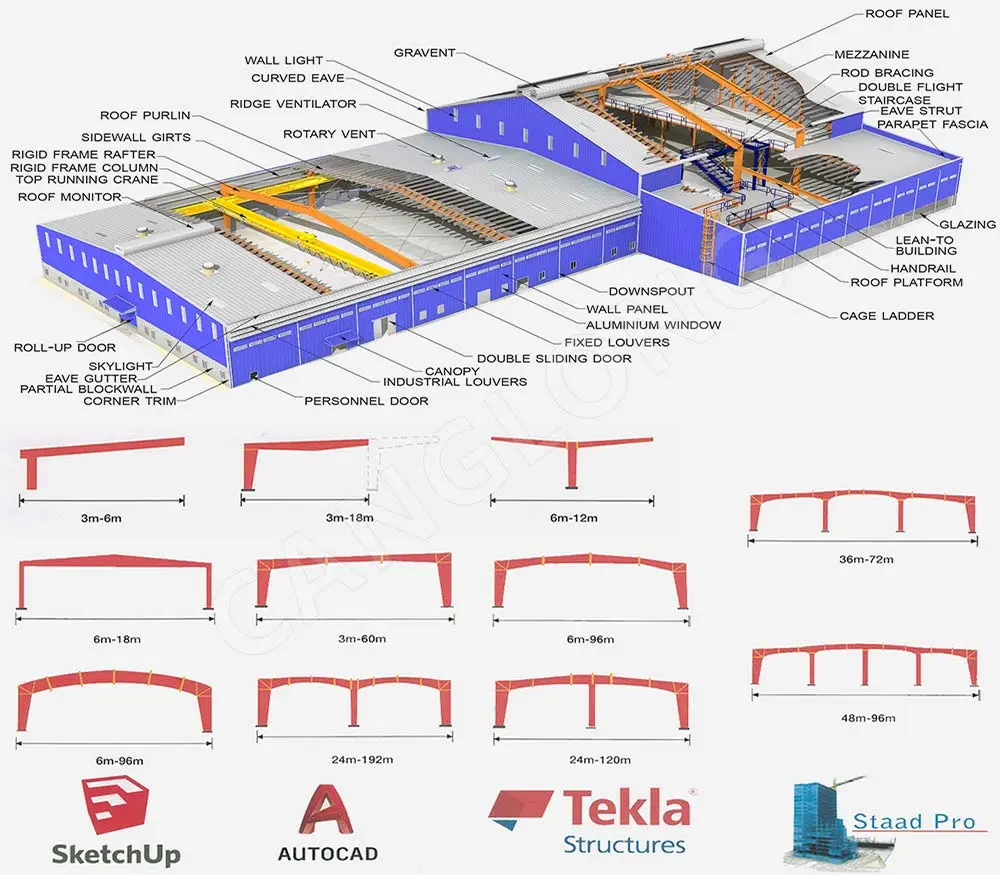
Above the piles, the building is a straightforward and honest piece of engineering: portal frame bays in H-beam steel, a 16.8 m clear span with no internal columns to fight when machinery turns or pallets stack deep, and a 5 m eave that accepts the kind of equipment — loaders, implements on trailers, stacked machinery — that no domestic-grade shed can swallow. C-section purlins carry the roof and wall sheeting without adding weight the piles have to hold.
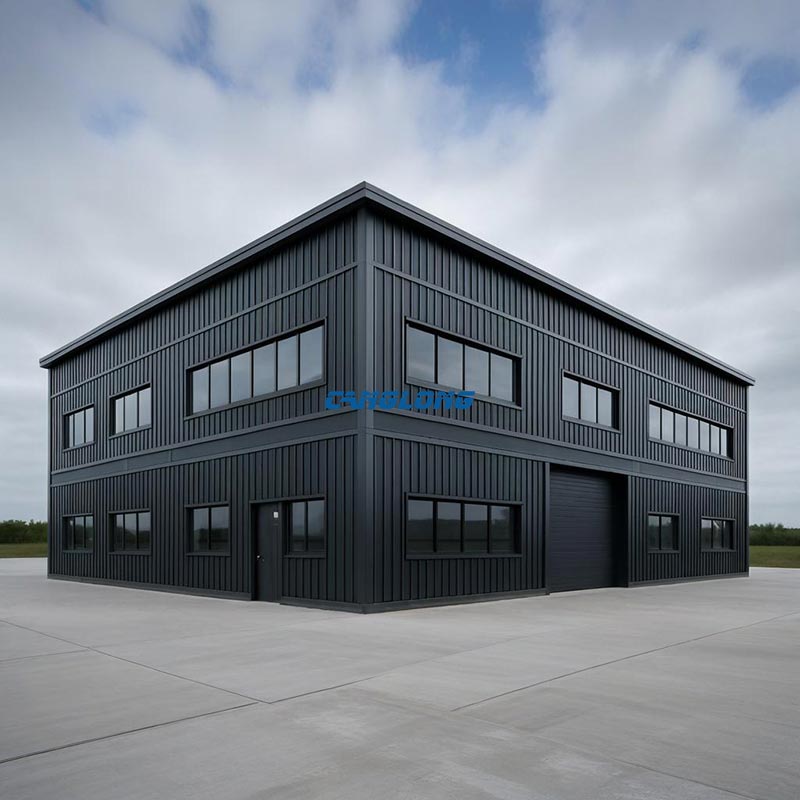
In this part of Canada, the design case is snow, not wind. The double-pitched gable roof sheds rather than holds, and the pitch keeps drift loads at the eaves predictable instead of letting snow accumulate against obstructions. The envelope follows the same logic: dark grey colour-coated steel cladding, a single large vehicle door on the gable for machinery to enter, and a personnel door at the corner — few openings, each one placed deliberately, because every opening in a snow country wall is a place where drifting, melting and refreezing will test the detailing.
The finished building is deliberately unglamorous: a tight, square-shouldered box with one big door, standing level on piles in deep snow. That levelness is the whole point — it is what the foundation was bought for.
When Pipe Piles Are Not the Answer
A frozen-ground site is not a reason to order pipe piles by reflex, and we say that plainly. On a southern site with competent, thawed soil, spread footings below the frost line remain the cheaper and entirely correct answer — most of our warehouse projects in the Americas rest on exactly that. Pipe piles earn their higher cost in specific conditions: ground that stays frozen or moves seasonally, sites where concrete logistics are difficult, or remote locations where mobilizing a full civil works crew costs more than the piles themselves. The site report decides, not the catalogue — a machinery storage building we delivered in Alberta was engineered around an entirely different set of constraints, and the difference between the two projects is exactly why we ask for ground conditions before we quote.
Other Steel Building Projects in Canada
- Steel machinery storage building in Alberta — 60 × 100 ft, wall height set by the door and panel thickness set by the container count
- Agricultural steel warehouse in Quebec — 540 m² with a five-tonne overhead crane
Frequently Asked Questions
Why use steel pipe piles instead of a concrete foundation?
Where the ground stays frozen or moves with the freeze-thaw cycle, shallow concrete footings are lifted and tilted year after year. Pipe piles pass through the moving layer and anchor into stable ground below it, keeping the frames plumb and the doors working. They also freight compactly and install with small equipment — a decisive advantage on remote sites.
Can a prefabricated steel building be erected in winter?
Yes, and this project is the proof. A prefab kit arrives cut, drilled and matched, so erection is bolting rather than building — no concrete pours to protect from frost and no curing time. The photos show the frames standing with snow on the ground.
What fits in a 20 × 16.8 m warehouse?
Three hundred and thirty-six square metres of floor with a 16.8 m clear span and a 5 m eave: farm and worksite machinery driven straight in through the gable door, palletized goods stacked deep without columns in the way, and space left over for seasonal overflow storage.
How is a prefab warehouse shipped to a remote site?
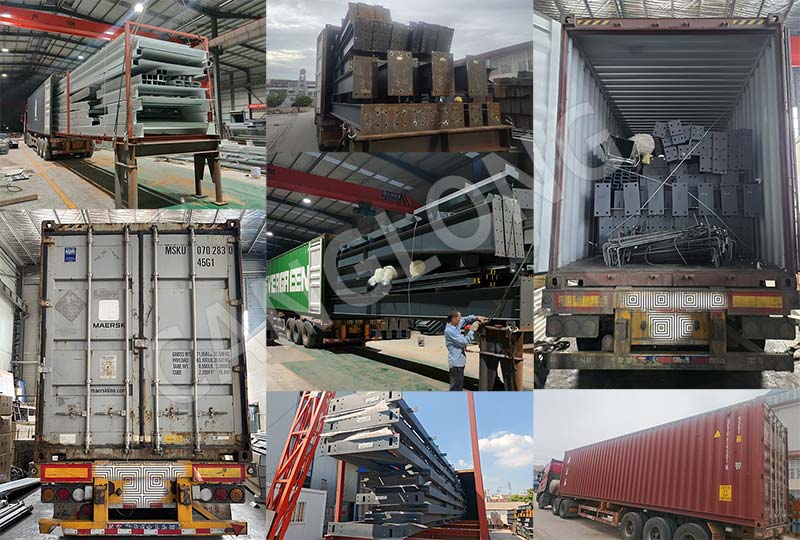
As a complete kit in shipping containers: steel members, purlins, cladding, fasteners and doors packed in the order they are needed on site. Container freight reaches remote communities by road, rail, sea or ice road, and every component arrives matched to its drawing so nothing critical is missing a day’s travel away.
Project Info
Country
Canada

Project Name
Storage Warehouse
Project Date
2026-1-6
Product Address
Montreal, Quebec, Canada
Area
242㎡
Customer Reviews
10.612 Rating
Quality
5.0
Price
4
Design
88
Service
91
Delivery
83
Package
75
Project Details
No
Contact us Leave a Message
Your email address will not be published. Required fields are marked *
Bringing the steel building to you
Figure out what you want, choose the type of building you need, understand the cost, contact Canglong then go get it!