

 September 30, 2026
 September 7, 2026
Philippine Pickleball Court
Project Case Study · Cebu, Philippines
Pickleball is booming in the Philippines, and Cebu is right at the center of it. But between the boom and the players stands an awkward fact: purpose-built venues are still rare. Most courts in the country are repainted basketball courts or multipurpose halls, and regulars know what that means — waiting lists, paddle queues, and peak-hour booking battles.
This is the story of one operator who decided to build something better: a covered facility with six dedicated courts under a single 33-metre clear span. He had never bought steel from China before. He found us on Facebook. And the project that followed was not perfect — one container was damaged during unloading, and two sets of drawings had to be detailed further before his crew could work from them with confidence. It still finished on schedule. Here is how it actually went.
- Location: Cebu, Philippines
- Steel up: June 17, 2026
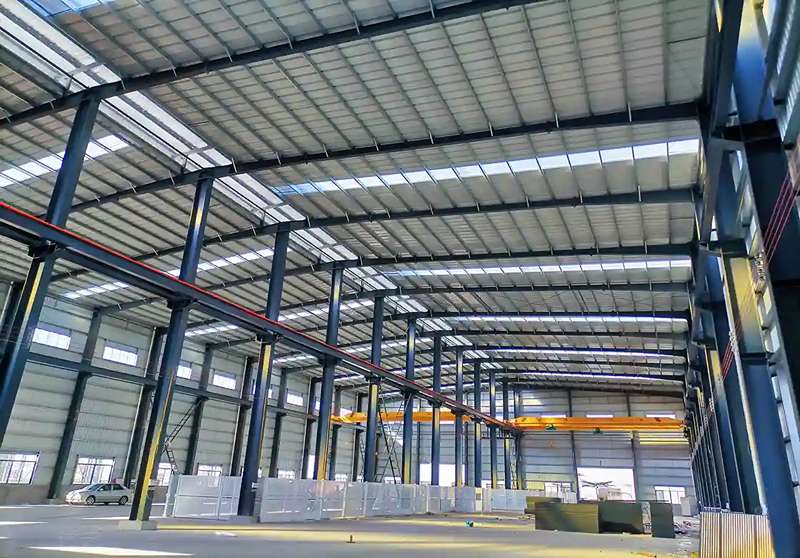
- Building: 33 m × 40 m × 7 m
- Floor area: ≈ 1,320 m²
6
Pickleball courts
33 m
Clear span, no columns
1,320 m²
Floor area
2 months
Main frame erected
3 × 40’HQ
Shipping containers
The Project at a Glance
| Building type | Prefabricated steel structure pickleball facility |
| Dimensions | 33 m span × 40 m length × 7 m eave height |
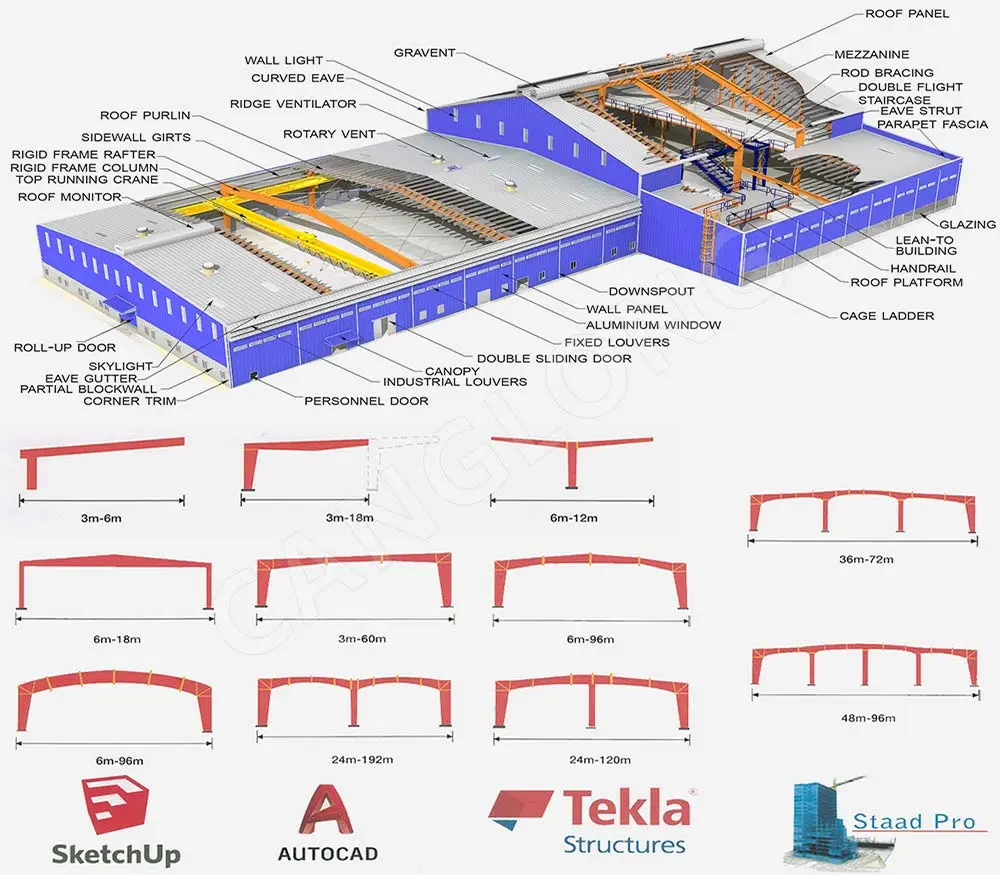
| Structural system | Portal frame, H-section columns and beams, C-section purlins |
| Column spacing | 10 m along the length, zero interior columns across the span |
| Roof & walls | Single-skin metal panels, double-pitched roof |
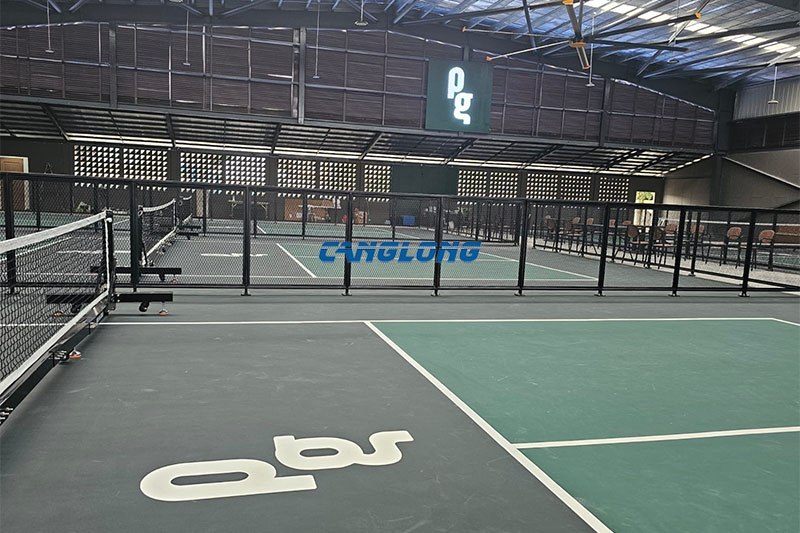
| Interior | 6 pickleball courts + steel mezzanine (office & reception) |
| Field Installation | Client’s own crew, guided remotely by Canglong |
| Shipment | 3 × 40’HQ containers to Cebu |
| Schedule | Erection March 10 – June 17, 2026 (main frame up in about 2 months); interior fit-out and court surfacing through July and August; opened late August 2026 |
Why Cebu, and Why a Real Building?
The sport reached the Philippines in 2016 — fittingly, with the country’s first clinic held in Cebu. Since then it has grown from a niche expat pastime into a national movement: by 2025 the Philippine Pickleball Federation counted more than 200 registered clubs and 13,000 registered members, and local press reported over 100,000 players booking court time through a single booking app.
But supply has not kept up with demand. Across Cebu, most play still happens on converted basketball courts, backyard slabs, and borrowed multipurpose spaces. Coaches quoted in local media describe the growth as “exponential” — and the shortage of dedicated venues as the sport’s biggest bottleneck. For an operator, that gap is the opportunity: players will pay for proper courts and a roof that keeps the games running through the rainy season.
Our client runs a sports venue business in Cebu. He did the math on land, courts, and throughput, and concluded that a purpose-built covered facility — six courts, playable in any weather — was worth the investment. What he had never done was buy a steel building, let alone one shipped from China.
A First-Time Buyer, and a Healthy Dose of Doubt
The first inquiry came through Facebook. The questions that followed were not really about price. They were about trust: Is the factory real? Will the steel match the drawings? What happens after I pay?
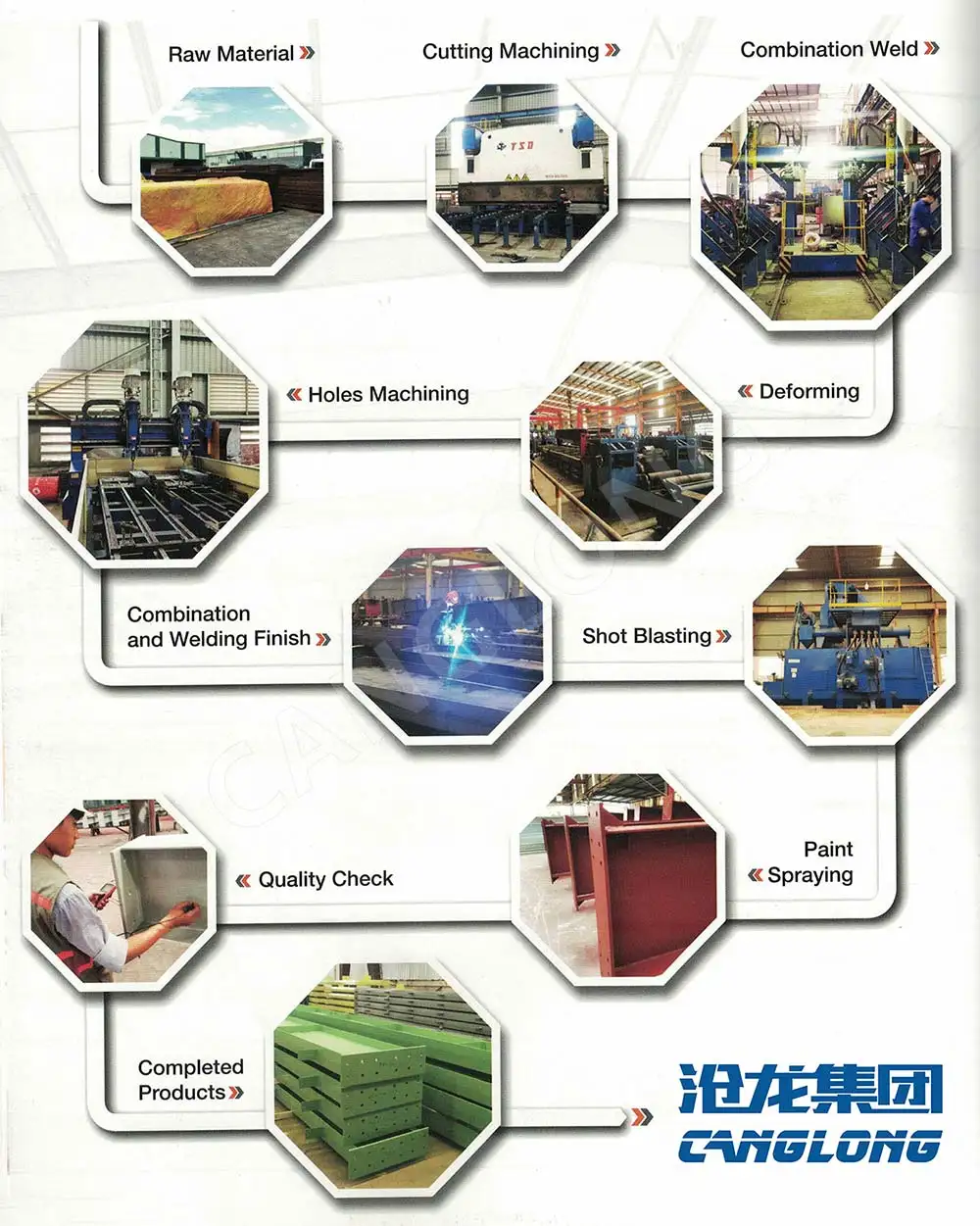
These are fair questions for a first-time importer, so instead of arguing on chat, we did something simpler. Sophia Liu, our export consultant for Southeast Asia, connected the client with Darren — one of our long-standing customers in the region — so he could hear it from someone with no stake in the sale. Then the client visited China, walked our factory floor, watched panels being produced, and checked the welding and shot-blasting lines himself.
He placed the order after the visit. Not because the factory looked impressive in photos, but because he had stood in it.
Designing Around the Courts, Not the Columns
A pickleball court punishes bad buildings. Every interior column is a collision risk; every metre of lost head height eats into lobs and overhead smashes. So the structure was shaped by the sport from the first sketch:
- 33-metre clear span. A portal frame spanning the full 33 m width with no interior columns, leaving the floor free to fit six courts with proper run-off zones on all sides — and to be rearranged later for tournaments, coaching clinics, or other sports.
- 10-metre column spacing. Deep bays along the 40-metre length keep the perimeter clean for circulation, benches, and spectator standing room.
- 7-metre eave height. Enough vertical clearance that even a high lob stays in the building.
- Double-pitched metal roof. Cebu’s rainy season is not negotiable; the pitched roof sheds heavy tropical downpours quickly instead of pooling them.
- A freestanding steel mezzanine. Office and guest reception sit on an independent mezzanine structure that is not tied into the main frame — so if the operator later rethinks the layout, the mezzanine can be unbolted and repositioned.
The design went through only one or two minor changes before fabrication — the layout logic held up under the client’s review, which kept the production window clean.
Three Containers, One Lesson in Humility
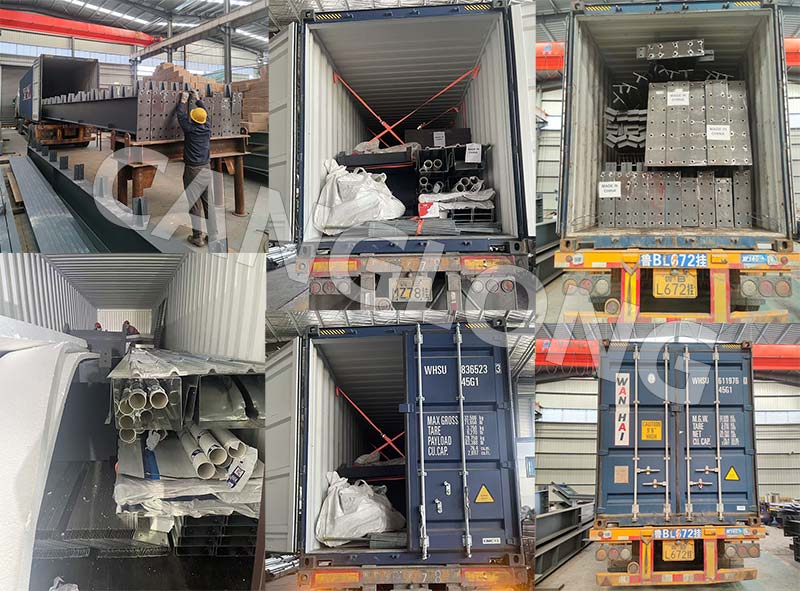
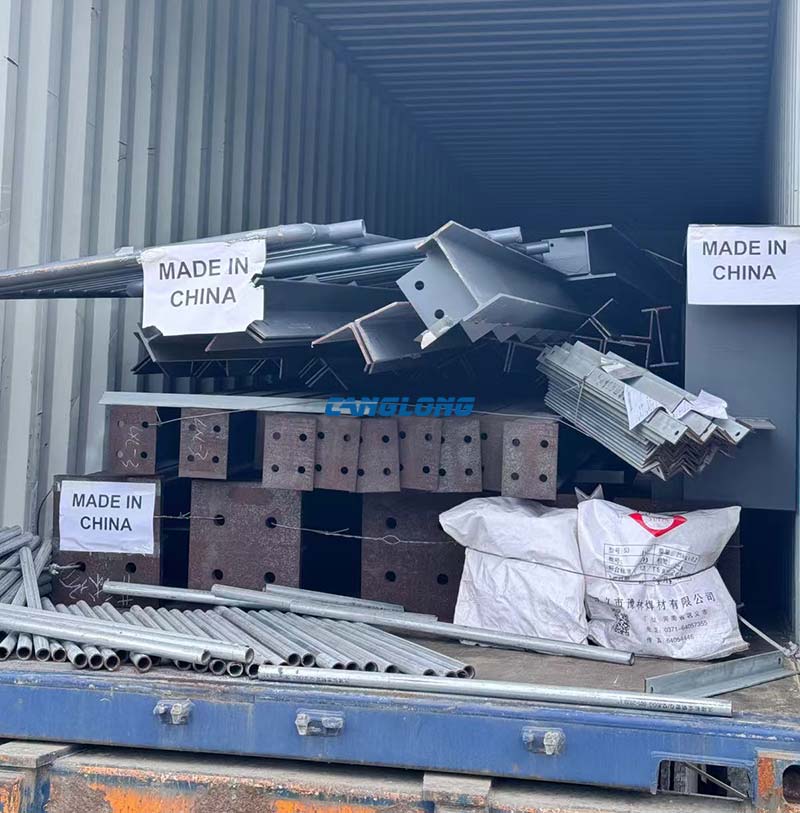
The complete building kit — primary frames, purlins, roof and wall panels, and the mezzanine steel — was fabricated at our factory, quality-checked, and loaded into three 40’HQ containers for the voyage to Cebu.
Then came the part nobody puts in a brochure. The client’s crew had never unloaded a 40-foot container before, and on day one at the site they damaged one of the three containers during unloading. Nobody was hurt and the steel was fine — but the moment made the point better than any manual could: a steel building kit arrives as several tonnes of long, heavy, precisely machined components, and unloading them is a skill of its own.
What changed because of this: for first-time builders, we now talk through the unloading plan — crane or forklift access, lifting points, sequencing — before the containers leave the factory, not after they arrive. It costs one video call. It saves the next customer a damaged box.
Detailing the Drawings for the Crew on Site
Two details in the drawing package had to be developed further once the crew was on site. Neither was a structural error — both were cases where a drawing that is perfectly clear to one crew leaves too much open for another. On a self-erect project, that gap is ours to close in advance, and this project is the reason we now close it as standard.
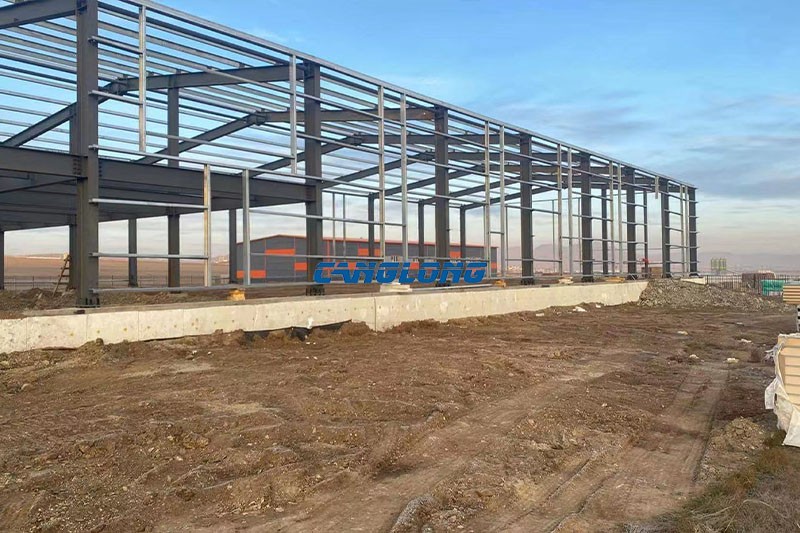
Foundation — a full anchor bolt setting plan before the pour. The original foundation drawing gave the bolt layout, but not at the level of detail a first-time crew needs to set and check every bolt before concrete goes in. The crew flagged it rather than guess, which was the right call: an anchor bolt set out of position means breaking out cured concrete, and a column base that will never sit plumb. Our engineering team reissued the drawing as a complete anchor bolt setting plan — every bolt located, sized and specified, so the layout could be verified against the column base plates before the pour. From that point the crew worked strictly to the drawing, and the foundation went in without another question.
Connections — a joint-by-joint bolt schedule. The second round came at the beam-to-column connections. A portal frame does not use one bolt throughout: diameter, grade and length change from joint to joint, and a general arrangement drawing alone does not tell a first-time erector which one belongs where. Rather than let that be sorted out on site, we issued a dedicated bolt installation drawing — every connection numbered, with bolt size, grade, length and quantity listed against it, so each bolt could be identified before it came out of the crate. That ended it.
What separates a drawing set that keeps a site moving from one that stops it is rarely the engineering. It is whether the drawings were produced for the people who will actually hold them. For customers erecting with their own crew, we now build the package around the crew’s experience level — not around what a drawing office would normally issue.
What changed because of this: the anchor bolt setting plan and the joint-by-joint bolt schedule are now issued as standard with every self-erect drawing package — not on request — together with a pre-pour checklist and a pre-erection video walkthrough with the crew.
On-Site Installation Finished in 2 months via Online Remote Guidance
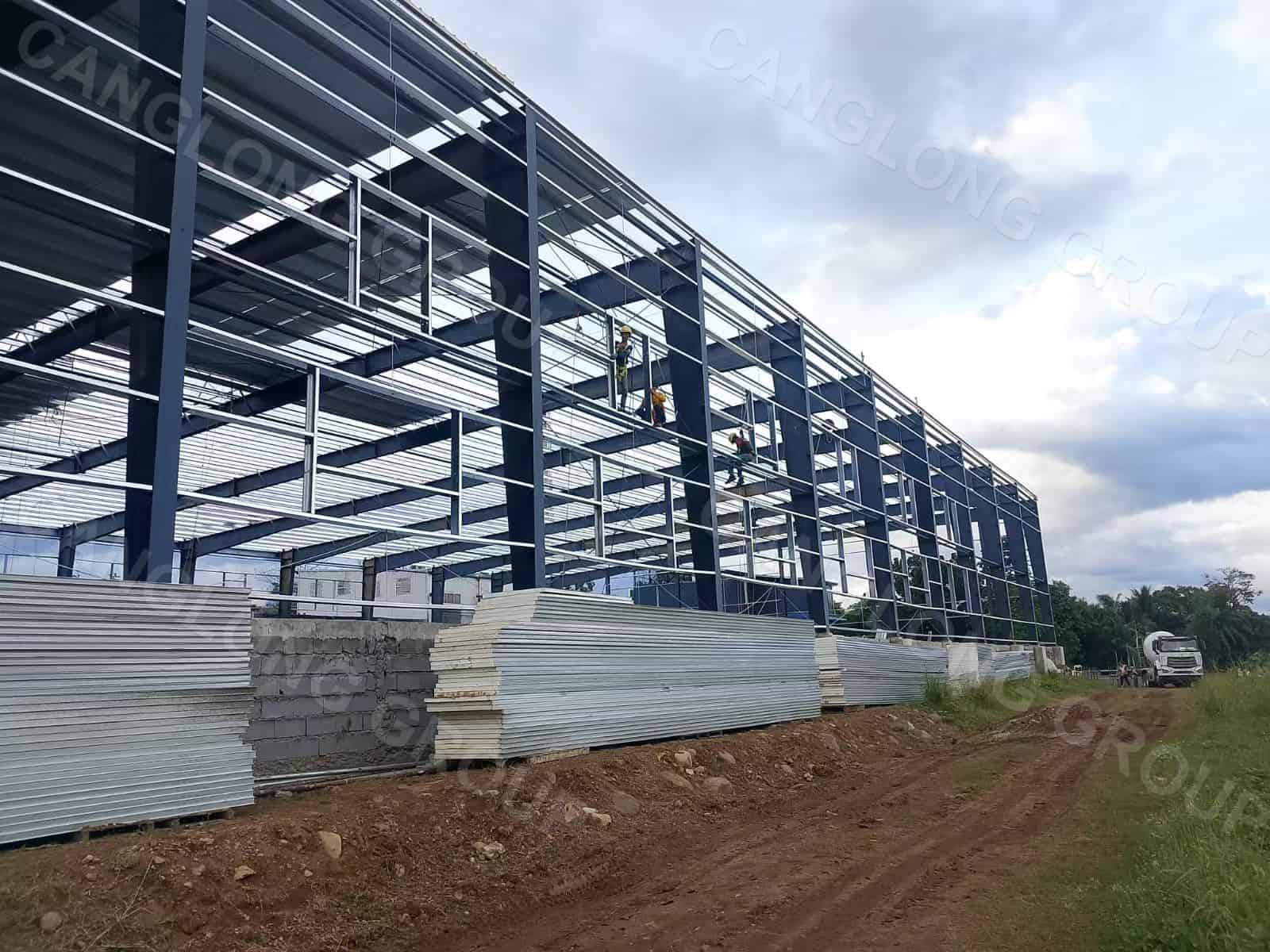
Canglong did not send an installation crew to Cebu — the client chose to erect the building with his own team, supported by our engineers remotely. Every question, from column plumb tolerance to purlin spacing to panel screw sequences, was answered with annotated drawings, photos, and video calls worked around the time difference.
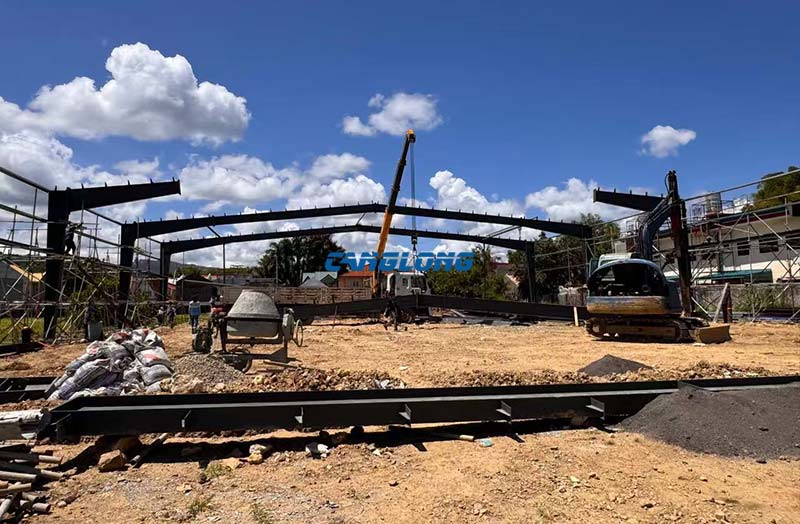
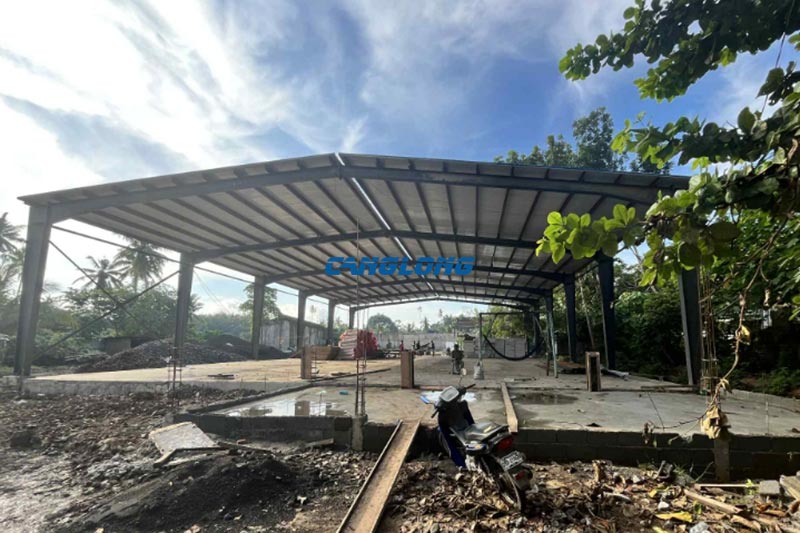
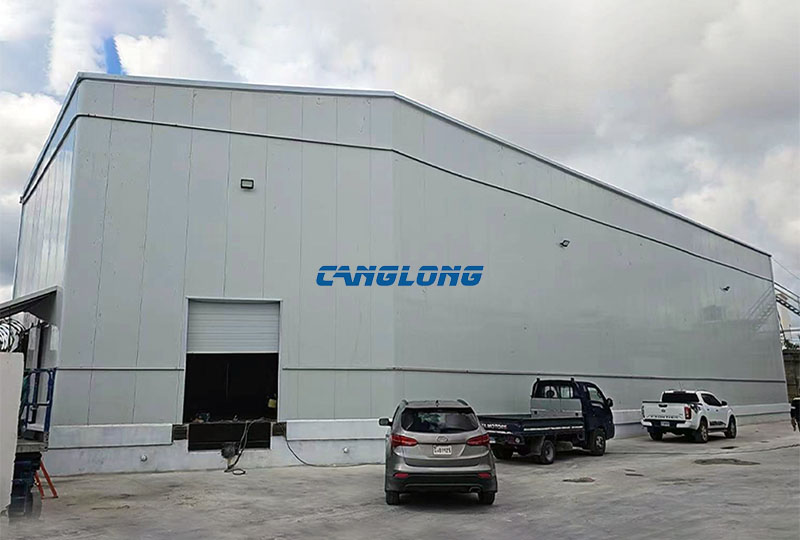
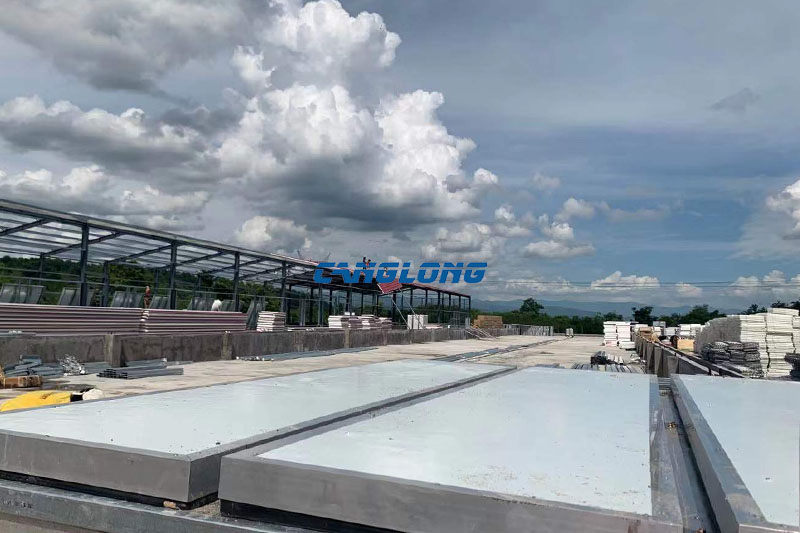
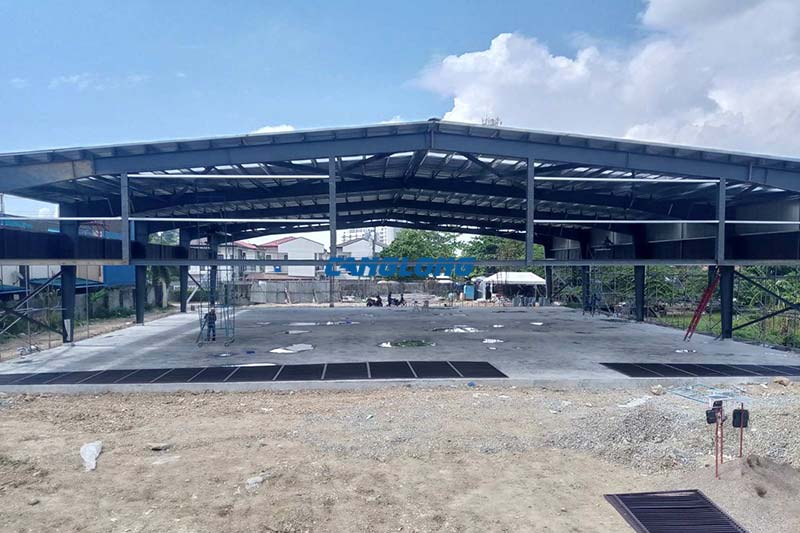
The client’s crew set the first columns on March 10, 2026. About two months later the main frame was standing; by June 17, 2026 the roof and wall sheets were on, the building was weathertight, and the courts were taking shape inside. Interior fit-out — court surfacing, lighting, and the mezzanine offices and reception — carried on through July and August, and the venue opened to players at the end of August 2026.
The Timeline
- ● 2025 · Facebook inquiryFirst contact. The questions were about trust, not price.
- ● Factory visitOur customer Darren vouches for us; the client tours the plant and places the order.
- ● Design & fabricationOne or two minor design changes; the full kit is produced and loaded into 3 × 40’HQ containers.
- ● Shipment to CebuThe client’s first container unloading — one damaged box, zero damaged steel, one lesson learned.
- ● Anchor bolt setting plan issuedFull bolt layout reissued; crew sets and checks every bolt against the drawing before the pour.
- ● Mar 10, 2026 · Erection beginsThe client’s own crew raises the first portal frames under remote guidance.
- ● Bolt schedule issuedEvery beam-to-column connection numbered with size, grade, length and quantity.
- ● Jun 17, 2026 · Steel completeRoof and wall sheets on, building weathertight, main frame up in about two months.
- ● Fit-outCourt surfacing, lighting, and the mezzanine offices and reception through July and August.
- ● Late Aug 2026 · OpeningSix covered courts open to players in Cebu.
How It Landed
In our post-completion follow-up, the client rated the project 8 out of 10. We are publishing that number deliberately: a file of flawless ten-out-of-ten scores would be easy to produce and impossible to believe. An 8, from a first-time buyer who saw exactly how we handle a detail his crew could not build from, is a result we can stand behind — and it tells you the problems above were resolved to his satisfaction, not just acknowledged.
For us, the project also settled a broader question: steel buildings are no longer just warehouses and workshops. A 33-metre clear span, a two-month frame erection, and a crew of first-time erectors working from a video call turned an empty lot in Cebu into one of the few dedicated six-court pickleball venues in the central Philippines.
Watch the Build
Planning a Pickleball or Sports Facility?
If you are weighing up a covered court project in the Philippines, Southeast Asia, or Oceania, talk to the person who ran this one end to end — the factory visit, the three containers, and every video call with the erection crew.
Talk to Sophia About Your Project
SL
Sophia Liu
Export Consultant · Southeast Asia & Oceania · Canglong Group
Export Consultant · Southeast Asia & Oceania · Canglong Group
Sophia handled the Cebu pickleball project from first Facebook message to final panel screw. Send her your site size, court count, and location for a tailored proposal and quotation.
Related pages
- Sports Buildings — steel structure solutions for covered courts, sports halls and other large-span sports facilities.
- Portal frame steel structure system — the engineering behind large clear-span sports buildings.
Project Info
Country
Philippines

Project Name
Pickleball Court
Project Date
2026-5-21
Product Address
Cebu, Philippines
Area
1320㎡
Customer Reviews
10.612 Rating
Quality
4.8
Price
4
Design
88
Service
91
Delivery
83
Package
75
Project Details
No
Contact us Leave a Message
Your email address will not be published. Required fields are marked *
Bringing the steel building to you
Figure out what you want, choose the type of building you need, understand the cost, contact Canglong then go get it!