
 October 16, 2026
 September 30, 2026
 September 7, 2026
Philippine Food Factory
Project Case Study · Davao City, Philippines
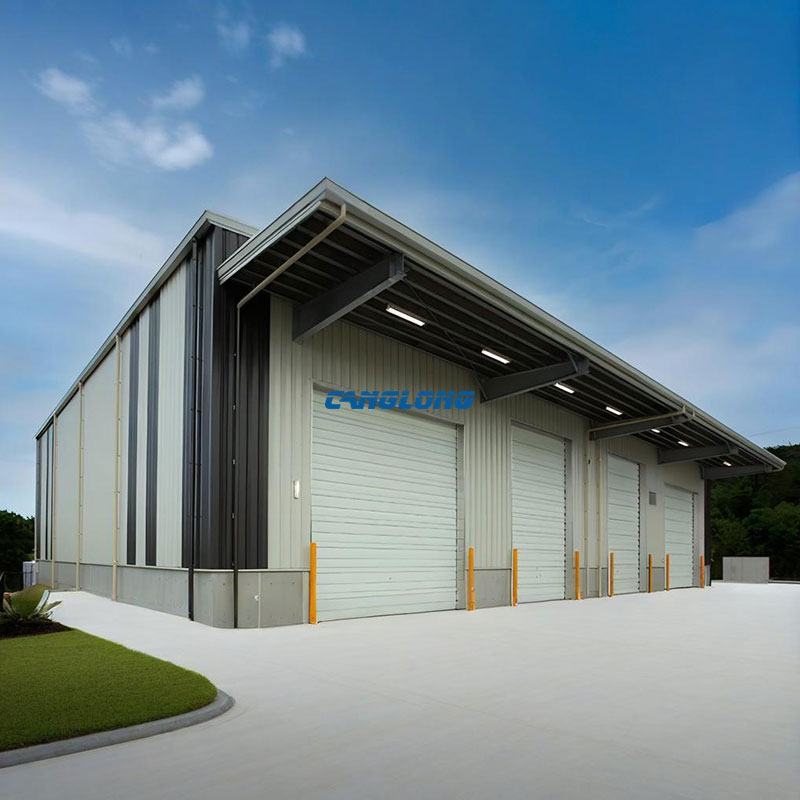
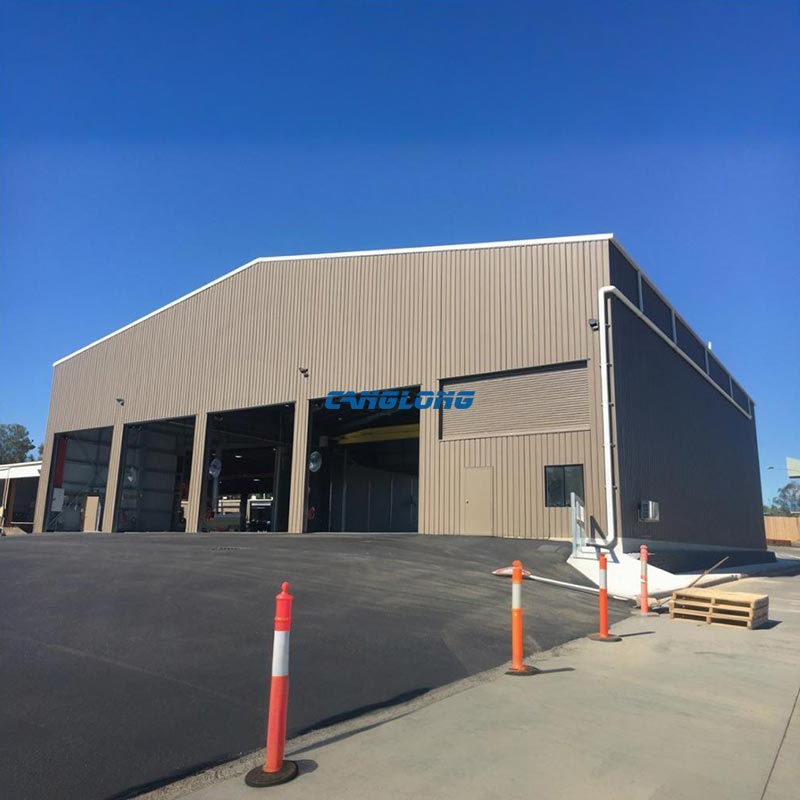
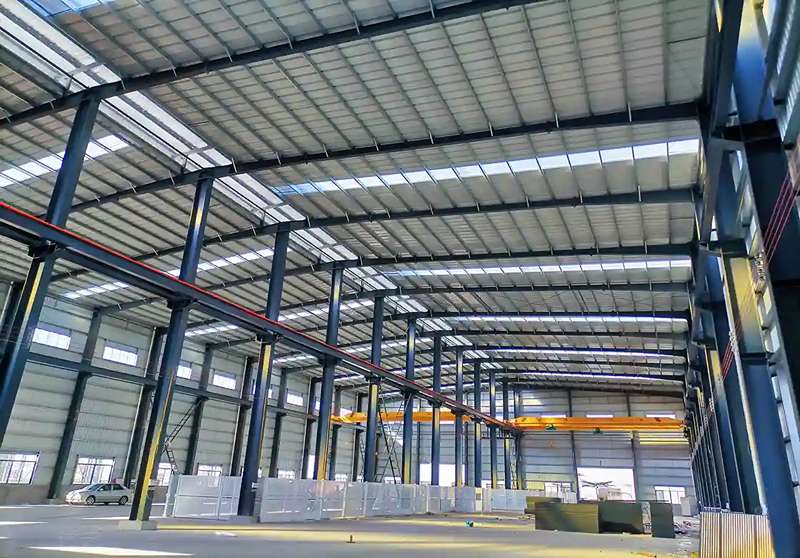
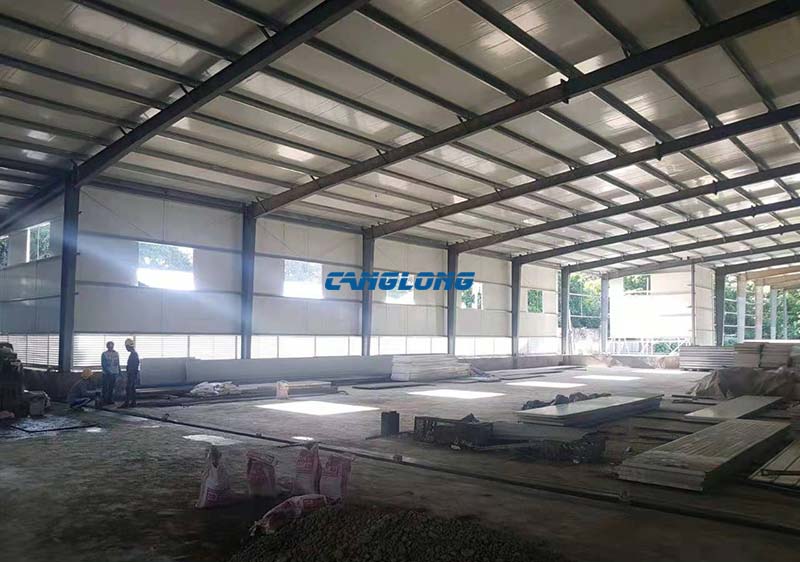
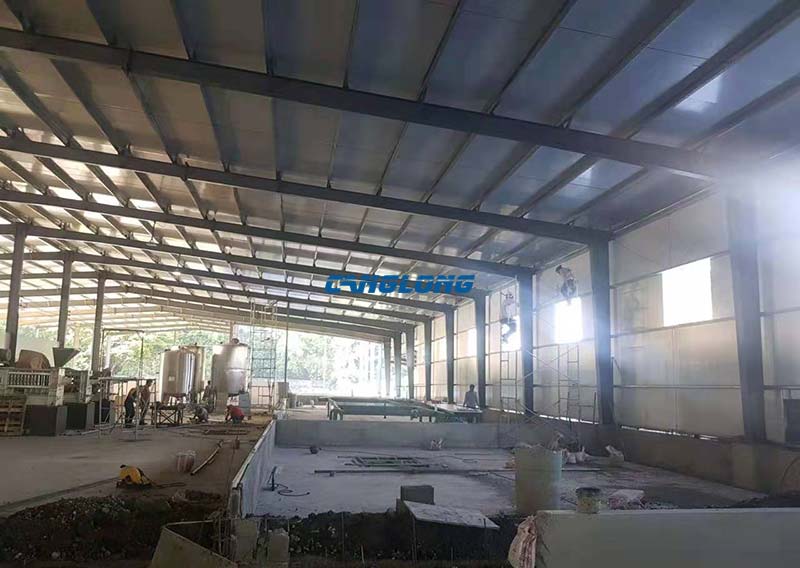
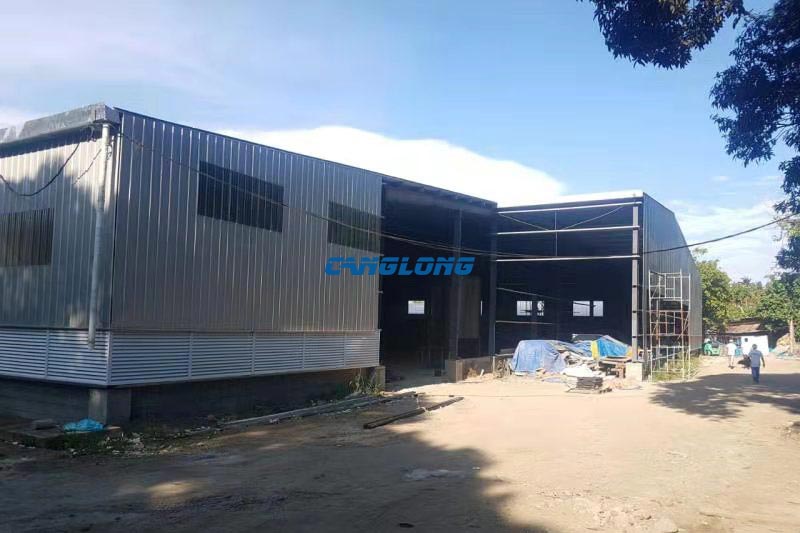
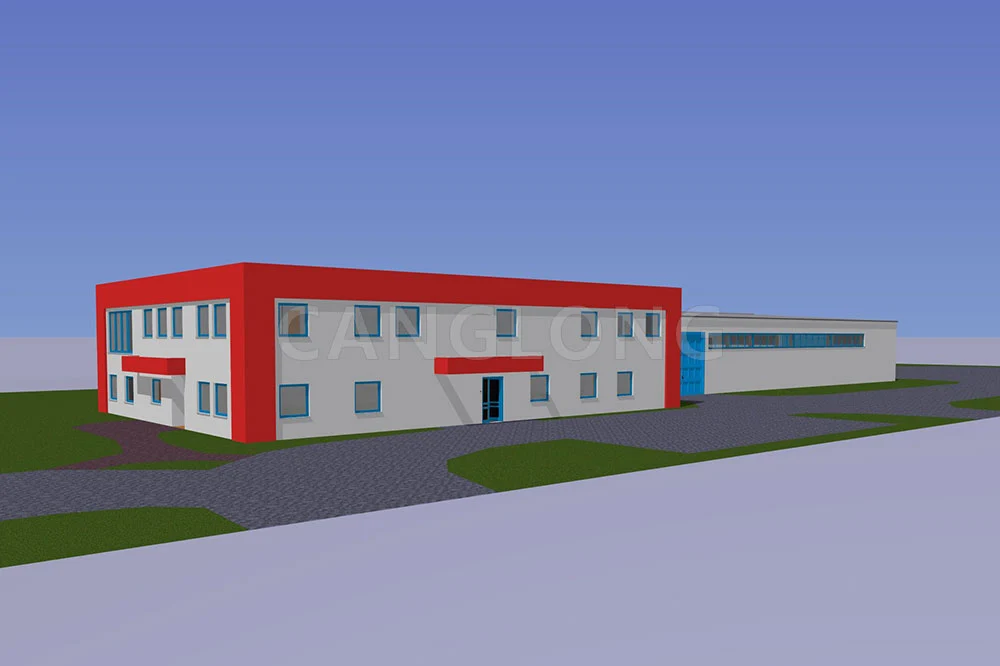
A food manufacturer in Davao City found us on Alibaba in 2019, while building the first plant of what has since grown into a four-building site. The brief for this one — their second Canglong order — was the brief of a buyer who had done this before: here are our drawings, make them better, supply the complete kit, and get it through Philippine customs and Philippine wind without drama. What landed in Davao is a 75 m × 36 m single-slope portal frame food factory warehouse — 2,700 m² of column-free floor under a 50 mm EPS sandwich roof, inspected by SGS before it left our factory, and erected by the client’s own crew.
Davao Is a Food Town. This Client Supplies It.
Davao City is the commercial capital of Mindanao and the center of Philippine export agriculture — bananas, coconut, cacao, pineapple, and the packing plants, oil mills and food factories that process all of it. It is also a city of about 1.8 million people that sits south of the country’s main typhoon tracks, with a mountain chain standing between it and the worst of the weather. The client is very much part of that food economy: a manufacturer that has been expanding steadily since 2019.
The first inquiry reached us on Alibaba while they were building their first plant. Before signing, their CEO and one of their engineers flew to China and walked our factory floor — the production lines, the welding bays, the shot-blasting. That visit settled the first order. This hall came later, for the least glamorous reason there is: the business grew, and the first plant ran out of room. When we asked what had brought them back, the answer was the unglamorous one too — a competitive price, a supplier that answers messages, and steel that matched the drawings the first time.
One Storey, One Slope, 2,700 Square Metres
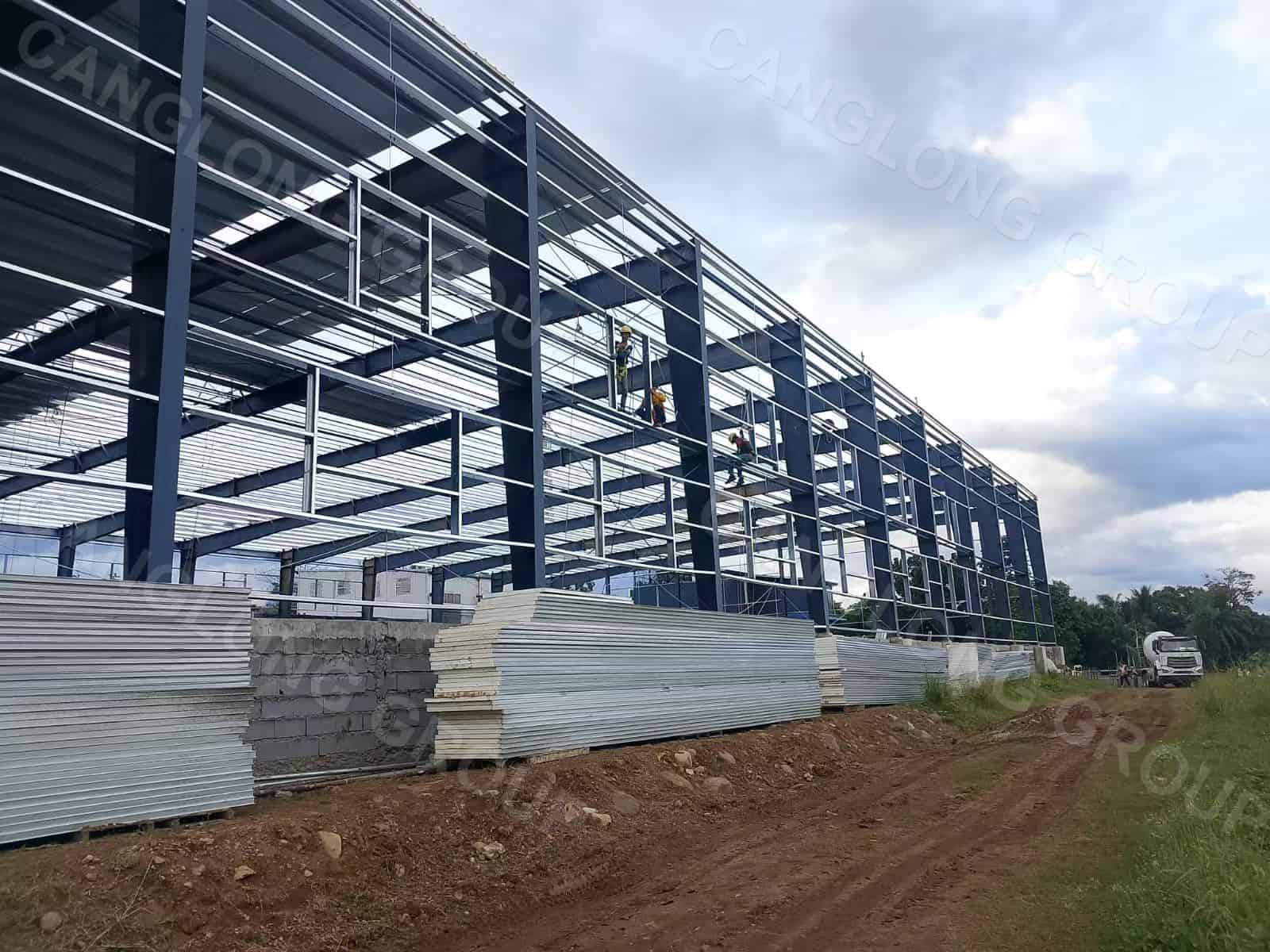
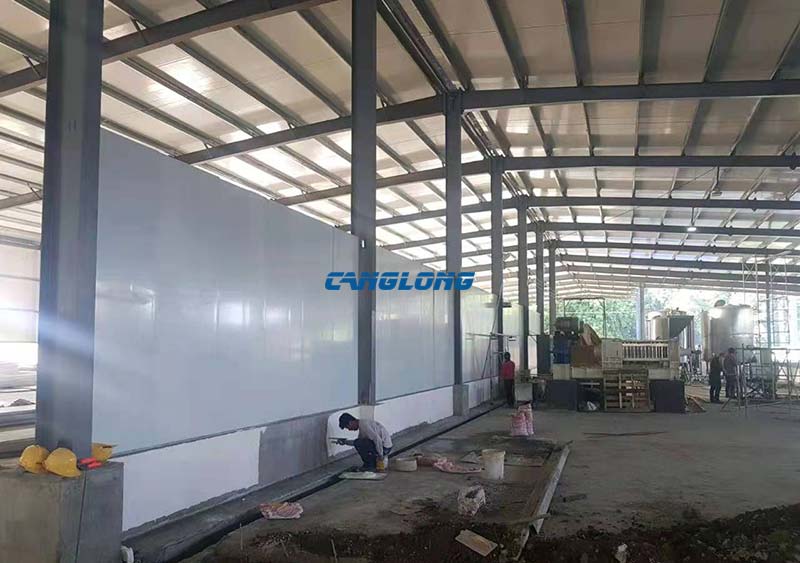
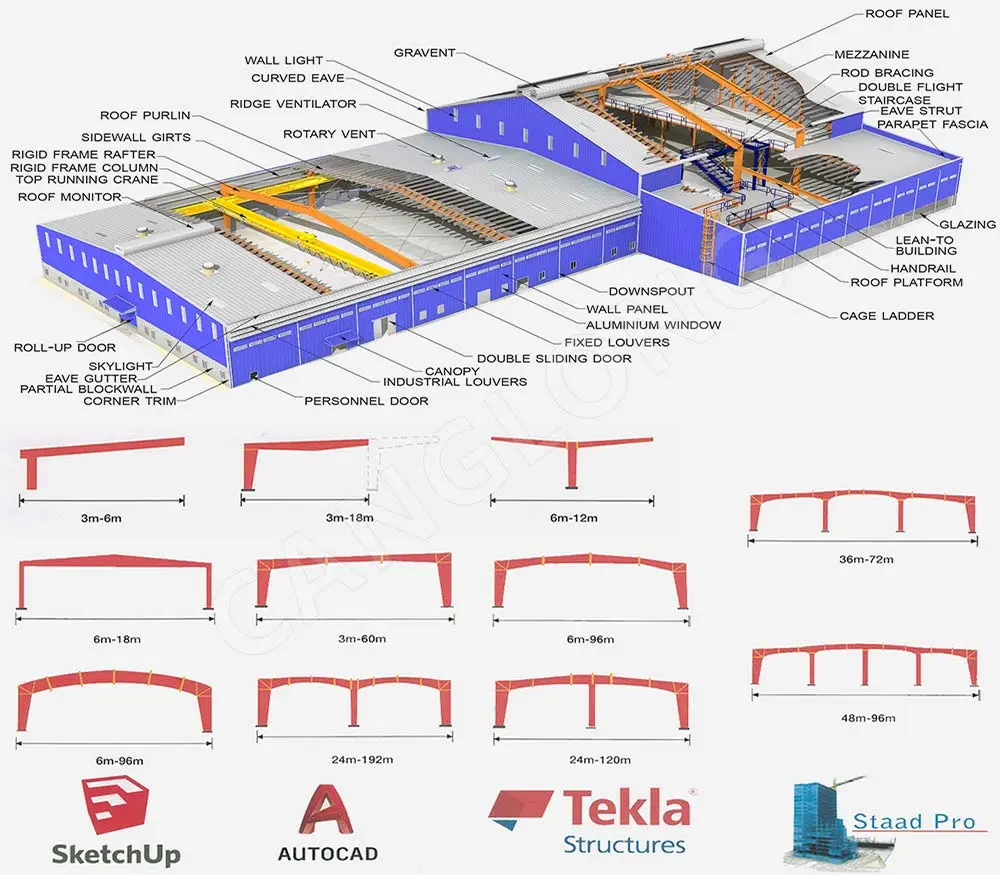
The client did not come to us with a blank page. They came with their own drawings, and our job was to optimize them for fabrication, detail the shop drawings, and supply the complete building kit for a single-storey standard factory building — primary steel, secondary steel, roof and wall panels, gutters, ventilators, partitions, fasteners, the lot. The result is a straightforward, disciplined prefabricated steel warehouse with nothing in it that does not earn its place.
| Location | Davao City, Mindanao, Philippines |
| Building type | Single-storey portal frame food factory warehouse |
| Dimensions | 75 m × 36 m, eave height 6.75 m rising to 8.75 m (single slope) |
| Floor area | ≈ 2,700 m², one level, no interior columns, no mezzanine |
| Structural system | Portal frame; H-section columns and rafters; C-purlins detailed open-side-down |
| Roof | Single slope, 50 mm EPS sandwich panels, with gutters and downpipes for organized rainwater discharge |
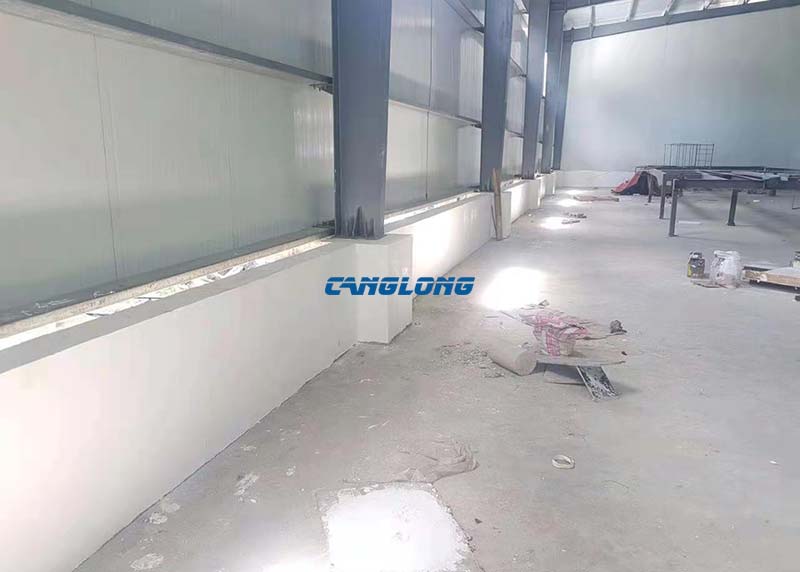
| Walls | Single-skin metal panels, wall-mounted ventilators, protective wire mesh at openings |
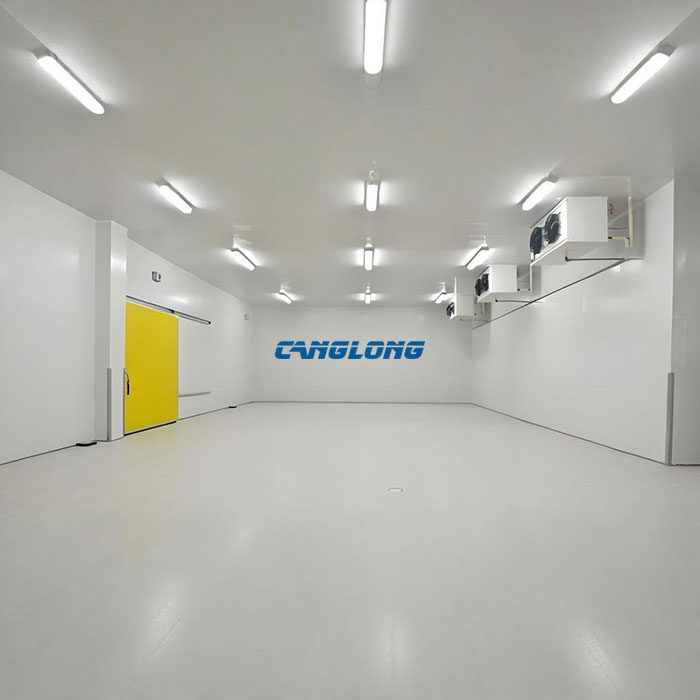
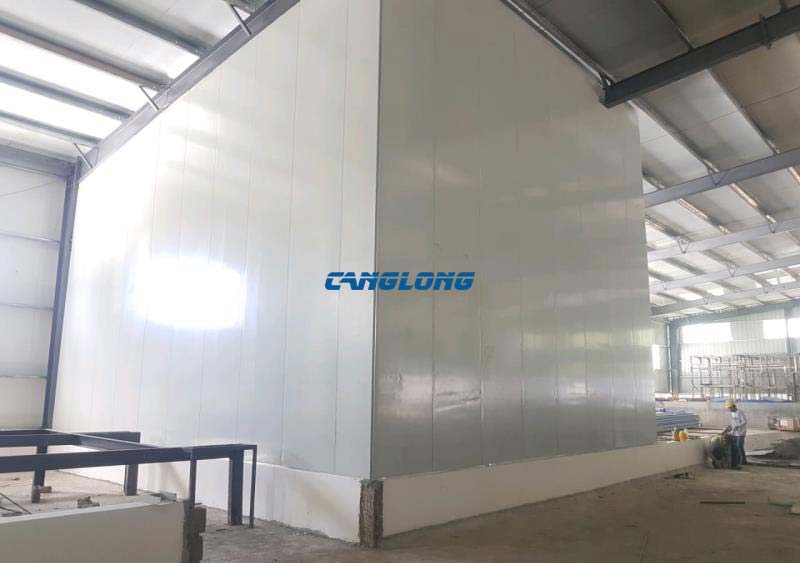
| Interior | Full set of partition panels for production and storage zoning |
| Wind design | Main frames, roof system and connections checked to the wind provisions of the Philippine National Structural Code of Practice (NSCP) |
| Inspection | Client-appointed SGS pre-shipment inspection at our factory — passed in full |
| Delivery | CIF Davao, two shipments: steel structure first, cladding panels second |
| Erection | Client-appointed professional local crew, supported remotely by our engineers |
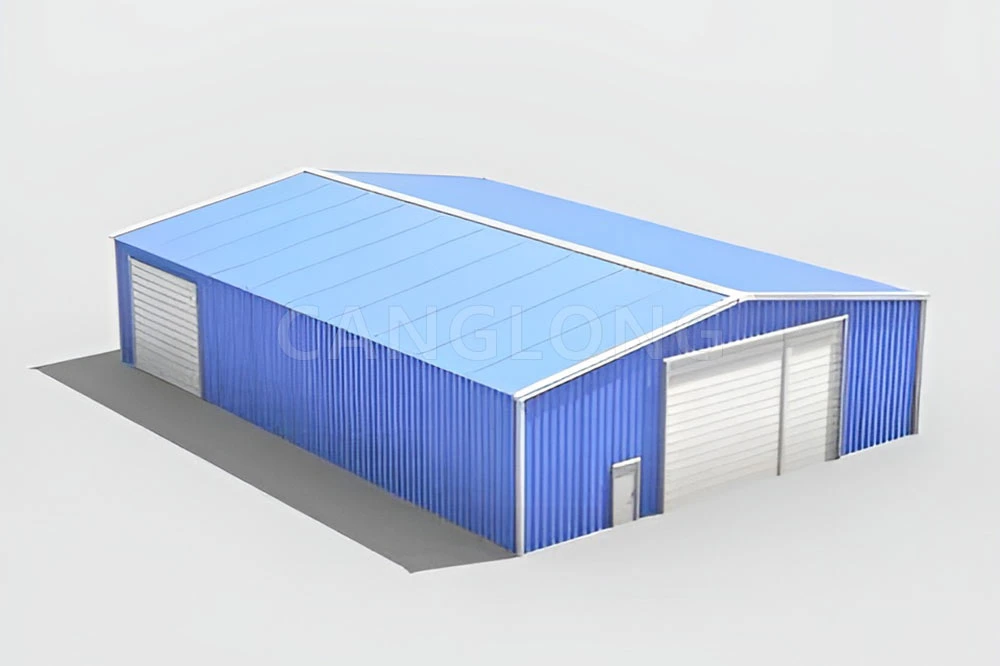
The single slope is worth a second look, because most buyers default to a double pitch without asking why. Here the roof climbs from 6.75 m on the low wall to 8.75 m on the high one, in one unbroken plane that hands the rain to the gutters in a single direction — no valley, no snow to worry about, one less thing to maintain. The 50 mm EPS sandwich panels do three jobs on top of that: they steady the indoor temperature and humidity (which in a food plant is not a comfort issue, it is a product issue), they soften the drumming of tropical rain on the roof, and they add the insulation without piling load onto the frames.
6.75 m
8.75 m
Cross-section, not to scale — 36 m clear span, no interior columns · single-slope roof, 50 mm EPS sandwich panels
Designed for the Wind the Maps Say Davao Doesn’t Get
Ask around and you will hear that Davao doesn’t get typhoons — the city sits outside the main typhoon belt, and the surrounding mountains take the edge off whatever does come through. The Philippines as a whole averages around twenty tropical storms a year, and buildings here are designed knowing that. Our engineers did not design this one to the local reputation. The main frames, the roof system and the connection nodes each went through a dedicated wind review, checked against the wind provisions of the Philippine National Structural Code of Practice, before any steel was cut.
There is no snow load to speak of in Davao — which is precisely why the wind numbers deserve the attention. The client gets a building engineered for the storm that hasn’t arrived yet, in a region that gets to keep saying it doesn’t have typhoons. That trade costs a little steel. It buys a factory that is still standing, square and weathertight, the year the forecast is wrong.
The Detail You’d Never Notice: Every Purlin, Open Side Down
Food plants are judged on cleanliness, and most steel buildings quietly fail that brief. Stand in the aisle of a conventional portal frame building and look up: every roof purlin is a C-section, and on most projects it is installed open side up — a continuous trough running the full 75 metres of the building, collecting dust and whatever the air carries, seven to nine metres above the floor. Cleaning it means scaffolding up to reach a ledge you cannot see from the ground.
For this project, our engineers detailed every purlin the other way round. Same section, same tonnage — the difference lives entirely in the shop drawings, which is why it costs a decision and almost nothing else.
Conventional: open side up
A dust shelf running the length of the building, up where nobody wants to clean.
This project: open side down
The cavity faces the floor. Nothing settles in it, and the roof underside stays wipe-clean.
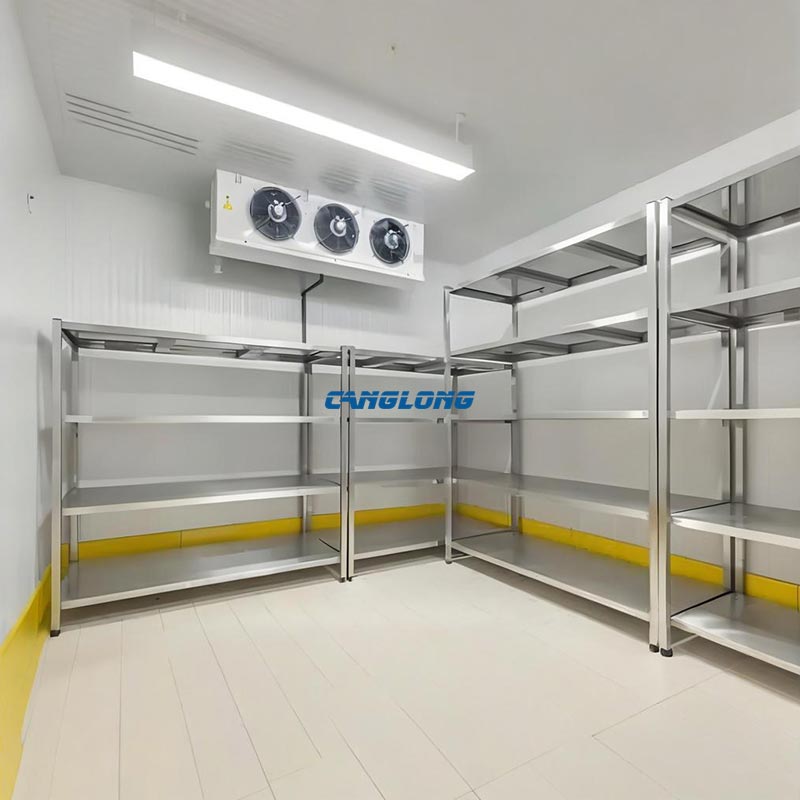
The purlins were one decision inside a package aimed at food-grade operation. Wall-mounted ventilators keep air moving through the hall so heat and humidity do not stagnate; protective wire mesh over the ventilation openings keeps insects and pests on the outside of the building envelope; and a full set of interior partition panels divides the production and storage zones without a single blockwork wall. None of it is complicated. All of it is the difference between a warehouse with a food factory in it and a food factory that happens to be steel.
An Inspector Who Doesn’t Work for Us
Before anything was packed, the client appointed SGS to inspect the finished kit at our factory. The inspection passed in full. We like these visits, and we keep saying yes to them, because they cost the client money and days while a container of problems arriving in Davao costs far more of both. If your project needs SGS or another inspection agency on the checklist, we book it into the production schedule from the start instead of bolting it on at the end.
Two Ships, Not One
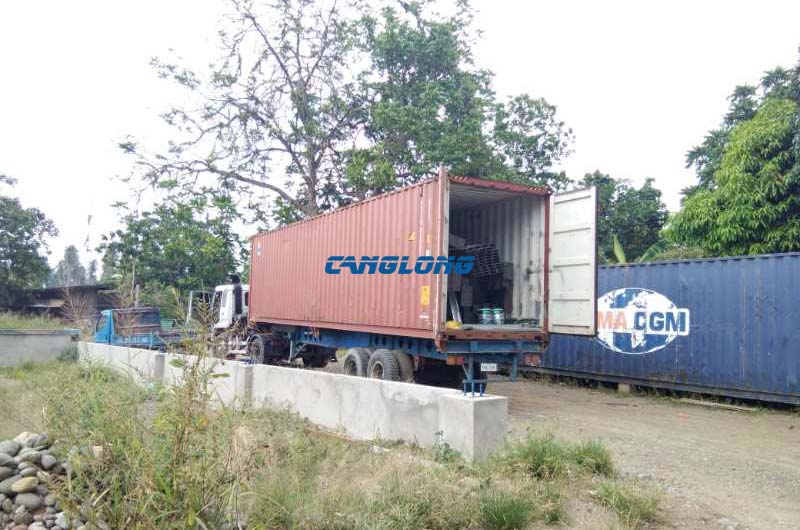
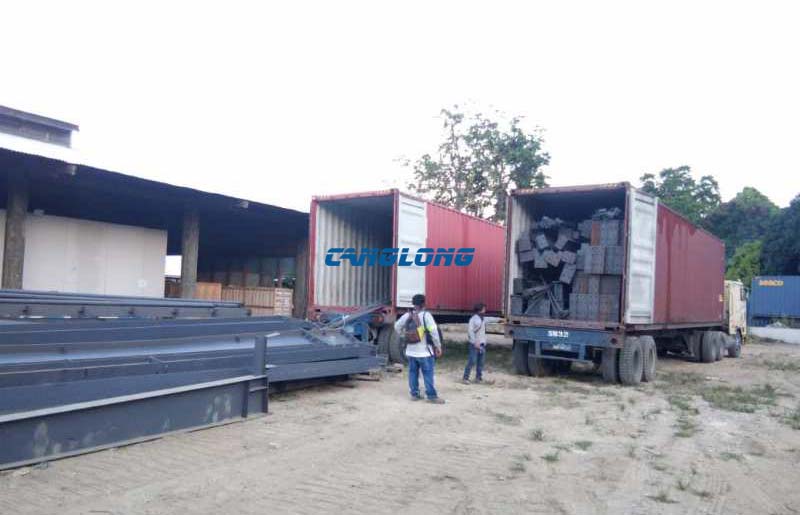
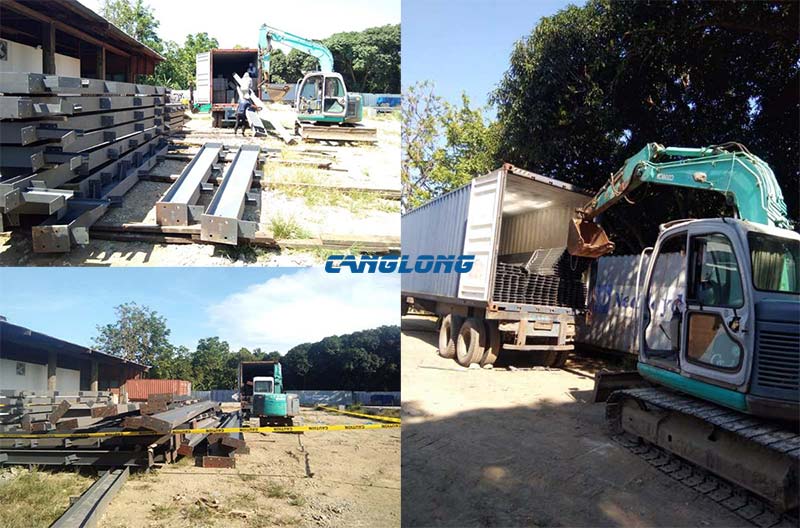
The complete kit was too large for a single sailing, so it went in two batches: the steel structure first, the roof and wall panels second. The split was as much the client’s finance plan as a logistics one — staggering the deliveries eased the pressure on working capital, and it gave the site crew the frames weeks before the panel mountain arrived, so unloading never stacked up at the gate. We shipped CIF Davao: ocean freight and marine insurance were ours to arrange, and the client received two managed deliveries instead of one large worry.
A Davao Crew, Our Drawings
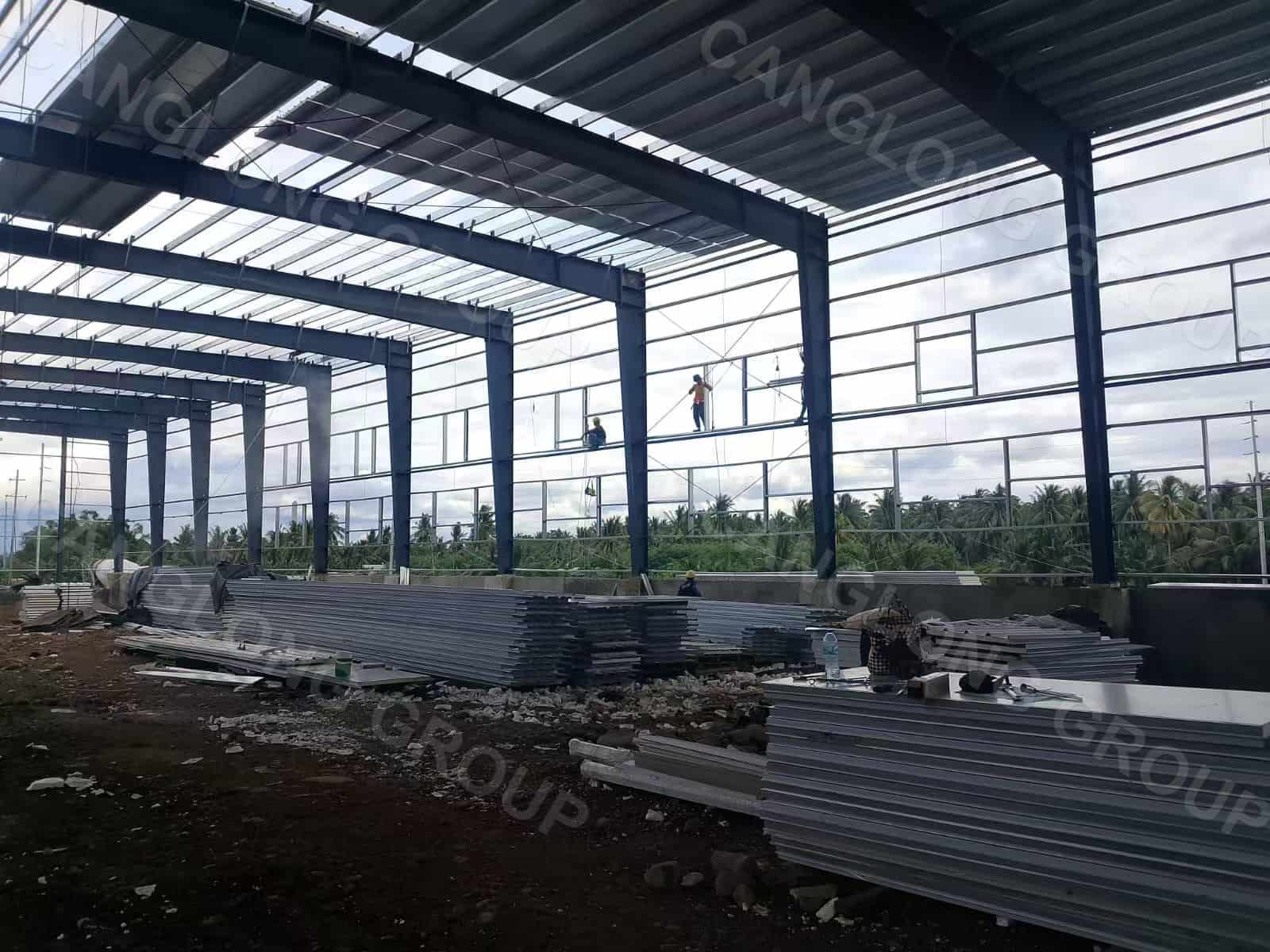
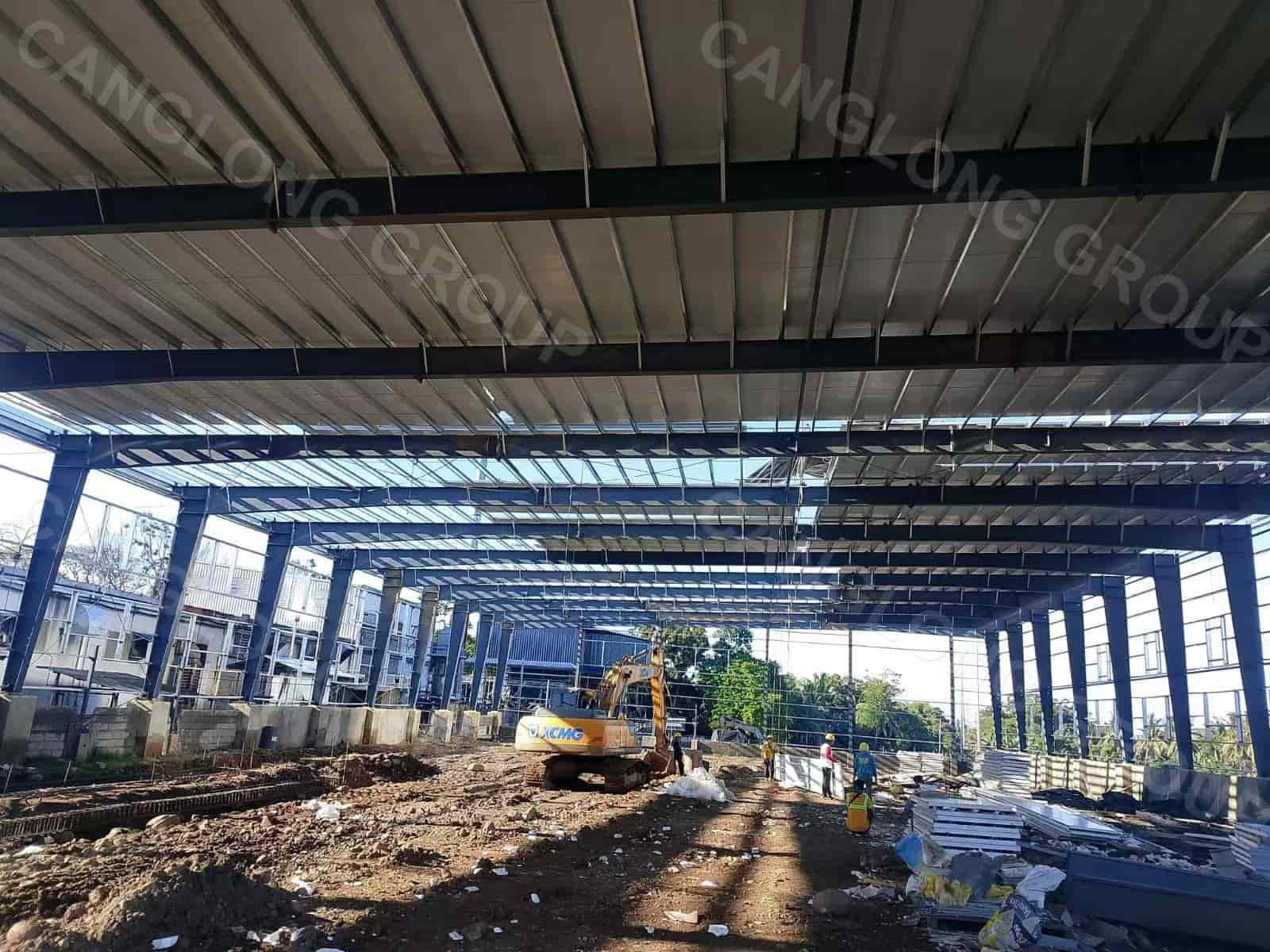
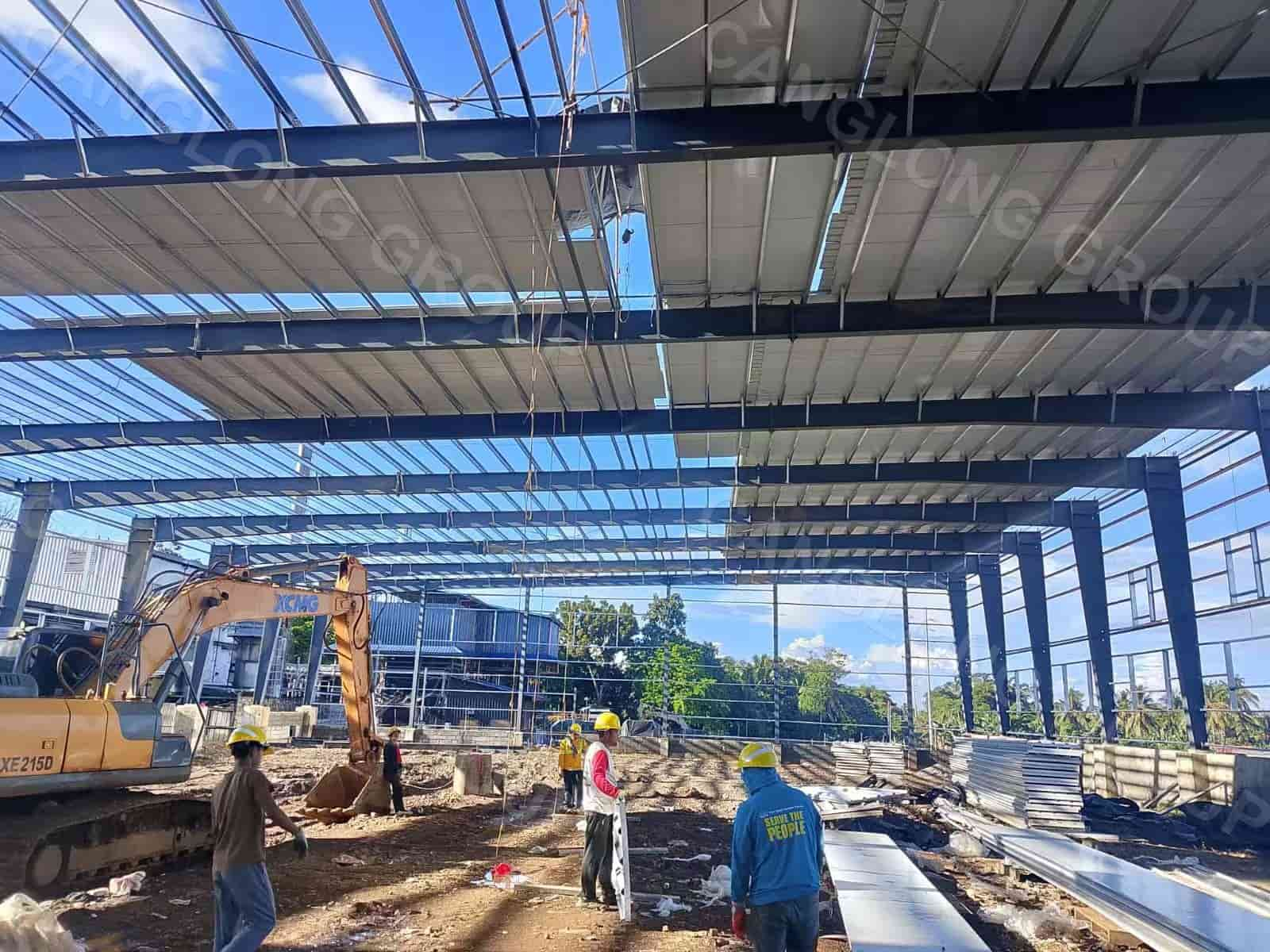
Canglong did not send an erection team. The client hired a professional local crew — their second build with us, and the drawing package is written for exactly that situation: shop drawings detailed for fabrication, erection drawings organized by column and bay, and a direct line back to the engineers who drew them while the frames go up.
Four Buildings, One Honest Score
In the follow-up after completion, the client scored the project 8 out of 10. They also asked us to keep their name off this page — no logo, no quote, and the photographs here stop at the erection stage. We are publishing the 8 and honoring the request, because both point at the same thing: this was a real project for a real buyer, not a brochure. What we can add is what their site already shows. A company that came to us in 2019 for one plant has kept ordering as it grows, and four completed buildings later, the Davao site says more about us than any testimonial we could write.
See Where It Was Built
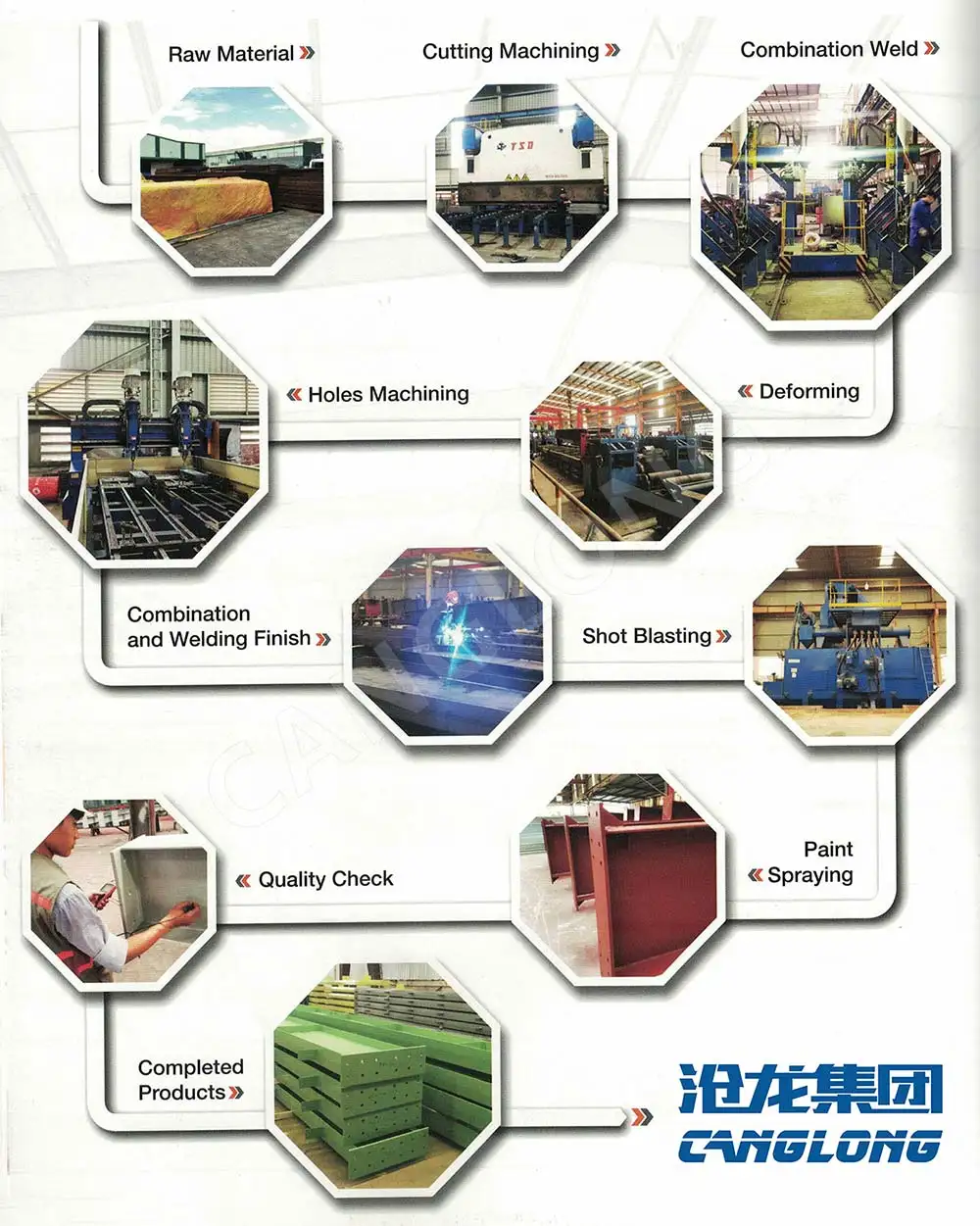
The client’s team took no project video, and their finished plant is theirs to keep offline. What we can show you is the factory that produced the kit — the fabrication lines, the welding, and the panel production behind every building on this site.
Planning a Warehouse or Food Plant in the Philippines?
If you are weighing up a warehouse, factory or food-grade building in the Philippines or Southeast Asia, talk to the person who ran this one end to end — the drawing optimization, the SGS inspection, both containers, and every call with the site crew. If you are still deciding what type of building you need, start with our guide on how to choose the right steel warehouse type.
Talk to Bella About Your Project
BW
Bella Wang
Export Consultant · Philippines & Southeast Asia · Canglong Group
Export Consultant · Philippines & Southeast Asia · Canglong Group
Bella handled the Davao food factory project from the first Alibaba message to the second container’s arrival. Send her your building dimensions, intended use and location for a tailored proposal and quotation.
Related pages
- Steel Warehouse Buildings — the full range of prefabricated warehouse designs and specifications.
- Industrial Buildings — steel structure solutions for factories, workshops and production facilities.
- Philippine Two-storey Warehouse — another Philippine industrial project, built for a different kind of site.
Project Info
Country
Philippines

Project Name
Food Factory
Project Date
2021-3-31
Product Address
Davao City, Mindanao Island
Area
5508㎡
Customer Reviews
10.612 Rating
Quality
4.6
Price
4
Design
88
Service
91
Delivery
83
Package
75
Project Details
1. Double span structure: 18 meter ultra large span (without column design) maximizes equipment layout flexibility.
2. Climate response: The double sloping roof is designed with an 8 ° inclination angle, which can withstand a strong typhoon load of 160km/h.
3. Energy saving and efficiency increasing: The reflective coating on the roof reduces indoor temperature by 5 ℃, saving over $20000 in air conditioning costs annually.
No
Contact us Leave a Message
Your email address will not be published. Required fields are marked *
Bringing the steel building to you
Figure out what you want, choose the type of building you need, understand the cost, contact Canglong then go get it!