




 November 13, 2026
 November 9, 2026
 November 5, 2026
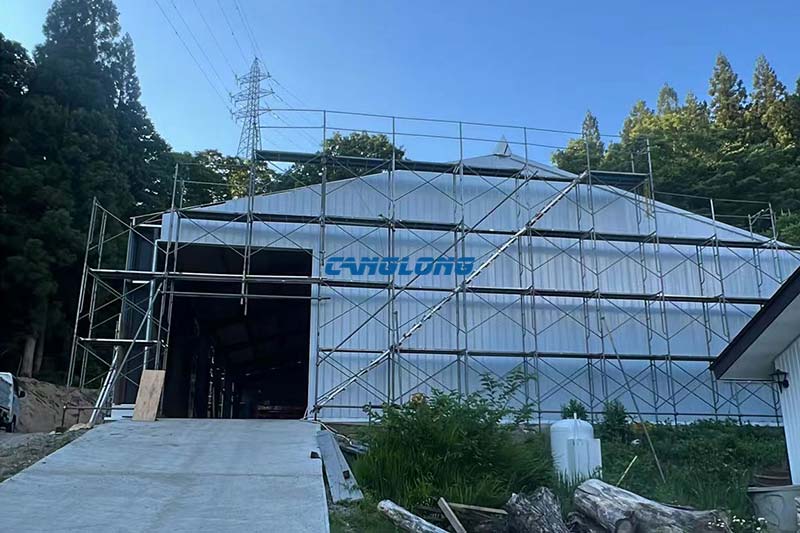
Japan Timber Warehouse
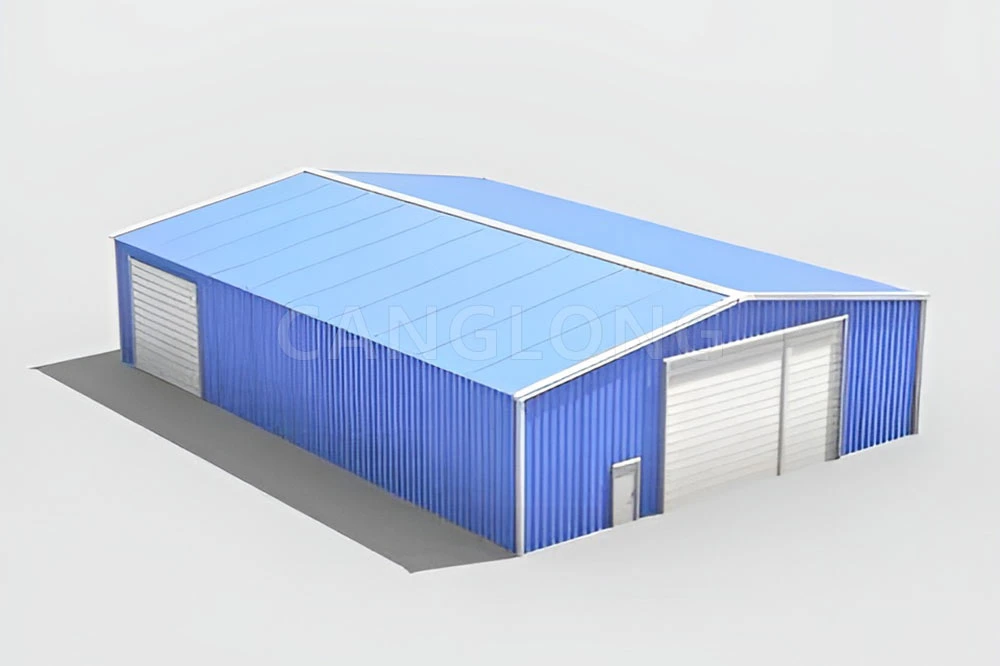
Timber is an awkward thing to store. It is heavy, it moves with moisture, and it needs forklift room more than it needs pretty offices. This timber warehouse in Murakami, Niigata Prefecture, Japan — 27 × 20 m on a 5 m eave, 540 m² under roof — was designed around those three facts: an H-beam portal frame for the load, a double slope gable roof for the Sea of Japan snow country, and a full-width front opening so a forklift never has to make a tight turn with a bundle of lumber.
Project Overview
| Location | Murakami, Niigata, Japan |
| Use | Timber and wood product storage |
| Building size | 27 m × 20 m × 5 m (540 m²) |
| Frame | Welded H-section columns and rafters |
| Roof form | Double slope (gable), metal roof sheeting |
| Walls | Corrugated metal cladding |
| Scope | Structural design, fabrication, erection guidance |
Why a Gable Roof Belongs in Snow Country
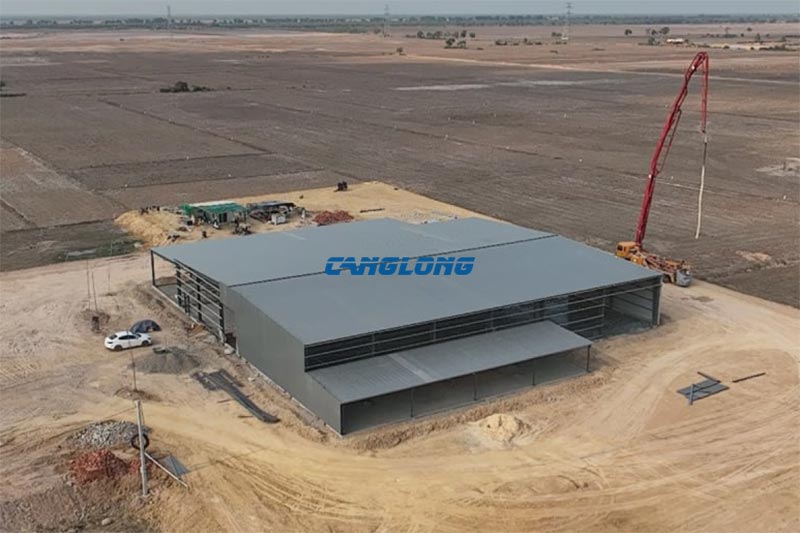
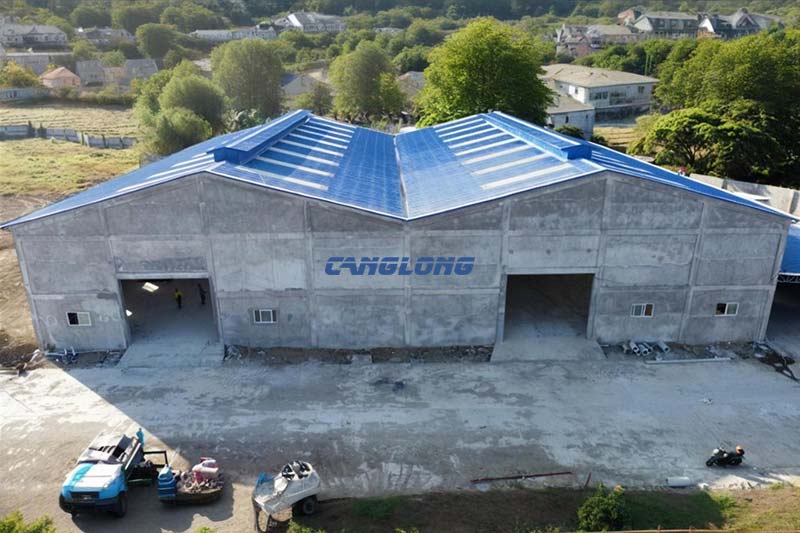
Niigata’s coast is one of the snowiest inhabited strips in Japan — the same weather that made the region famous for sake rice piles deep drifts on anything left flat. A gable roof answers this in two ways: the ridge splits the snow load between two sloping planes, and the pitch gives fresh snowfall a path to slide before it consolidates. On the site photos you can see the finished roof standing clear against the hills, with no internal gutters or valley lines where ice could dam.
The roof pitch on this building was set for the local snow load, not a catalog default. That is the part of a Japanese project we treat as non-negotiable: the frame numbers only mean something once the site’s ground snow load and wind exposure are in the calculation.
The Frame: H-Beams Sized for Lumber Loads
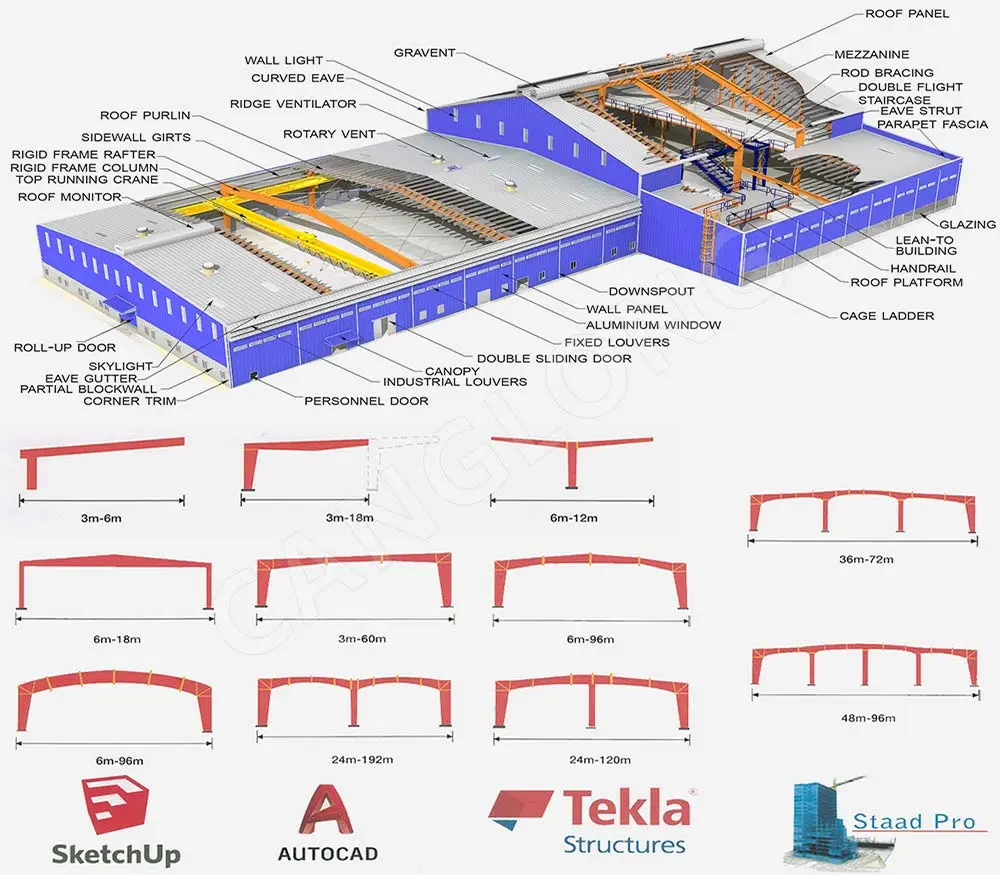
Timber storage loads are less forgiving than they look. Green lumber is heavy, racking loads run high, and forklifts bump columns. The portal frames here are welded H-section columns and rafters, braced in both directions, spaced so that stacked timber loads travel cleanly into the foundations. The erection photos show the sequence: slab first, then the frames picked in with a mobile crane one bay at a time, then purlins and bracing to lock the geometry before any sheeting went on.
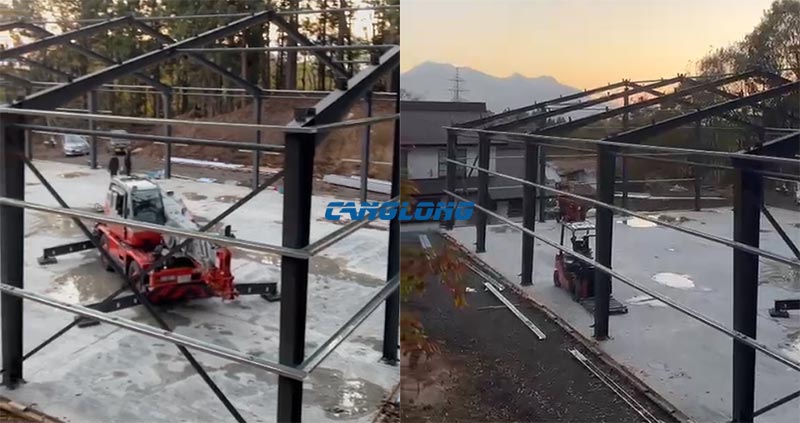
Closing In the Building
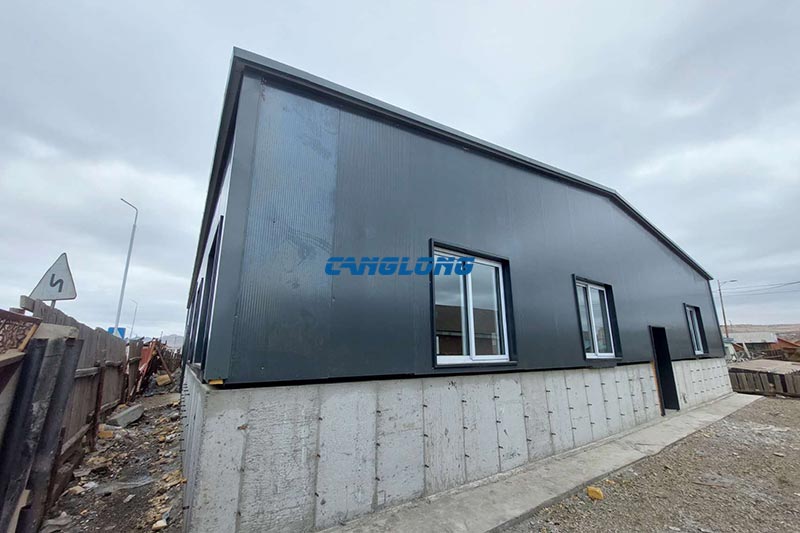
With the frames braced, the roof and wall sheeting went up in the standard order — roof planes first, then the wall cladding, then the trims. The photo below shows the wall and roof panels going on around the open gable end; the finished building keeps that end as a full-width front opening under the gable, which is what makes a timber warehouse work day to day: a forklift can enter square-on with a loaded bundle, and air can move through the open front when the weather allows.
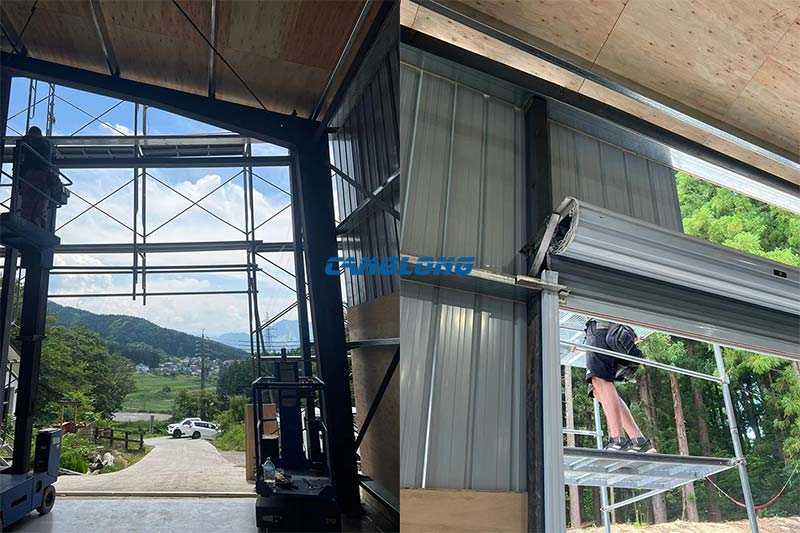
The walk-through video below covers the finished frame and envelope:
What Timber Asks of a Warehouse
- Moisture control. Wood moves as it dries. Metal cladding keeps rain off the stack, and the open front lets cross-ventilation carry humid air out on dry days — the cheapest dehumidification there is.
- Floor loading and flatness. The slab was poured and cured before the steel arrived, which is the right order for a storage building: the frame bolts down onto known concrete, and the forklift gets a flat floor from day one.
- Height over span. At a 5 m eave the building stacks bundles high without needing clear-span tricks across the full 20 m width — the gable does the spanning, the H-sections do the carrying.
One Supplier from Design to Erection Guidance
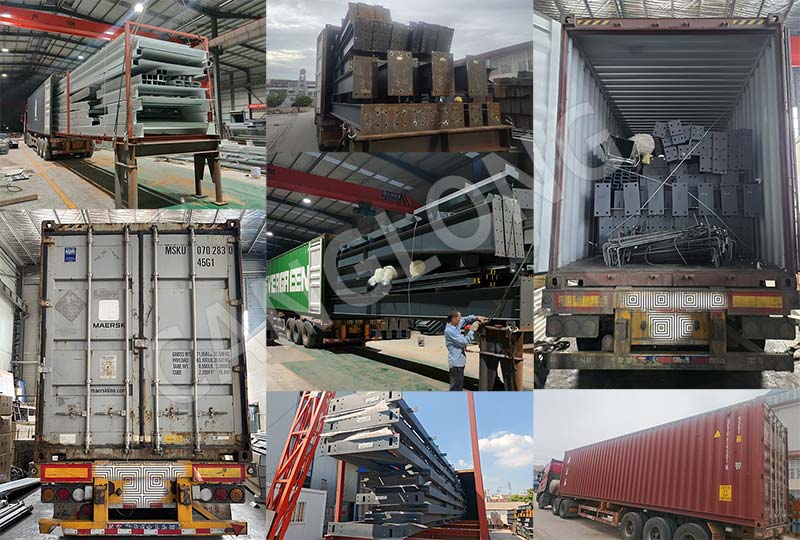
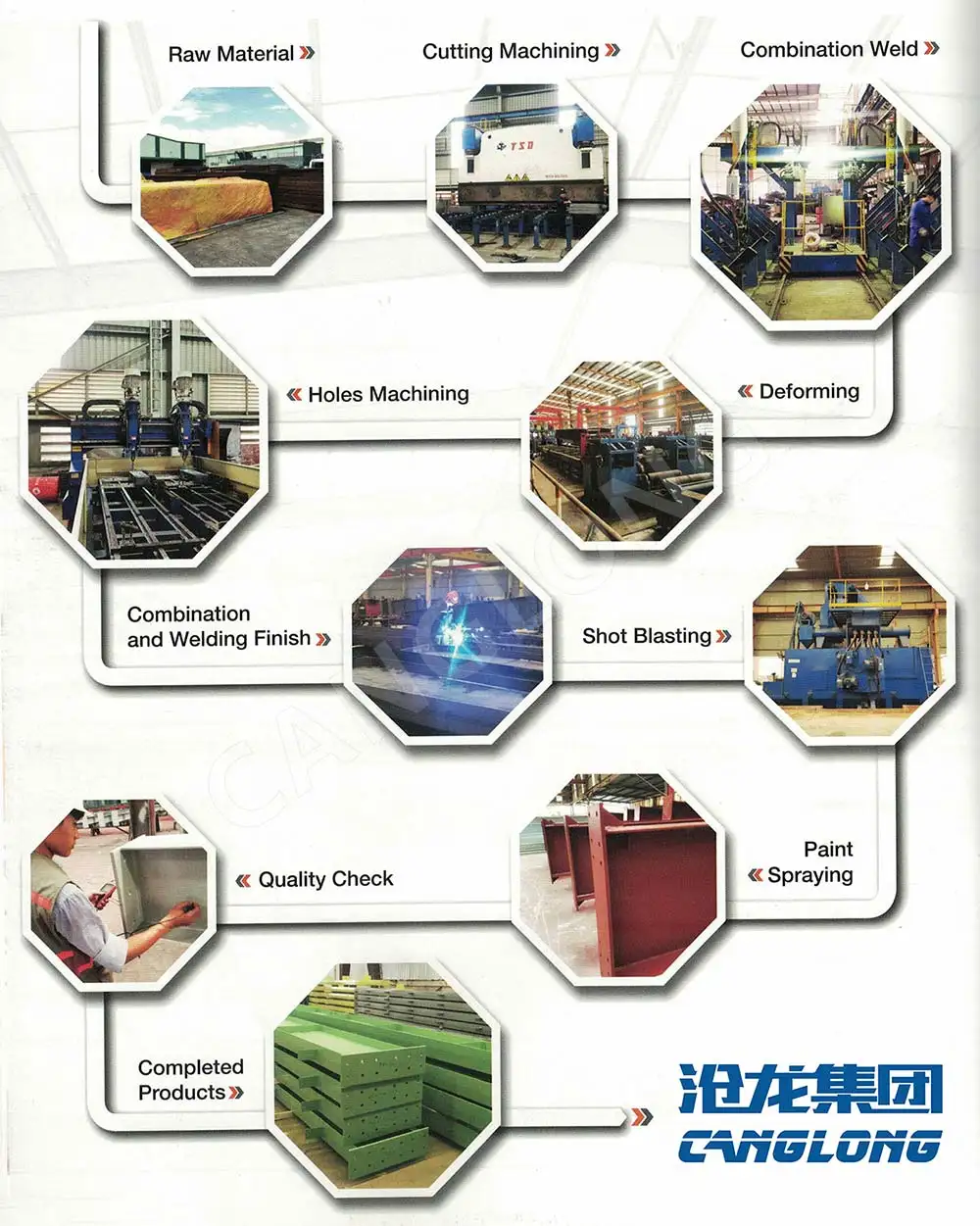
Canglong Group’s scope covered the structural design, factory fabrication and erection guidance on site — the frames, purlins and bracing arrived cut, drilled and matched to shop drawings, so the local crew spent its time bolting steel, not re-fitting it. For a comparison of how the same steel system adapts to other Japanese storage uses, see the storage warehouse delivered in Yokohama, or the stone warehouse built for heavy mineral loads. The gable format itself is described on our double slope warehouse page.
Planning a Timber or Heavy-Material Store in Japan?
Send us the storage tonnage, the stack heights and your site’s snow zone, and we will come back with a frame design, a steel weight and an erection plan matched to your council’s requirements: start here.
Project Info
Country
Japan

Project Name
Timber Warehouse
Project Date
2024-6-15
Product Address
Murakami, Niigata, Japan
Area
540㎡
Customer Reviews
10.612 Rating
Quality
4.8
Price
4
Design
88
Service
91
Delivery
83
Package
75
Project Details
No
Contact us Leave a Message
Your email address will not be published. Required fields are marked *