



 November 18, 2026
 November 17, 2026
 November 16, 2026
 November 13, 2026
Indonesia Cleanroom
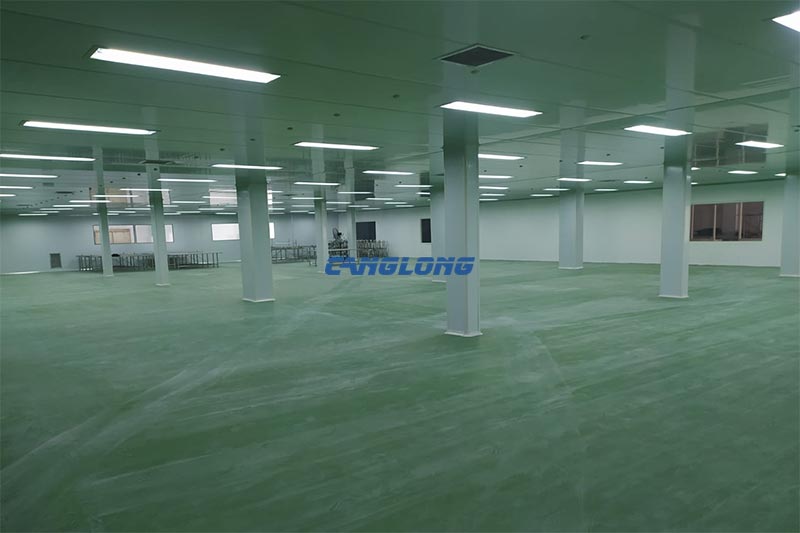
Canglong supplied the panel envelope for a 1,500 m² cleanroom in Indonesia — larger than the 1,260 m² cleanroom we built in Ho Chi Minh City and the 850 m² clean room inside a Yemeni factory. The panels are EPS (expanded polystyrene) core bonded between pre-coated steel faces.
Two properties drove the specification on this site, in this order: airtightness at the joints, and resistance to a coastal-industrial atmosphere. Washability of the finished surface comes third, and it is the one every supplier claims, so it is the least useful thing to compare. Scope note up front — we supplied the panel system and the technical support for its installation; air handling, filtration and certification stayed with the client and their local contractors.
What a coastal atmosphere actually attacks
EPS does not corrode. The 0.4–0.6 mm steel face does, and it fails at the workmanship points first — cut edges, fixing holes, and scratches from handling — long before it fails in the middle of a panel. A project inland and a project a few hundred metres from the shoreline are not the same specification, and pretending otherwise is how a cleanroom envelope starts staining in its second year.
The rule we work to is set by distance from the sea, not by the client’s budget: a standard polyester topcoat inland, a higher-build topcoat with a heavier metallic coating as you approach the coast, and every cut edge sealed during installation rather than “before handover”. The last item costs almost nothing and prevents most of the complaints we are asked about.
That said, on a genuinely inland site the upgraded coating is money spent with nothing to show for it. We do not apply it by default, and we will say so if a client asks for it where it is not needed.
Airtightness is the specification, not the panel
At 1,500 m² the envelope contains several hundred linear metres of joint, and the room’s pressure regime is held by those joints — not by the panels between them. Panels are a commodity; the joint detail is the engineering.
Three things make or break it here. The joint has to stay flush, because any ledge is a surface that collects dust and gets missed in cleaning. The joint detail at a door frame or a service penetration is not the same detail as a straight wall run, and treating them identically is the most common failure we see in drawings drawn by panel salesmen rather than by the people who have to seal them. And the sealant is a maintenance item with a service life measured in years — worth budgeting for on a cycle rather than discovering during an audit.
When you compare quotes, ask for the joint detail drawing. Not the panel datasheet — the datasheet is the same for every bidder.
Getting 1,500 m² of panel to an island site
Shipping to an archipelago changes the packing specification more than people expect. Three things we plan for:
- Moisture, not impact, is the bigger risk. A bundle that sits sealed and sweating through a tropical sea leg can arrive with face staining that no amount of careful unloading will undo. Packing has to let the load breathe and stay dry at the same time, and the storage plan on arrival matters as much as the container.
- Strap pressure. Panel edges are crushed by strapping more often than they are damaged by handling. Strap positions and edge protection are specified, not improvised at the stuffing yard.
- The inland leg is frequently the rougher one. We pack for the worst leg of the journey, which is rarely the ocean crossing. On this kind of site the last stretch of road transport does more damage than the port.
Every panel left the factory cut to size and numbered to a position. That is what allows the installation crew to work without measuring and trimming on site, and it is also what makes a delayed or misplaced bundle recoverable — you can identify exactly what is missing instead of re-surveying the whole room.
What this project did not include
- Air handling, HEPA or FFU filtration, ductwork and chillers. We build the envelope the HVAC works against. We need the air change rate and the duct routes before the ceiling can be detailed.
- Cleanroom certification — particle counts, pressure differential and recovery testing are done by a third party after commissioning.
- The installation crew. The panels were erected by the client’s local team with technical support from us. That is a normal arrangement for material-supply orders, and it only works if the panels arrive numbered and the drawings are complete — which is why the factory cutting matters more than the shipping terms.
- Import clearance, duties and the inland haul are contract items. They are agreed in the order; they are never assumed.
The three cleanrooms on this system, side by side
| Project | Area | What made it different |
|---|---|---|
| Indonesia cleanroom | 1,500 m² | Coastal atmosphere drove the facing and coating specification; island logistics drove the packing. |
| Vietnam cleanroom | 1,260 m² | Hot and humid — ambient humidity near dew point made thermal bridges and joint sealing the binding constraint. |
| Yemen clean room | 850 m² | Built inside a working factory; 50 mm panels were chosen partly because they can be handled without a crane. |
Questions buyers ask about this project
How are the panels packed for sea freight, and what can go wrong?
Panels travel in wrapped bundles with edge protection and specified strap positions. The usual cause of damage is strap pressure on the panel edge; the usual cause of staining is moisture trapped in the packing through a long humid voyage. Both are packing-design problems, not shipping-luck problems. The arrival plan matters too — panels should go into dry, covered storage, not sit on an open slab waiting for the crew.
Can the same panel system be used for a cold room instead of a cleanroom?
Yes, with a different core and a different thickness. Cleanrooms are usually about airtightness and surface finish; cold rooms are about insulation value and vapour control, which is why the modular cold rooms we build run on 200 mm polyurethane panels rather than the thickness used here. Do not ask one panel specification to do both jobs.
What does the client need ready before the panels arrive?
Four things: a slab that is flat and level enough to seal a coved junction against, the air handling equipment decided (not “being decided”), every service penetration fixed in the drawings, and dry covered storage on site. If any of those four is missing, the panel delivery becomes the thing that waits — and storage on an active site is where panels get damaged.
Project Info
Country
Indonesia

Project Name
Clean Room
Project Date
2023-5-10
Product Address
Kendari City, Sulawesi Tenggara
Area
1500㎡
Customer Reviews
10.612 Rating
Quality
5.6
Price
4
Design
88
Service
91
Delivery
83
Package
75
Project Details
No

No
No

Contact us Leave a Message
Your email address will not be published. Required fields are marked *