



 November 9, 2026
 November 5, 2026
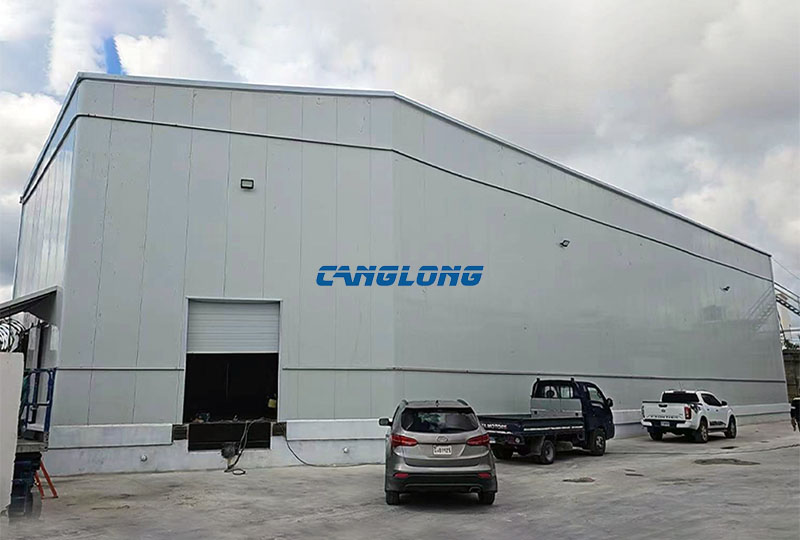
Canada Glass Factory
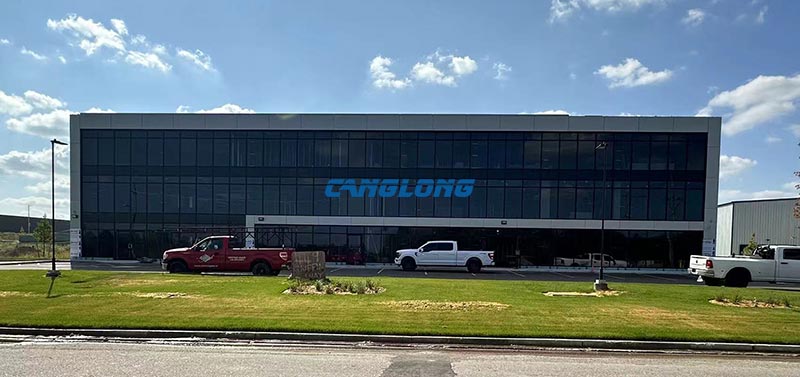
Most steel building projects are either a warehouse or an office. This one, built for a glass products company in Toronto, Canada, had to work as both: an 81.25 × 41.25 m steel warehouse with an integrated office block, 9.9 m to the eaves, delivered as a complete package — structural steel, overhead crane, roof and wall cladding, and the glazing for the office facade.
The business behind the building explains the layout. A company that stores and moves glass products needs a warehouse where heavy crates and racks travel by crane along a fixed path, day after day, without a bump. It also needs a place where customers and partners walk in through a front door — and for a glass company, that door might as well be glass. The building answers both: a crane-equipped storage hall behind, and a glazed office face in front that shows exactly what the company sells.
Project at a Glance
| Location | Toronto, Ontario, Canada |
| Use | Glass products warehouse with integrated office block |
| Dimensions | 81.25 × 41.25 m, eave height 9.9 m (approx. 3,350 m² footprint) |
| Structure | H-section steel frame with overhead crane runway beams |
| Wall system | Double-layer panels with injected insulation foam |
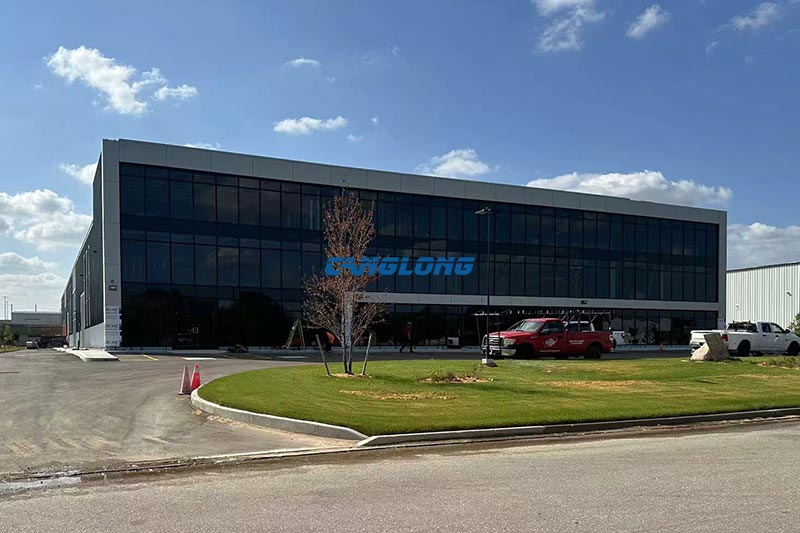
| Office facade | Full glass curtain wall on one elevation |
| Scope | Steel structure, crane, cladding, curtain wall glazing; interior fit-out by client |
One Building, Two Jobs: Warehouse Plus Office
Combining offices and storage under one roof is a common request in industrial parks, but it changes the design more than most buyers expect. The office section needs different eave treatment, different natural light, and a facade that represents the company to visitors. The warehouse section behind it needs clear height, crane coverage, and large door openings. A single steel frame handles both, as long as the two zones are planned together from the first drawing instead of bolted onto each other later.
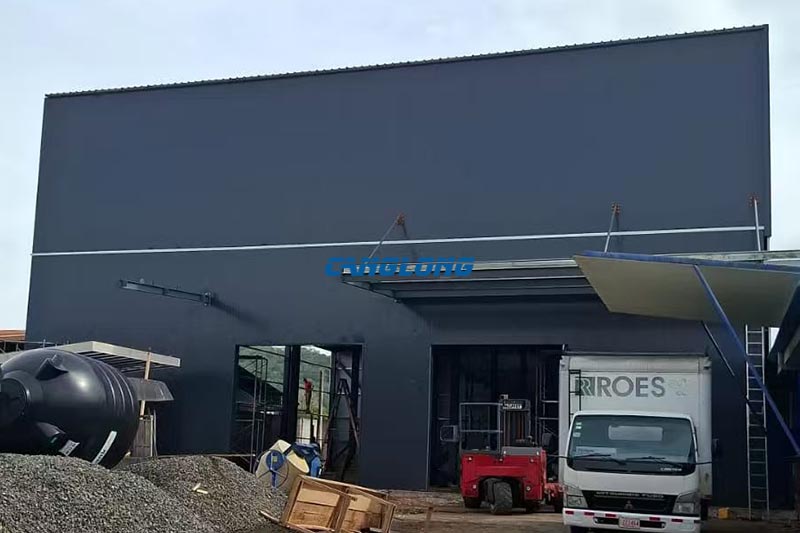
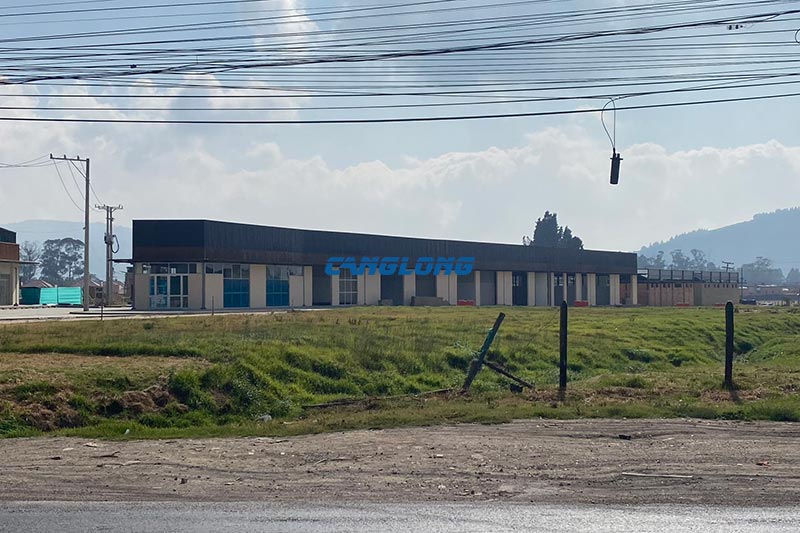
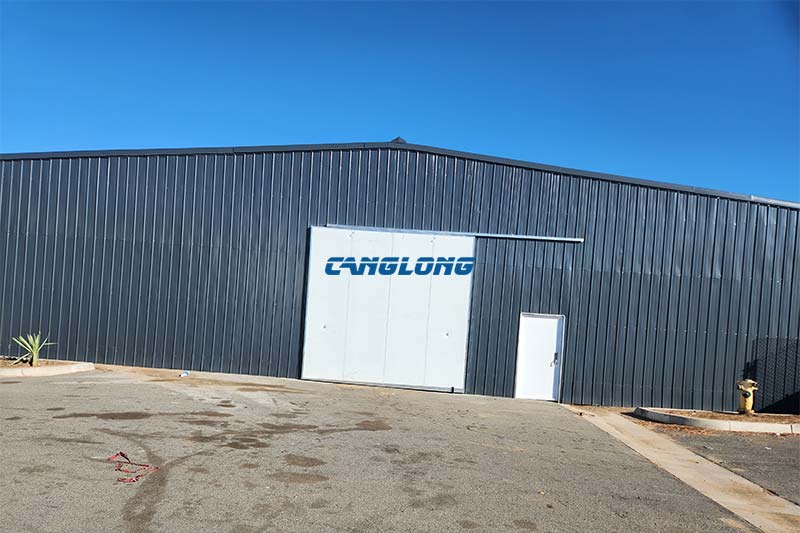
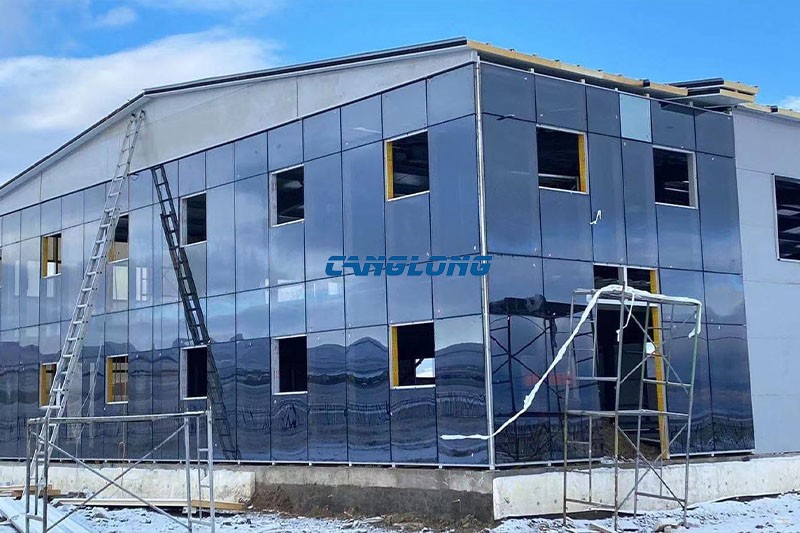
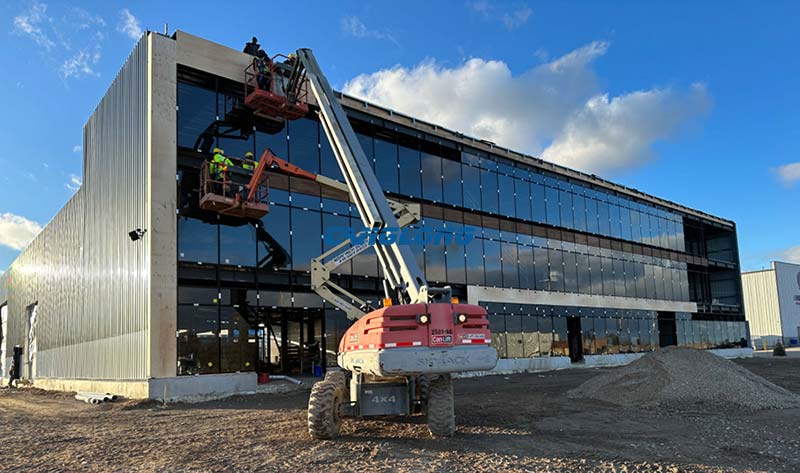
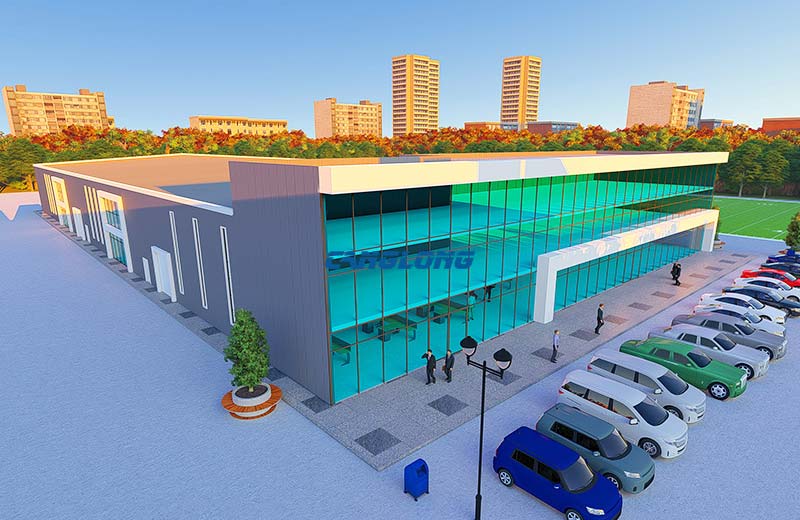
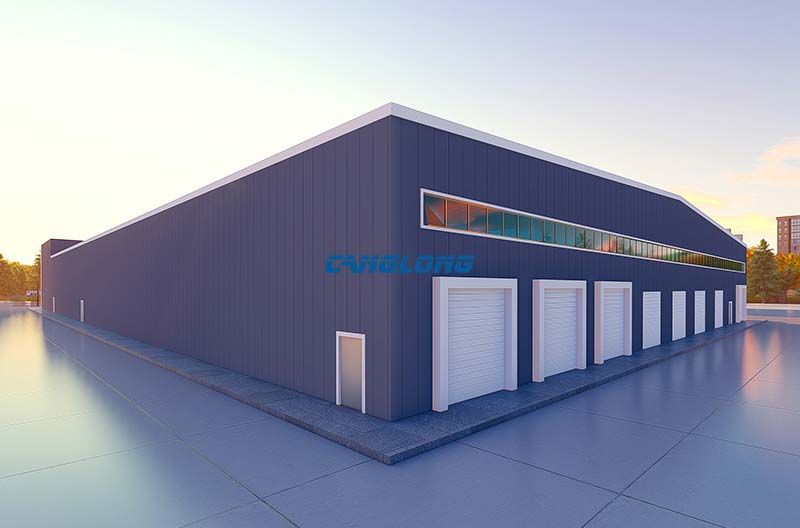
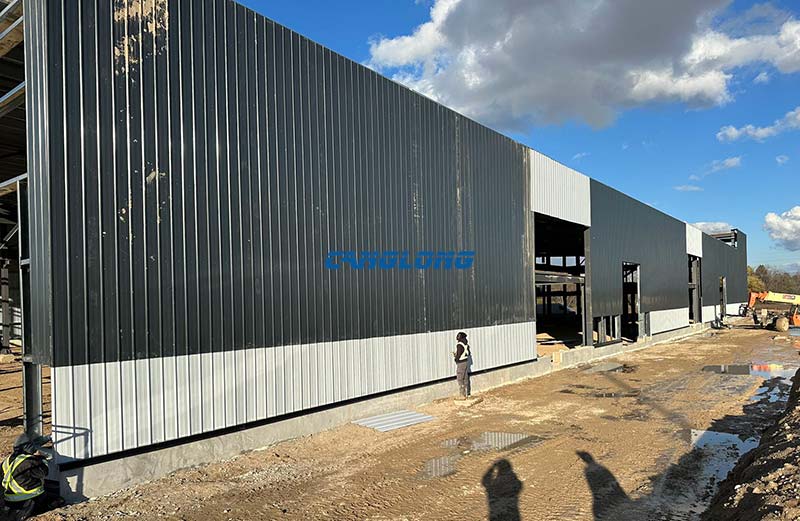
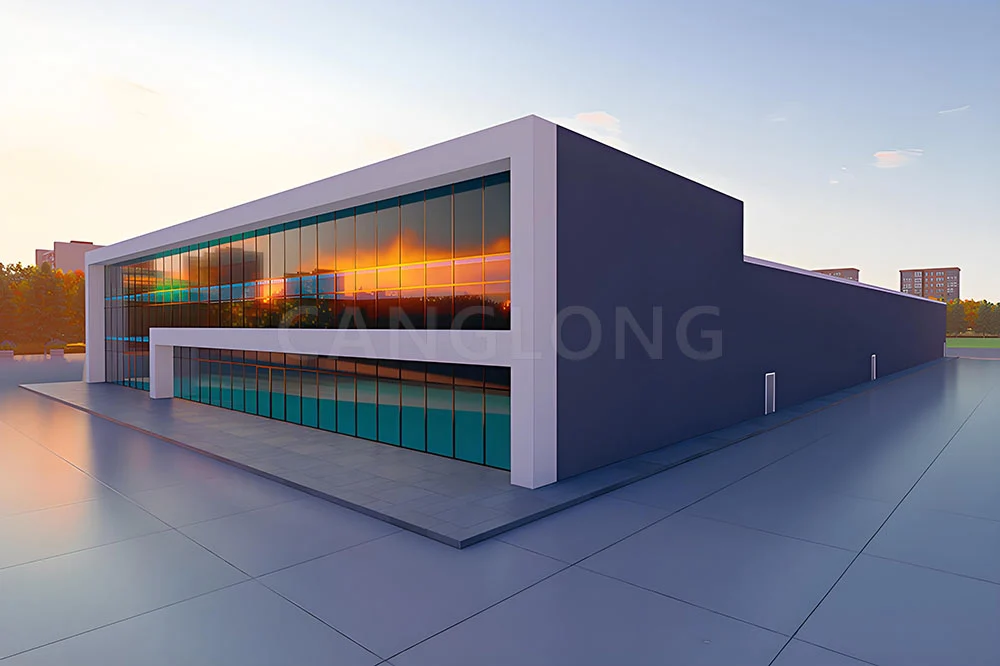
Here the office block sits at the front of the building, and its street-facing elevation is a full glass curtain wall — a deliberate choice for a business that works in glass. Beyond the branding value, the curtain wall floods the office floor with daylight and gives the front elevation the kind of finished, commercial-park appearance that municipal design review boards and landlords in Ontario tend to expect. The photos below were taken after completion; the dark glazed facade against the charcoal cladding is the most recognizable view of the building.
Overhead Crane Built into the Frame
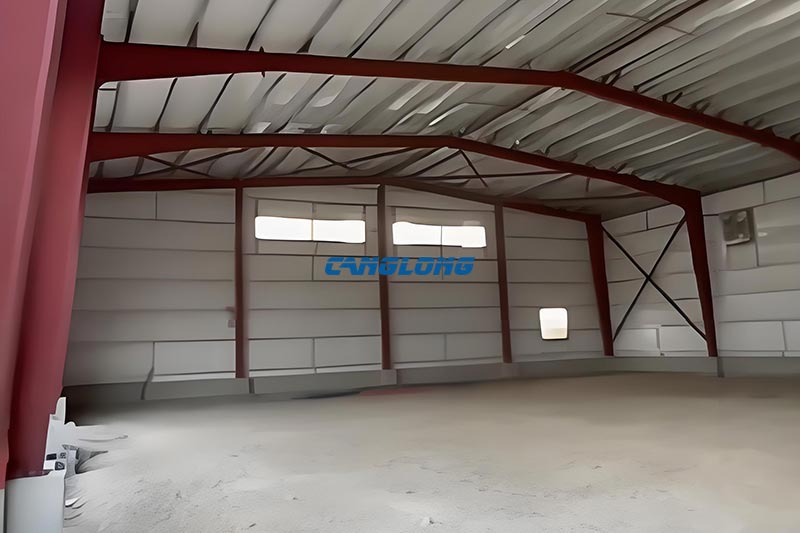
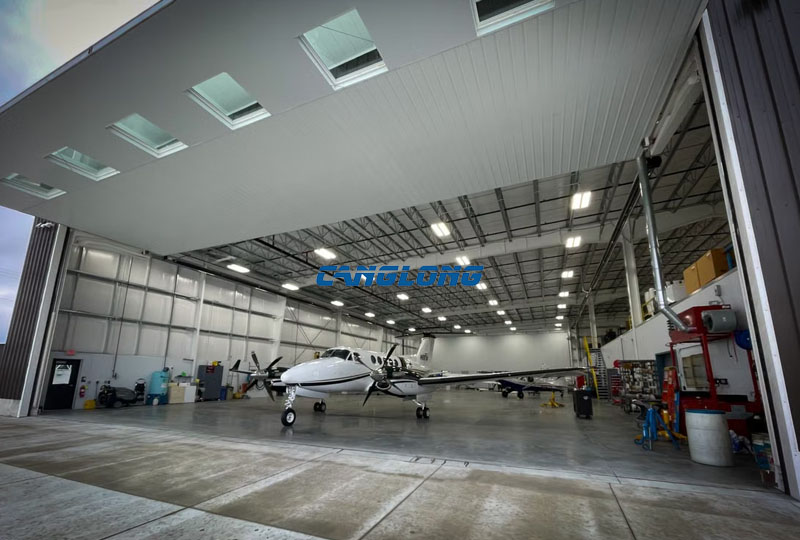
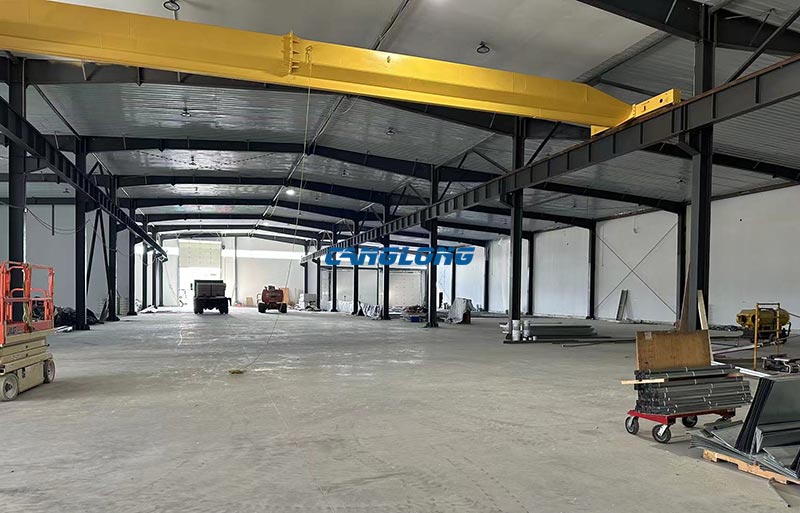
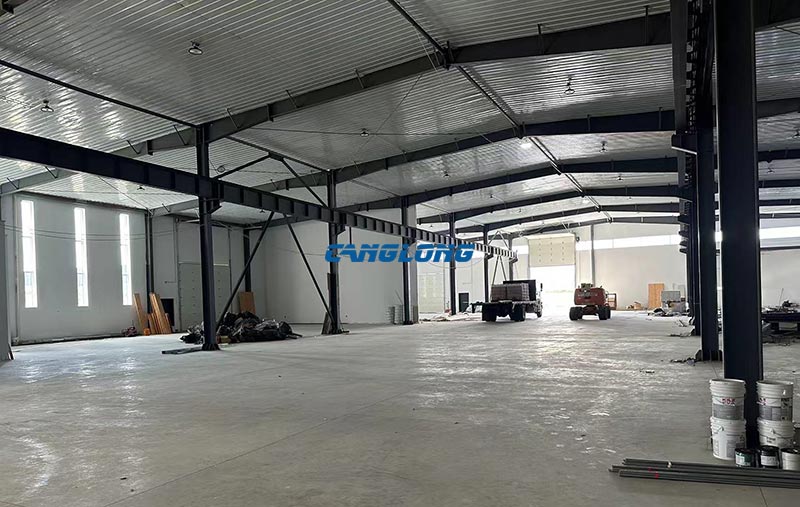
The warehouse section runs a bridge crane for handling glass loads. Photos taken inside after erection show the yellow crane runway beams integrated directly into the column line: the columns that carry the roof also carry the crane, so the crane adds no extra footings and no extra columns to work around.
Glass is a difficult cargo to engineer for. It is heavy, it is fragile, and it cannot be dropped or dragged, which rules out rough clamping and demands smooth, controlled lifting. A bridge crane on a fixed runway handles this well — the load stays on a known path, travel is steady, and the operator can position racks and crates precisely. The frame was designed around those dynamic crane loads from the start, with column sections and connection plates sized for vertical wheel loads and lateral surge, not retrofitted for them.
That principle runs through all of our factory buildings with cranes: the crane is decided first, and the structure is drawn around it — never the other way round.
Double-Layer Panels with Injected Insulation
For the walls, this project used a double-layer panel system with injected insulation foam rather than a standard single sandwich panel. Two steel skins with foam injected between them cost less than a thick prefabricated sandwich panel while still delivering real thermal performance — a sensible trade for a Toronto building that must hold a workable indoor temperature through cold winters and warm summers.
The interior photos show the other half of this system: a white inner liner face, which brightens the working space considerably. Between the dark exterior panels, the white liner walls, and the translucent roof light panels, the warehouse floor reads far brighter than a typical steel shed — useful in a facility where staff handle fragile, high-value product all day.
What We Supplied, and What the Client Did On Site
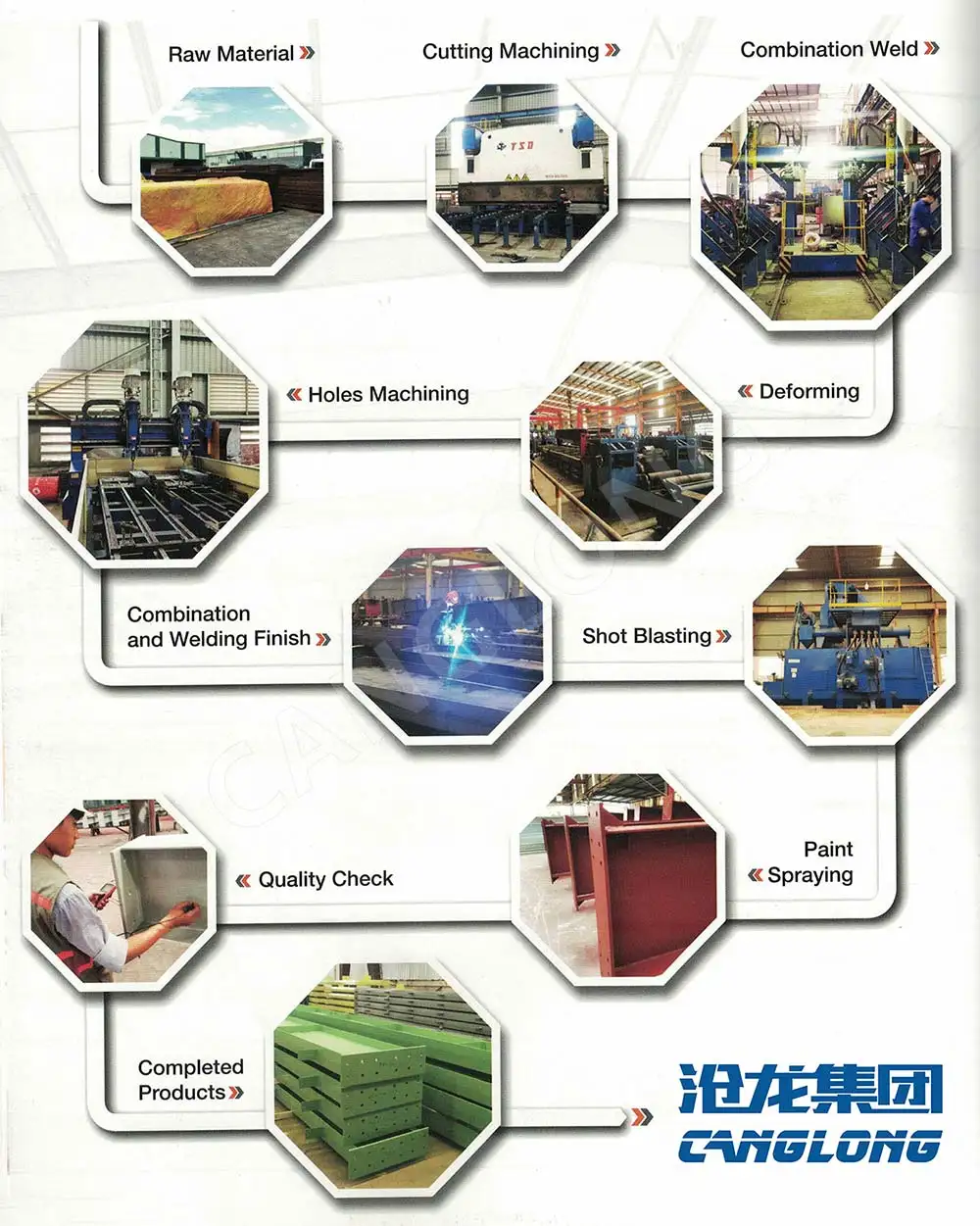
This was a complete building package: primary and secondary steel, the overhead crane, roof and wall cladding, and the glass curtain wall for the office elevation. That is worth stating plainly, because scope on projects like this is often mixed — and on this one it was not.
The interior fit-out was the client’s own work. The office and back-of-house areas were finished with gypsum board partitions and linings installed locally, which is the normal and economical way to handle interiors: the steel shell and envelope arrive weather-tight from the factory, and the fit-out proceeds on the client’s schedule with local trades.
From 3D Model to Finished Shell
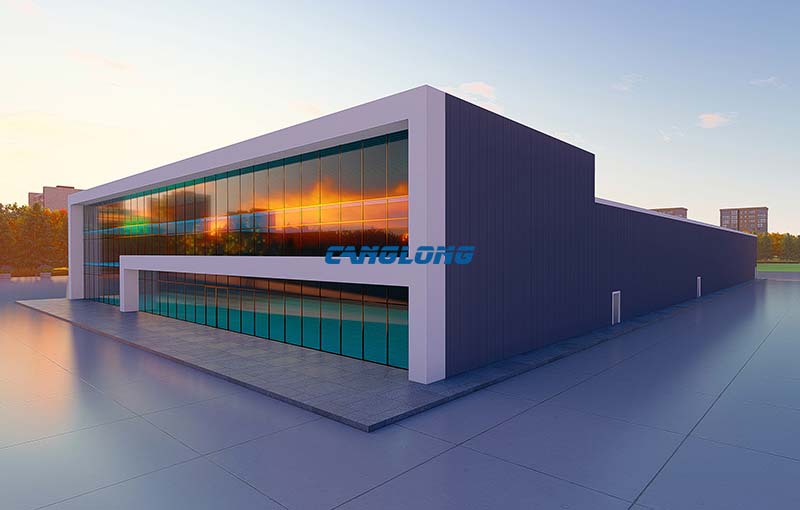
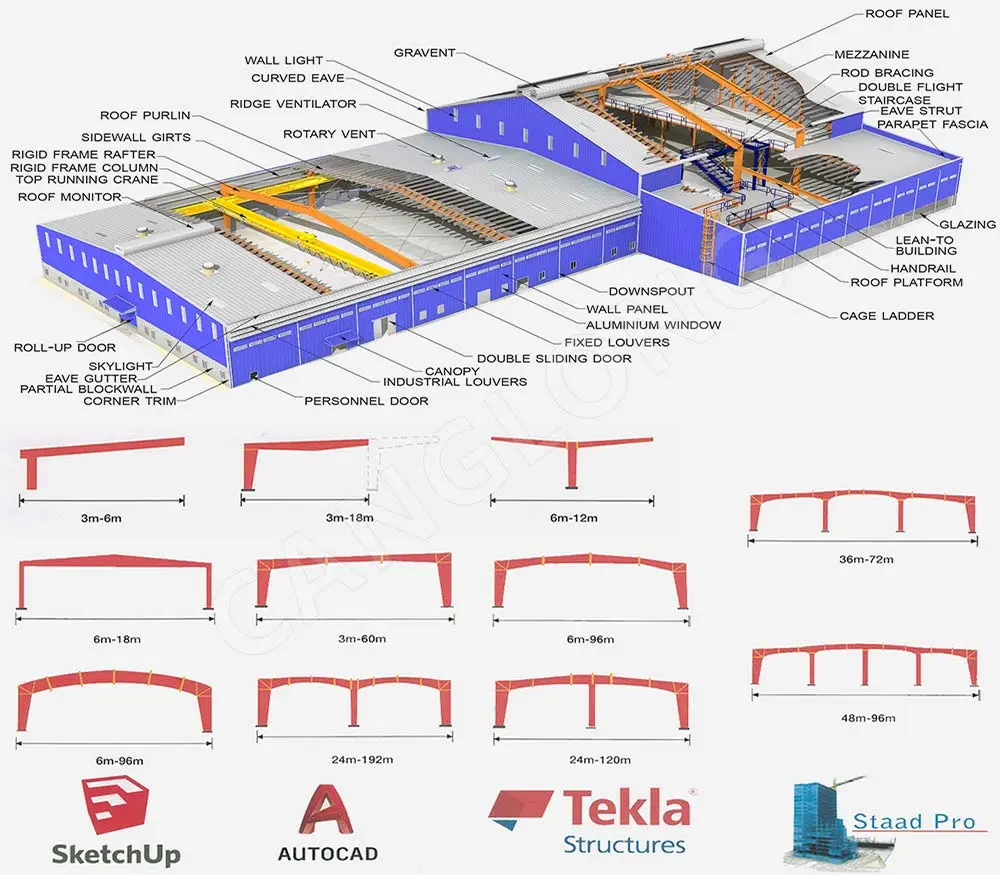
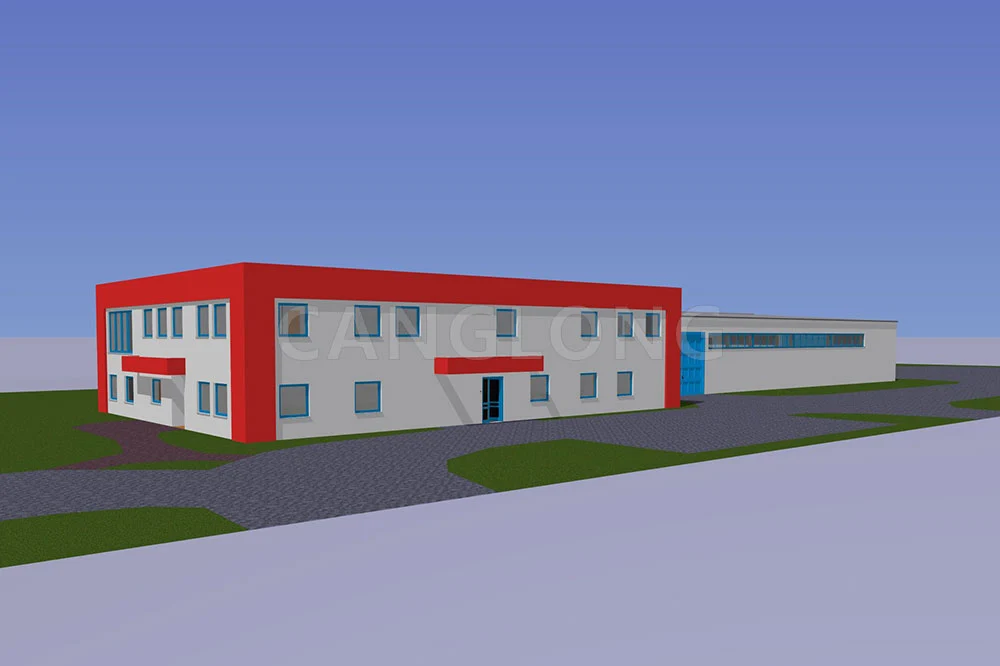
The project moved through the stages every kit building shares, and the photos record each one. It began as a 3D model — the office block, the crane span, and the glazed front elevation all agreed on screen before a single member was cut, which is where layout disagreements are cheap to fix.
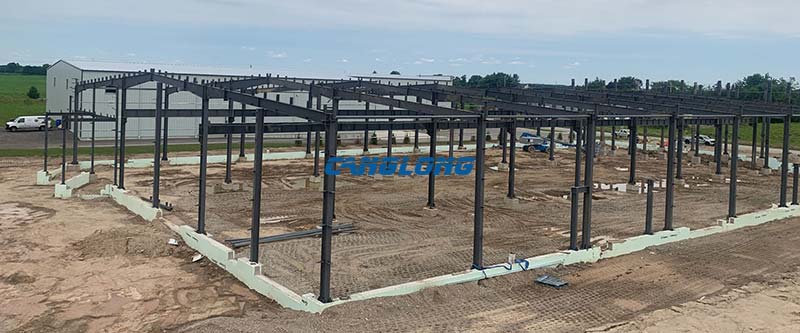
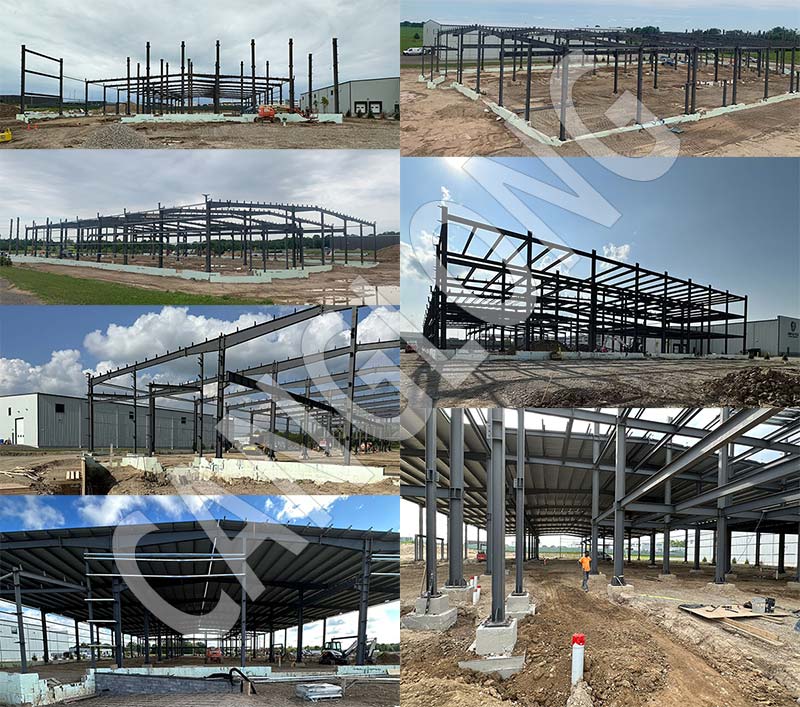
On site, the concrete foundations were poured first with anchor bolts set to our layout, so the steel could land without rework. The frames went up next — columns, rafters, and crane runway beams rising together until the full 81-meter silhouette stood against the sky. The envelope followed: dark exterior panels, white liner walls, and translucent roof light panels, then the curtain wall in the final stretch, hung section by section from a boom lift.
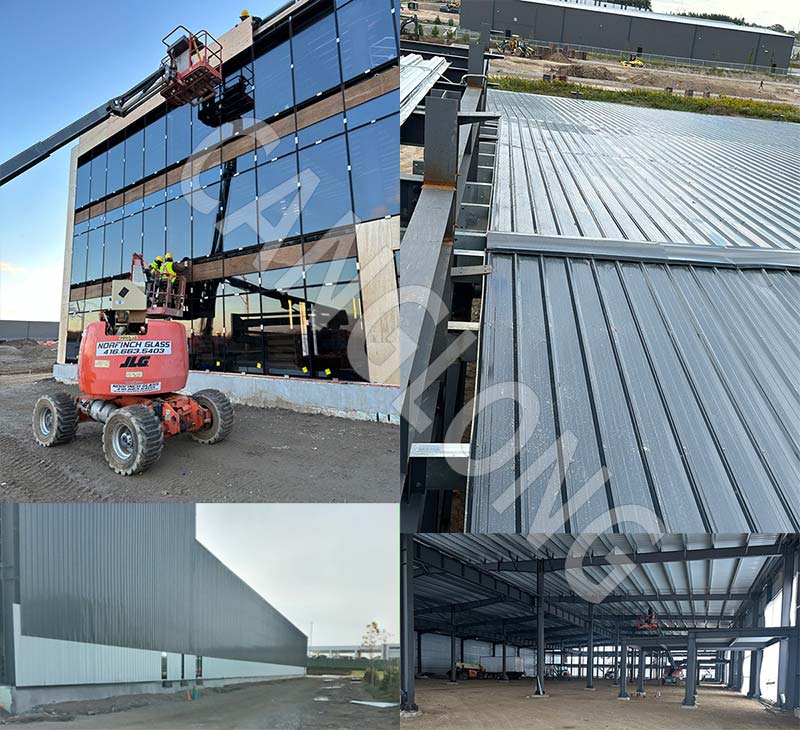
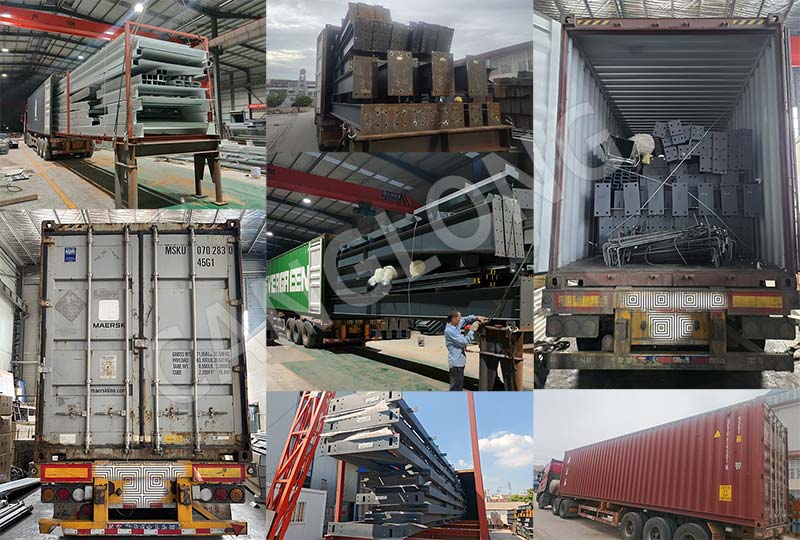
Every stage of the build — model, foundations, frame, envelope, glazing — is documented in the photos across this page, which is how we prefer to show a project: as it actually happened, not as a brochure.
Steel Buildings with Offices in Canada
Warehouse-plus-office buildings are one of the most frequent requests we get from Canadian buyers, and this project covers the full combination: crane coverage, an insulated double-layer envelope, and a glass curtain wall front that works as a company face. Other Canadian projects worth comparing:
- Factory building in Windsor, Ontario — a manufacturing plant in Canada’s automotive heartland, engineered around production flow.
- PU panel warehouse in Canada — a storage building with a prefabricated PU sandwich panel envelope, the alternative wall system to this project’s double-layer panels.
If you are planning a building that mixes warehouse space, offices, or crane coverage, send us the footprint, the eave height you need, and how the interior should split between the two uses. We can price the combined layout as one package and show where the boundary details — facade transition, door positions, crane span — need to be worked out.
Frequently Asked Questions
Can a steel warehouse and office be built under one roof?
Yes, and it is one of the most common layouts for industrial buildings. The office occupies the front section of the same frame, with its own facade treatment — here a glass curtain wall — while the rest of the building stays open for storage or production. Planning both zones in one structure saves a separate foundation, separate utilities runs, and the cost of a second building.
Why choose double-layer panels with injected foam instead of sandwich panels?
Cost. Two steel skins with insulation foam injected between them deliver useful thermal performance at a lower material cost than thick prefabricated sandwich panels. For climates like Toronto’s — cold winters, warm summers, but no extreme cold-chain requirement — the double-layer system is often the better value. Where higher insulation ratings or fire ratings are needed, PU or rock wool sandwich panels remain the upgrade path.
Is the glass curtain wall part of the steel building package?
On this project, yes — the glazing for the office facade was supplied with the building, so the envelope arrived complete. Interior finishing such as gypsum board partitions is typically done by the client’s local trades after the shell is weather-tight, as it was here.
What crane capacity can a frame like this carry?
Frames with integrated crane runway beams are engineered around the specific crane load, span, and lift height of the project. Tell us the crane capacity and duty class you plan to run, and the column sections, runway beams, and connections are designed for those loads from the first calculation — as with the bridge crane in this Toronto warehouse.
Project Info
Country
Canada

Project Name
Glass Factory
Project Date
2024-10-11
Product Address
British Columbia, Canada
Area
3528㎡
Customer Reviews
10.612 Rating
Quality
4.9
Price
4
Design
88
Service
91
Delivery
83
Package
75
Project Details
No
Contact us Leave a Message
Your email address will not be published. Required fields are marked *