



 November 13, 2026
 November 9, 2026
 November 5, 2026
Thailand Coconut Factory
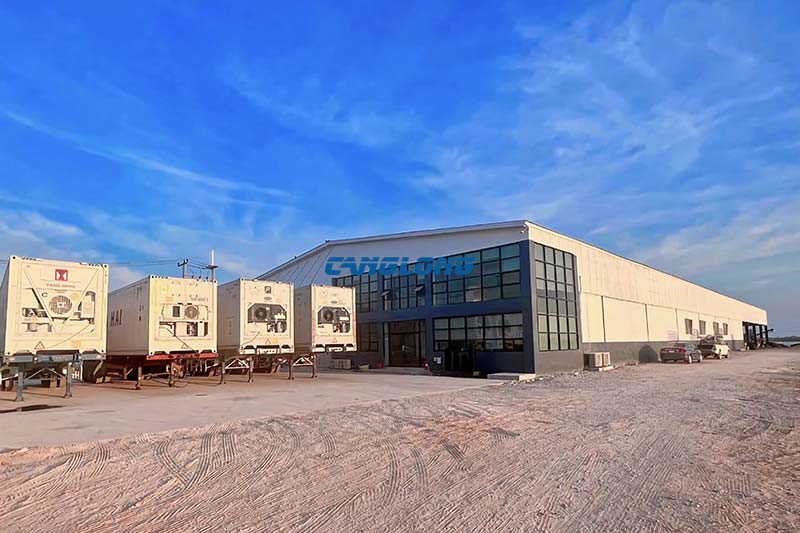
Damnoen Saduak, in Thailand’s Ratchaburi province, has traded in coconuts for longer than anyone living there can remember — the district’s famous floating market still sells them from flat-bottomed boats. The factory on this page is the modern end of that trade: a 93.5 × 30 m coconut processing plant, 2,805 m² under roof, built in 2022 to handle young coconuts, mature coconuts and hairy coconuts from the surrounding groves, with cold storage inside and its own glass-fronted office block. The complete kit shipped through Laem Chabang, and the client’s own crew stood the building in thirty days.
What makes this project worth studying is not its size but its specification. Coconut processing is quietly one of the most corrosive environments in the food industry, and the material choices on this building — fibreglass purlins, stainless steel bolts, a UPVC roof — are a case study in matching a steel building to a hostile process. This page walks through them one by one, because any buyer planning a fruit, seafood or wet-processing plant will face the same decisions.
| Location | Damnoen Saduak District, Ratchaburi, Thailand |
| Use | Coconut processing — young, mature and hairy coconuts — plus cold storage |
| Dimensions | 93.5 × 30 m, eave 6.5 m |
| Floor area | 2,805 m² |
| Roof | UPVC anti-corrosion sheets on FRP purlins |
| Connections | Stainless steel bolts throughout |
| Lower walls | Brick to 4 m height |
| Inside | Polyurethane-panel cold rooms and storage zones |
| Office | Composite panels with aluminium-and-glass curtain wall |
| Doors | Aluminium electric roller shutters |
| Erection | Client’s own crew, 30 days · 2022 |
Corrosion Is the Design Case
Nothing about a coconut plant looks hostile from the outside. Inside, it is a different story: coconut water is acidic, husks and wet fibre ferment in piles, the floor is washed down daily, and the air sits permanently near saturation in a tropical climate. Put those together and ordinary steel building components start a countdown — galvanized purlins rust from the cut edges inward, zinc-plated bolts weep rust streaks down the walls within a couple of seasons, and a coated steel roof sheet loses its coating exactly where water pools and debris sits. In a processing plant, corrosion is not an aesthetic problem; rust falling onto a food production floor is a contamination event.
So the specification for this building removes rust from the vocabulary component by component, and the three most interesting lines are the next three.
Three Materials That Never Rust
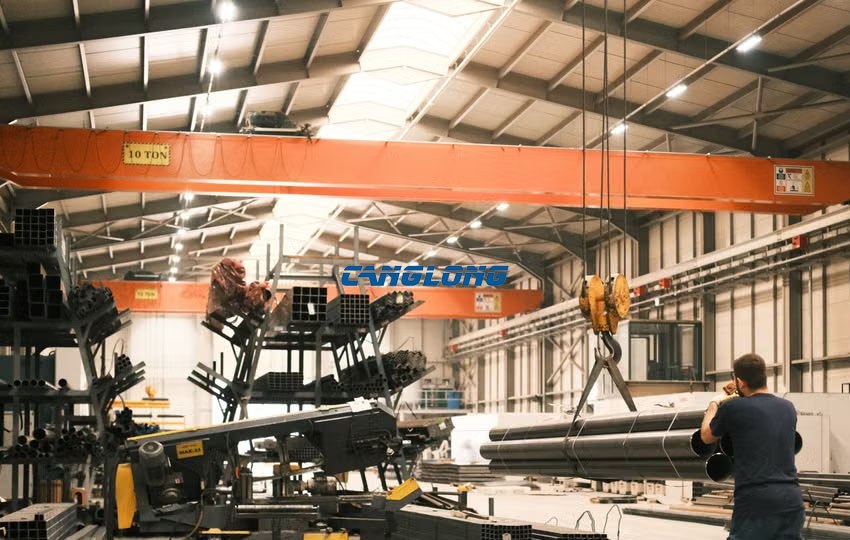
The purlins are FRP — fibre-reinforced plastic. Purlins are the most corrosion-exposed structural members in any plant: they sit directly under the roof, catching condensation, humid air and any leak. In this factory they are fibreglass profiles rather than steel, which means there is nothing to coat, nothing to re-paint, and nothing to rust — the material is inert to the acids and moisture that the process throws at the roof space for the building’s whole life.
Every bolt is stainless steel. A corroded fastener is where most steel buildings actually fail first: the bolt head bleeds a rust stain, seizes, and turns a removable panel into a cut-one. Specifying stainless throughout the envelope connections — and specifically everywhere the process air reaches — is a modest cost at purchase and the single most visible quality signal at year five. It is also the kind of line item that only gets specified by someone who has seen the alternative fail.
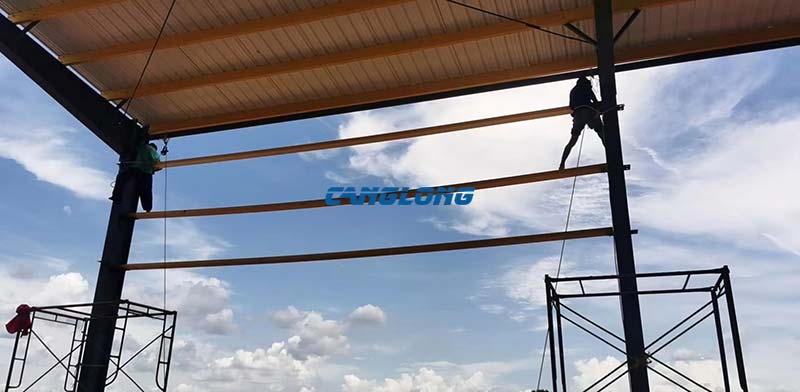
The roof is UPVC. Unplasticised PVC corrugated sheets shrug off the acids, alkalis and salt spray that strip coatings from painted steel, which is why they are the standard answer for fish, chemical and fruit processing roofs. Here they do the weather work directly above a wet process floor — the photos from installation show the roof going on in orange sheets, a common colour for the anti-corrosion grade — and they will outlast any coated steel sheet in this environment without repainting.
Brick to Four Metres
The lower four metres of the walls are brick, and the reasoning is less about corrosion than about what the walls will physically meet. Inside a working plant, the bottom of a wall takes the hits: pallet trolleys, forklift tines, hoses, stacked crates, the occasional misjudged reverse. A steel panel at floor level dents and scratches; brick absorbs the contact and, just as importantly, survives the washdown hose with its finish intact — no coating to peel, no panel edge to wick water. Above four metres, where nothing collides with the wall, the envelope transitions to lightweight cladding and the building keeps the speed and economy of a steel kit. Splitting the wall at the impact line is one of those low-technology decisions that ages better than most high-technology ones.
Cold Rooms Inside the Shell
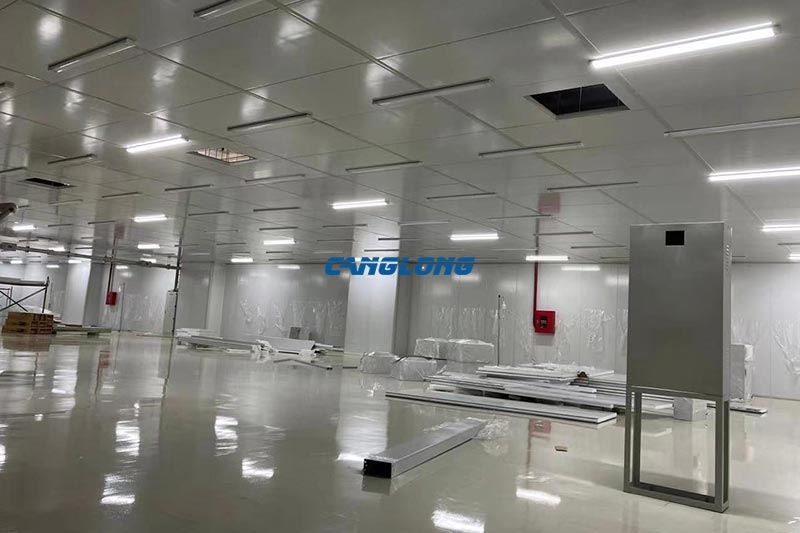
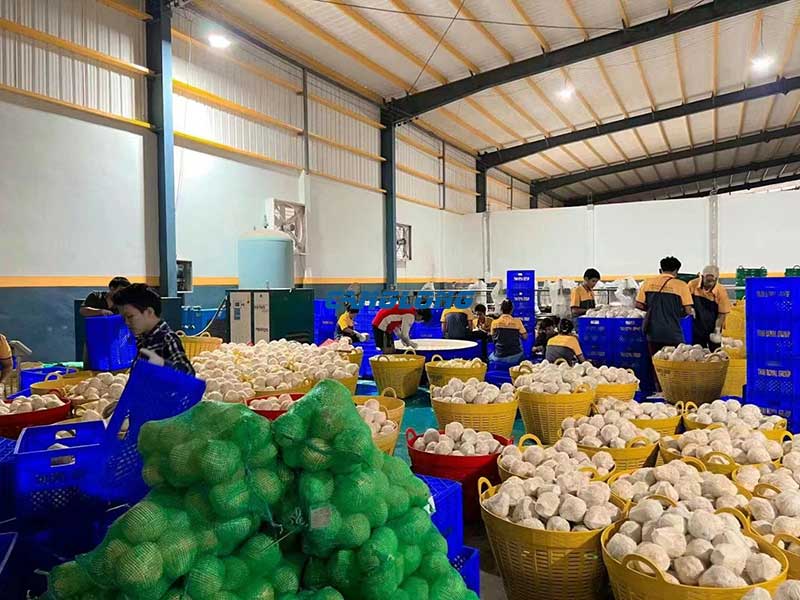
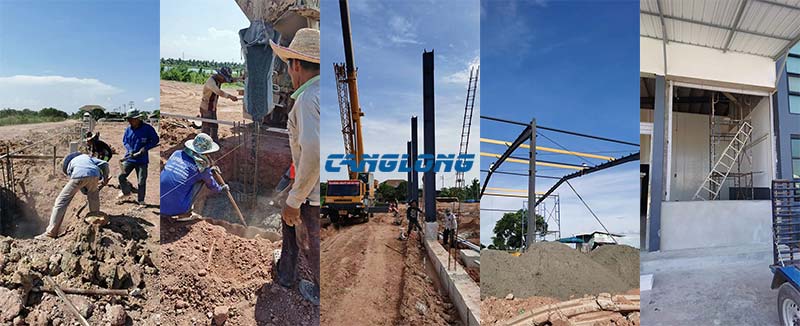
A coconut plant lives or dies by temperature, and not only in the processing hall: young coconuts for export move into cold storage as fast as they are trimmed, because shelf life is measured in the reefer container, not on the tree. The interior photographs show how this building solves it — polyurethane-panel cold rooms built as insulated boxes inside the steel shell, alongside open storage zones for the flow of green and husked nuts.
Putting the cold rooms inside the shell rather than insulating the whole envelope keeps the thermal boundary tight around exactly the volume that is refrigerated, with panel joining to panel instead of performance diluted across the whole hall. The same logic governed our cold store in Chile, and it scales down as well as up: the hall stays a cheap, ventilated, washable working space, and the expensive thermal performance is bought only where the temperature is paid for.
The Face of the Factory
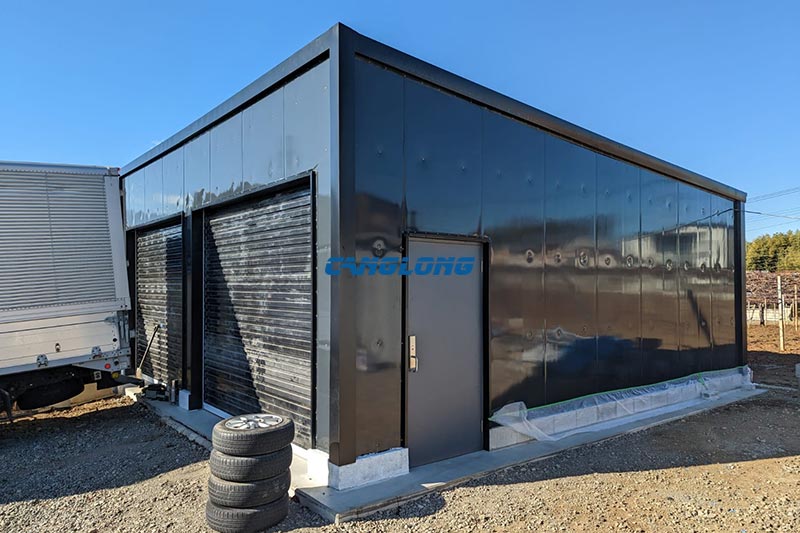
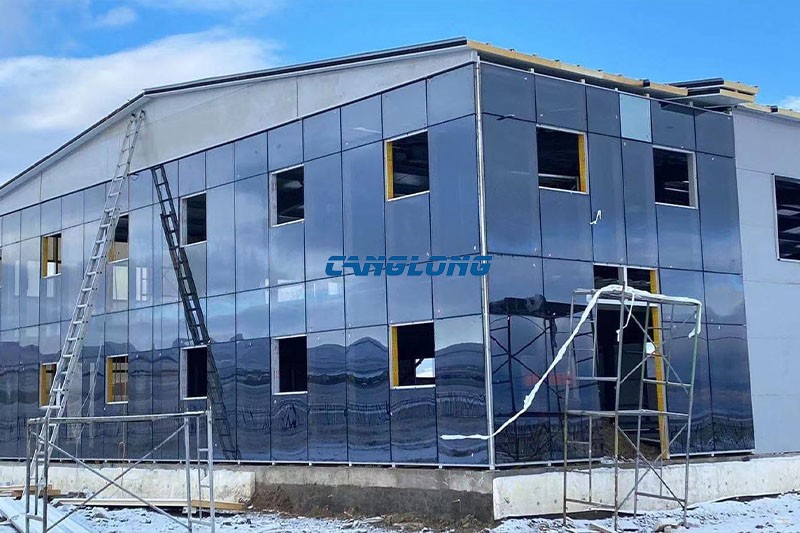
The office block is the part of the plant that every visitor, buyer and inspector sees first, and it was finished accordingly: composite-panel walls with an aluminium-and-glass curtain wall that gives the frontage the blue-glazed, finished look visible in the completion photo — a working office with daylight, not a partitioned corner of the shed. At the dock, aluminium electric roller shutters handle the daily traffic of loading trailers and moving pallets between the processing floor and cold storage without anyone leaving a forklift to crank a handle. On a plant of this throughput, door automation is not a convenience; it is how the cold chain stays closed at the doorway.
Thirty Days, the Client’s Own Crew
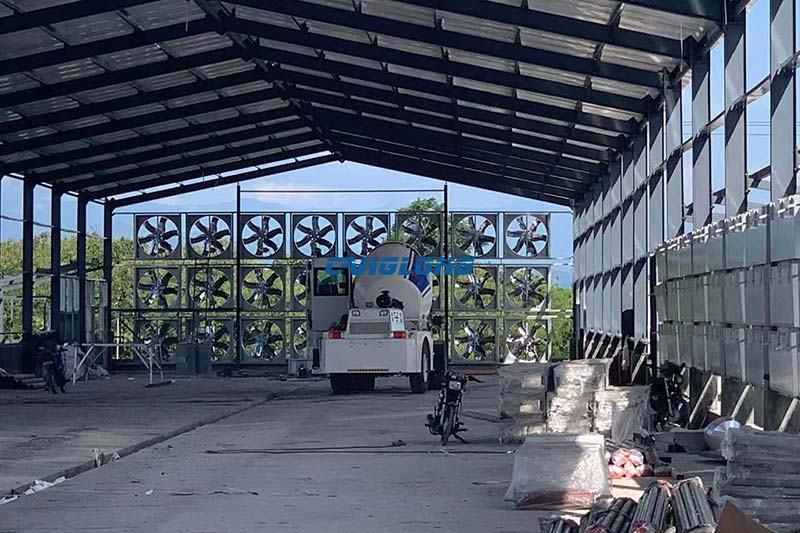
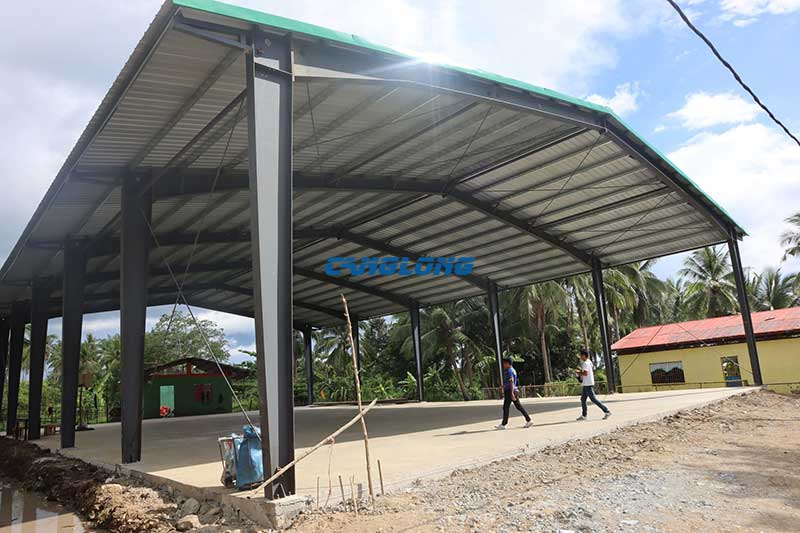
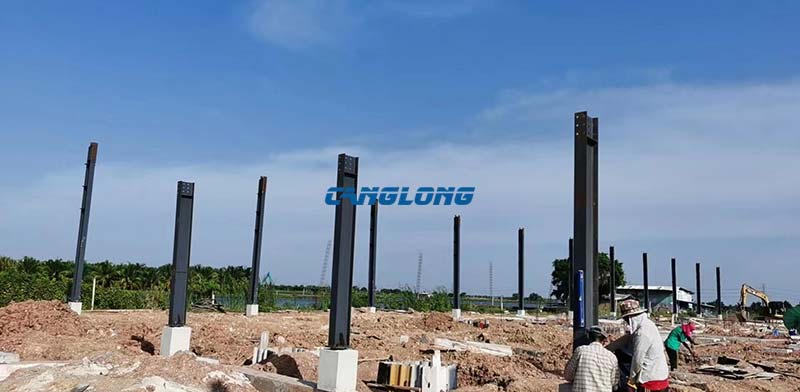
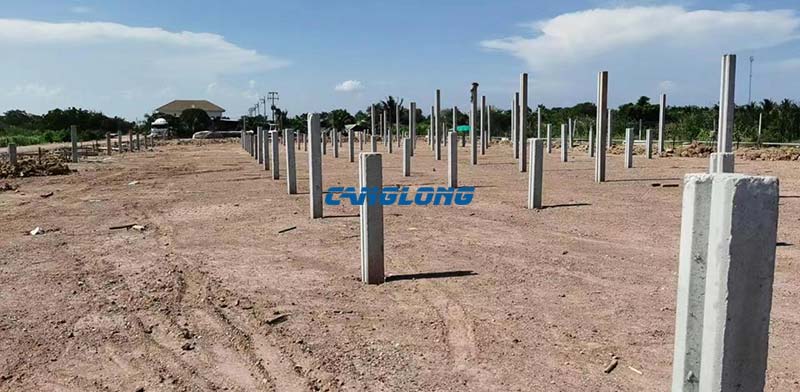
The erection story is the strongest quality signal this project offers: the customer chose to install the building with their own team, and finished in thirty days. That only works when the kit deserves the confidence — columns that land on pre-set anchor bolts, purlins and panels sequenced so the roof closes in order, openings cut for the doors that were shipped with the building. The photographs from site tell the sequence: foundation piers, the 93.5-metre rank of columns, roof sheets going on, and the finished frontage with the first containers already at the dock. A supplier only sells a self-install kit to a client they have never met when the drawings and the packing list are trustworthy; on this project, they were.
The Durian Factory That Followed
The clearest verdict on a building comes from what the client does next: the same client has since come back for a durian processing plant, the natural next line for a Thai fruit processor whose coconut capacity this building now underwrites. Repeat orders are the part of a case study no rendering can fake — the first building has to perform before the second one gets bought.
When a Corrosion Specification Is Overkill
For honesty’s sake: fibreglass purlins, stainless fasteners and UPVC sheeting cost more on day one than the standard galvanized kit, and in a dry, ambient-storage warehouse that premium buys nothing — a standard factory building envelope is the correct answer there. The corrosion specification earns its cost exactly where a wet, acidic, washdown process runs under the roof: fruit, seafood, dairy, chemicals, coastal sites. Match the envelope to what the process does to it — and if your process is anything like coconut water, spec the purlins before the rust does.
If you are planning a coconut, durian or other fruit processing plant in Thailand or Southeast Asia, send us the line and the products. The corrosion conversation is the one that decides whether the building is still white at year ten — and we can show you what ours look like.
Project Info
Country
Thailand

Project Name
Coconut Factory
Project Date
2022-11-8
Product Address
Damnoen Saduak District, Ratchaburi
Area
2805㎡
Customer Reviews
10.612 Rating
Quality
4.8
Price
4
Design
88
Service
91
Delivery
83
Package
75
Project Details
The project adopts advanced structural design and high-quality building materials:
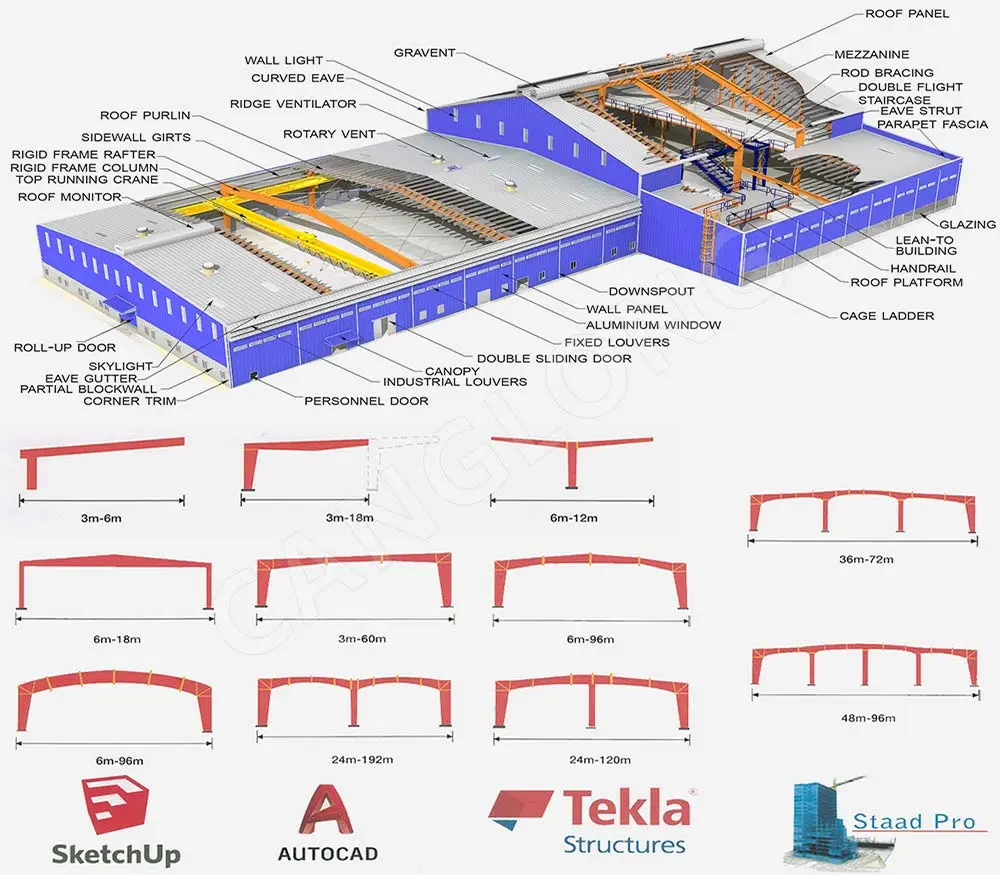
The main body adopts Q235 material H-shaped steel beam column structure to ensure overall stability and load-bearing capacity.
Innovatively adopting a double sloping roof design, it not only meets the drainage needs of tropical rainforest climate, but also enhances the aesthetic appeal of the building.
The enclosure system adopts a composite structure of brick walls and metal plates, balancing durability and practicality.
The roof adopts a composite system of metal plates and insulation cotton, effectively blocking tropical high temperatures and improving indoor working environment.
No
No
Contact us Leave a Message
Your email address will not be published. Required fields are marked *