




 November 13, 2026
 November 9, 2026
 November 5, 2026
Guinea Factory Shed
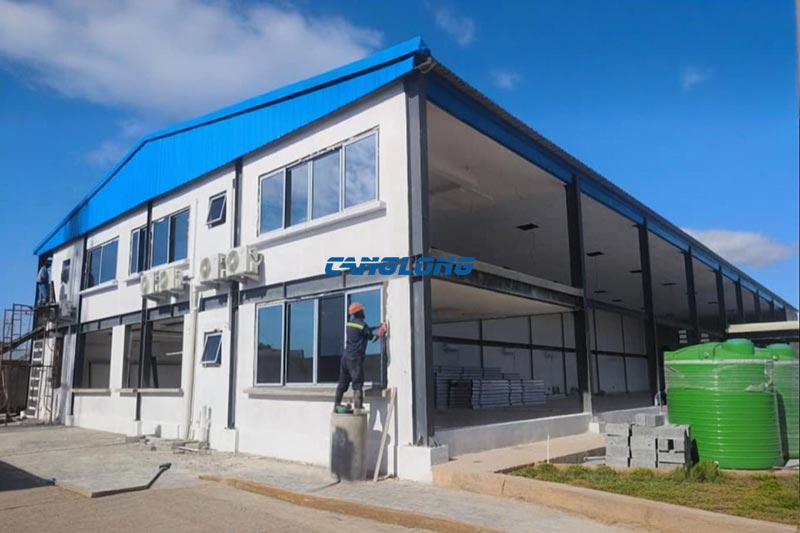
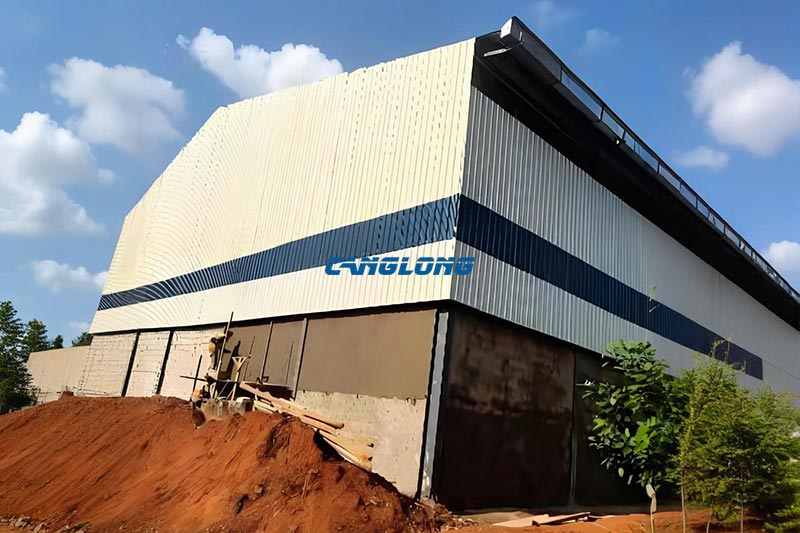
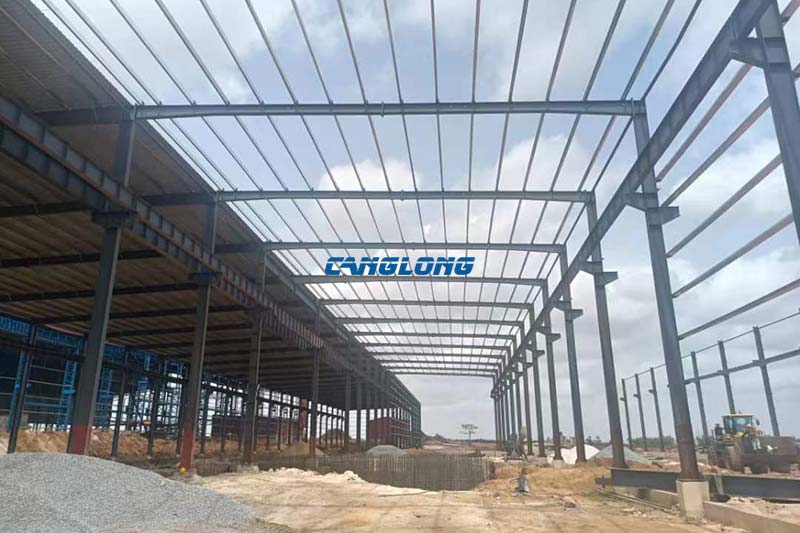
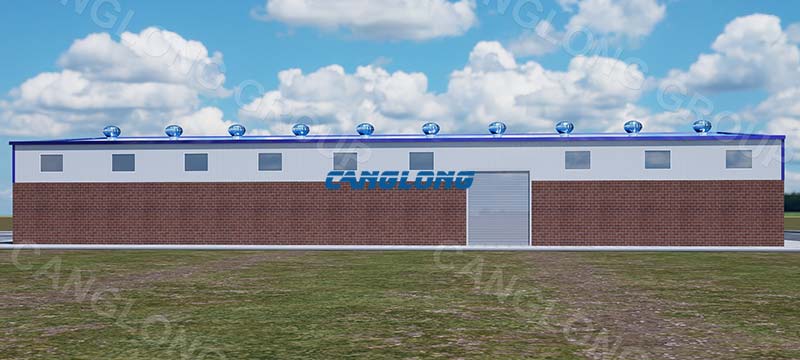
Four factory sheds went up in the Conakry region of Guinea — not one building with four bays, but four separate steel structures on the same project, each framed around the overhead cranes it would carry. The main factory runs 248 m long by 25 m wide with two 15-tonne EOT cranes; a 156 m warehouse and two more workshops follow it, each carrying — or, in the smallest one, spaced and stubbed for — a pair of 6-tonne EOT cranes. Together the four sheds enclose 13,576 m². Canglong Group’s scope was the steel structure itself, engineered for the crane loads; the roof sheets were bought locally, and the daylighting was designed in from the start.
Project at a Glance
| Country | Guinea |
|---|---|
| Location | Conakry region |
| Function | Factory sheds with EOT cranes |
| Buildings | 4 sheds, 13,576 m² combined |
| Supply scope | Steel structure, crane runway beams, connections |
| Roof & wall sheets | Colour steel sheeting, purchased locally |
| Daylighting | Continuous window band below the roof line, roof ventilators |
| Building | Size | Cranes |
|---|---|---|
| Factory 1 | 248 × 25 m | 2 × 15 t EOT |
| Warehouse 2 | 156 × 18 m | 2 × 6 t EOT |
| Workshop 3 | 88 × 21 m | Sized for 2 × 6 t EOT |
| Workshop 4 | 136 × 20 m | 2 × 6 t EOT |
What an EOT Crane Asks of a Steel Frame
An EOT crane — an electric overhead travelling crane — does not simply hang from a roof. It rolls along runway beams carried low on the columns, and every lift sends its weight, its trolley position and its braking forces into those beams and the columns beneath them. A crane-ready frame is therefore a different structure from a plain shed: the columns carry bracket stubs at runway level, the crane aisles stay braced so surge loads have a path to the foundations, and the steel is detailed for the repeated, fatiguing nature of crane service rather than a one-off wind storm.
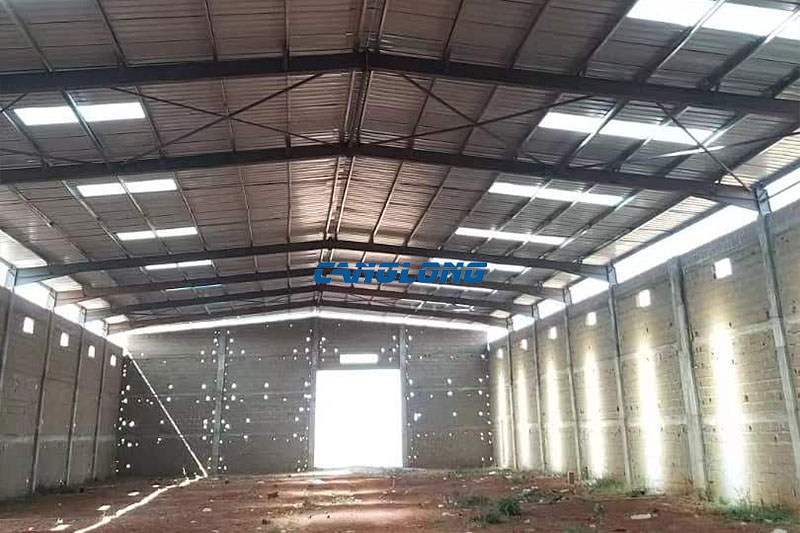
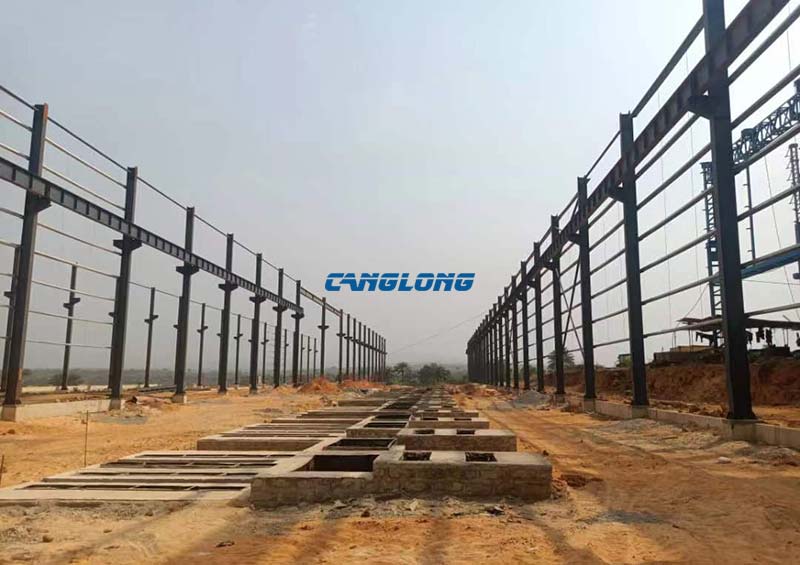
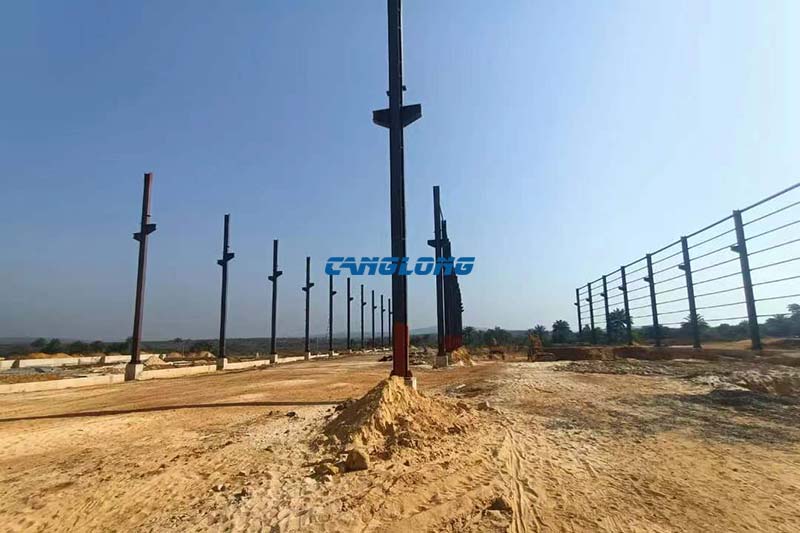
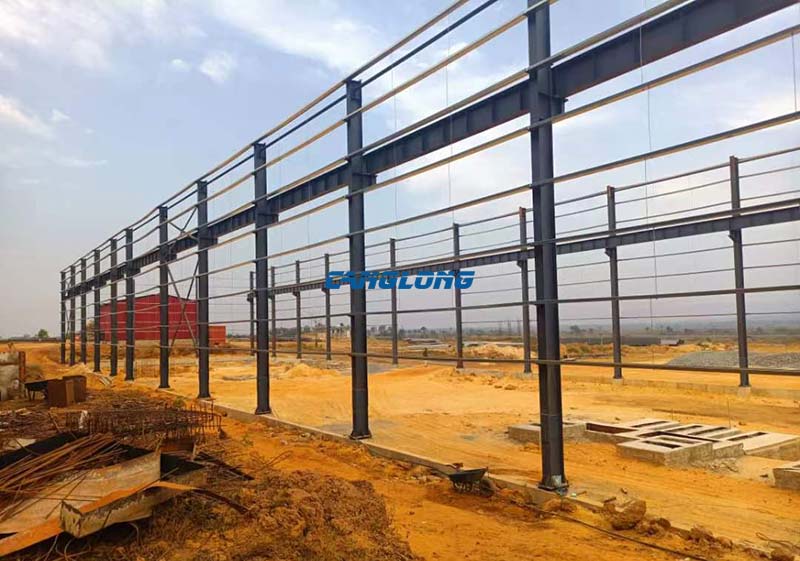
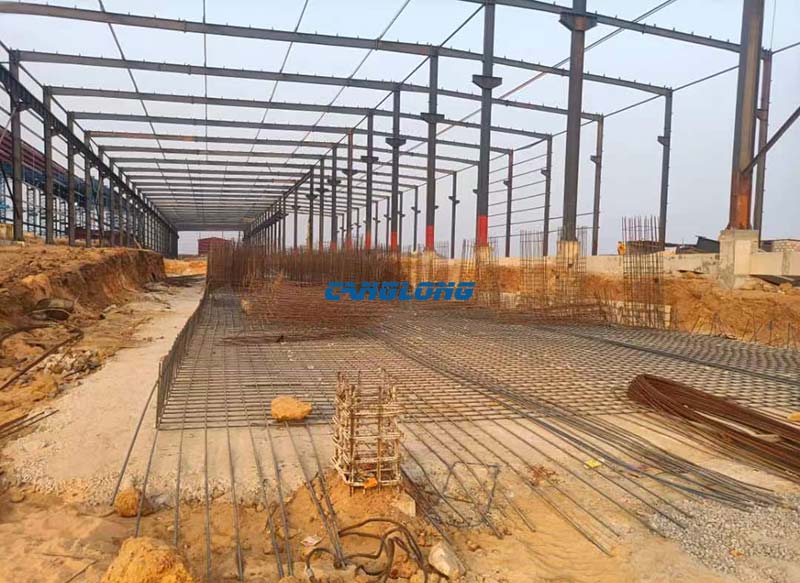
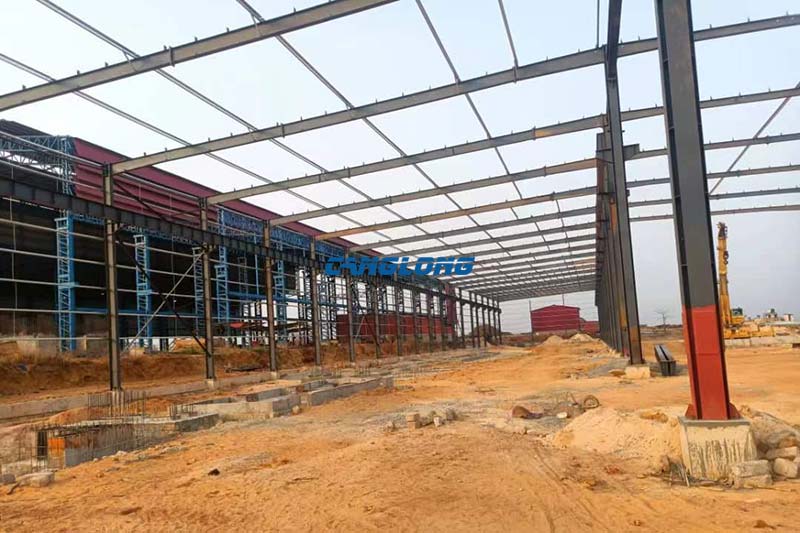
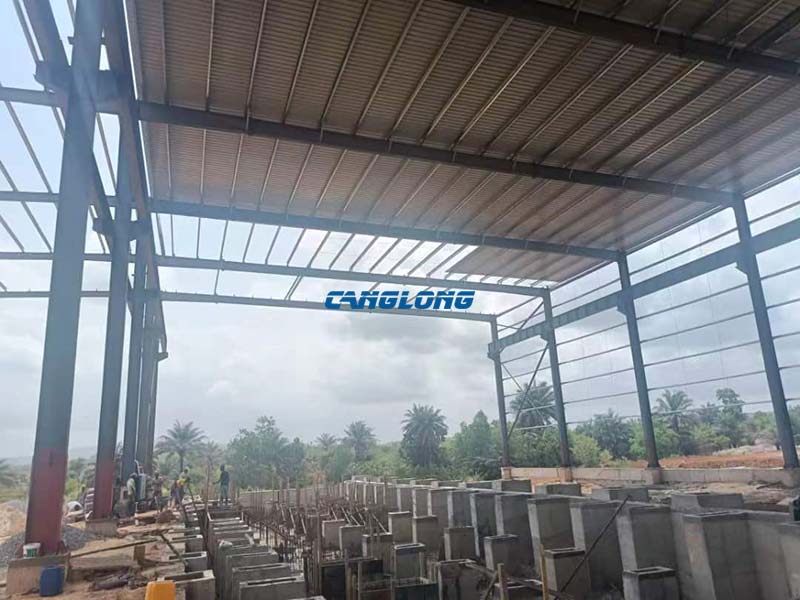
Eight cranes across four sheds means that logic repeats down every column line. The site photographs show it plainly: the short bracket stubs standing proud of each column at runway height, the long runway beam lines running the length of each shed, and the anchor bolts set into the foundation plinths waiting for the frames. None of that detail is visible in the finished building, but it is the difference between a shed that holds cranes and a shed that merely stands near them.
The 15-Tonne Shed Sets the Pace
The 248 m main factory is the project’s benchmark. Two 15-tonne EOT cranes working across the 25 m width move castings, machine bases and finished assemblies the length of the building, and every element of the frame — column sections, bracket plates, bracing, foundations — was sized from that duty. The three smaller sheds repeat the same grammar at 6 tonnes: lighter runway beams, lighter brackets, the same uninterrupted crane aisles. Sharing one structural system across four buildings kept the detailing consistent and the erection rhythm familiar, which matters when crews move from one shed to the next on the same site.
Steel Supplied, Sheets Sourced Locally
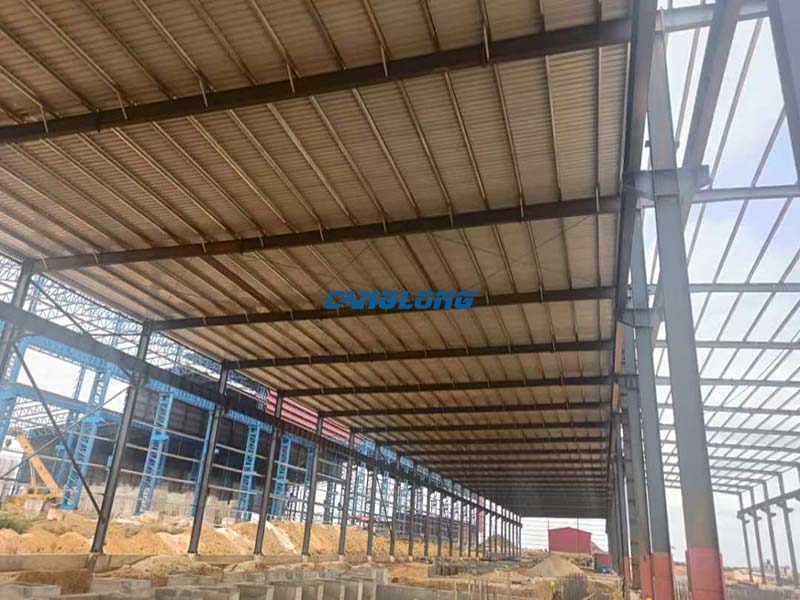
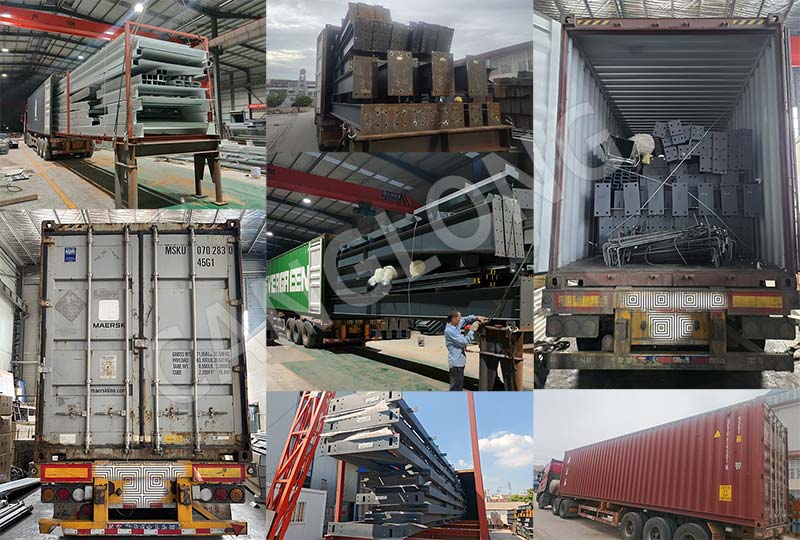
This project drew the supply line in a deliberate place: Canglong delivered the steel structures, crane runway systems and bolted connections, while the colour steel sheeting for roofs and walls was purchased locally and fitted by the client’s team. For a coastal West African site, the split has practical logic — sheet profiles and colours can match what local suppliers stock for future repairs, freight volume drops to the steel that genuinely needs factory control, and the frame that carries the cranes is still manufactured, drilled and matched to its drawings before it ships. The roof photos show the two scopes meeting: imported steel above, locally bought sheeting closing the building in.
Daylight Built Into the Roof Line
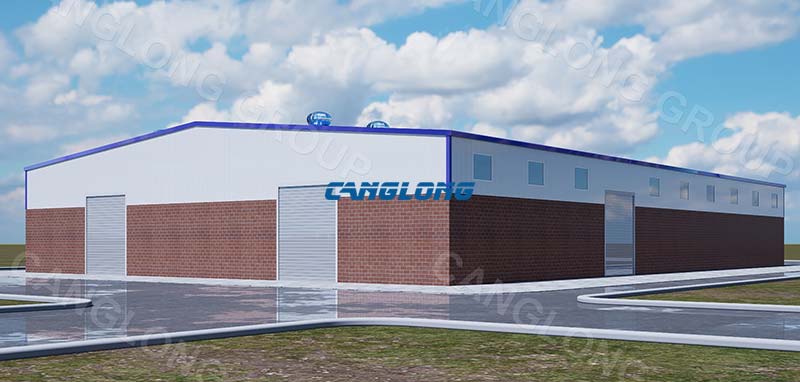
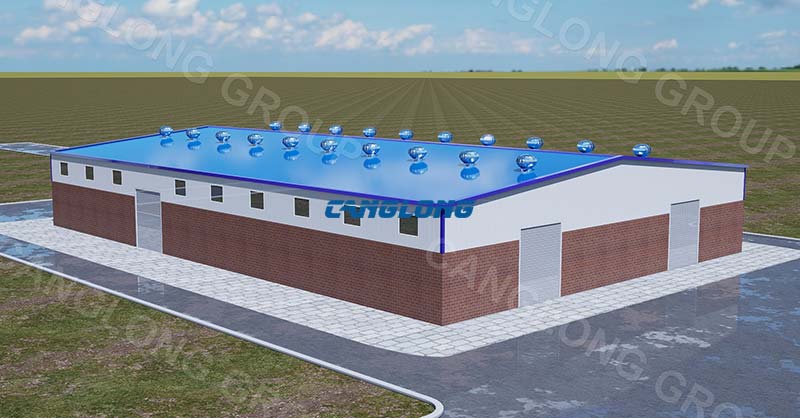
Guinea sits in the tropics, and the design leans on that rather than fighting it. A continuous band of window panels runs below the roof line on each shed, washing the crane aisles and work floor with daylight, and roof ventilators along the ridge let hot air out of the high volume. In a climate where the sun is reliable and the wet season is not, daylighting is not decoration: it keeps the interior usable through overcast spells without switching the whole building on, and the ventilators keep the tall sheds from trapping heat under the roof.
How the Four Sheds Went Up
The photographs follow the same sequence four times over. Local civil works cast the foundation plinths and tied the reinforcement; the steel frames followed, column rows rising with their bracket stubs already in place; runway beams and purlins closed the frames out; and the locally sourced sheeting brought each shed under cover. Four buildings on one site share one learning curve — by the second shed, the erection crew knew the frame by heart.
More Factory Projects in Africa
- Factory with overhead crane in Cameroon — double-span 1,360 m² workshop with a single-beam crane system
- Factory shed in Zimbabwe — steel frame combined with local brick construction
- Factory building in Mali — production space built for the Sahel
Frequently Asked Questions
What is an EOT crane, and how does the building support it?
An EOT (electric overhead travelling) crane runs on runway beams fixed to bracket stubs on the building columns, moving loads along the shed’s full length. The steel frame is designed for the crane’s vertical wheel loads, its braking and surge forces, and the repeated duty cycle of crane service — which is why a crane-ready shed is detailed differently from a plain storage building.
Why were the roof and wall sheets bought locally?
Local sheeting matches the profiles and colours available in Guinea for future maintenance and repairs, cuts the shipped volume down to the steel that needs factory control, and still leaves the crane-critical structure — frames, runway beams, connections — manufactured and pre-drilled to drawing before shipping.
How are the four sheds sized?
The main factory is 248 × 25 m with two 15 t EOT cranes; the warehouse is 156 × 18 m and the two workshops are 136 × 20 m and 88 × 21 m, each carrying or sized for two 6 t EOT cranes. Combined floor area is 13,576 m².
How does the design handle Guinea’s climate?
A window band below the roof line brings daylight deep into the sheds, roof ventilators release hot air from the high volume, and the double-slope roofs shed the heavy wet-season rain. The steel frame carries its protective coating from the factory; locally purchased sheeting keeps future replacement simple.
Project Info
Country
Guinea

Project Name
Factory Shed
Project Date
2024-5-9
Product Address
Guinea Conakry Region
Area
13576㎡
Customer Reviews
10.612 Rating
Quality
4.6
Price
4
Design
88
Service
91
Delivery
83
Package
75
Project Details
No
No
Contact us Leave a Message
Your email address will not be published. Required fields are marked *